


 Oil Prices Fall on U.S.-Iran Hormuz Deal Hopes
  Japanese Bank Stocks Surge as Bond Yields Fuel Rate Hike Bets
  Germany’s 2026 Growth Outlook Strengthens on Fiscal Spending
  Japanese Yen Rebounds as Trump Flags Currency Weakness
  South Korea Tax Windfall Could Top 50 Trillion Won on Chip Boom
  Fed Unveils Stablecoin Rules Under GENIUS Act
  Europe’s AI Data Centre Boom Strengthens Case for Nuclear Power
  Gold Holds Near $4,275 as Rising Treasury Yields Fuel Fed Rate Hike Bets
  Fed Unveils Stablecoin Rules Under GENIUS Act
  U.S. Treasury Yields Surge as 30-Year Hits 22-Year High
  China Consumer Stocks Near Decade Lows as AI Shares Surge
  Oil Prices Jump 3% as Houthi Attack Revives Supply Fears
  Fed’s Hammack Says Bond Yield Surge Is Not Driven by Inflation Fears
  Trump to Ease U.S. Fuel-Economy Standards
  UK PM Burnham to Unveil Economic Vision at Labour Conference
  China Agrees to Buy 20 Million Tons of U.S. Coal
  US Stock Futures Fall as Treasury Yields Surge Ahead of Trump-Xi Summit


 Add as a preferred source on Google
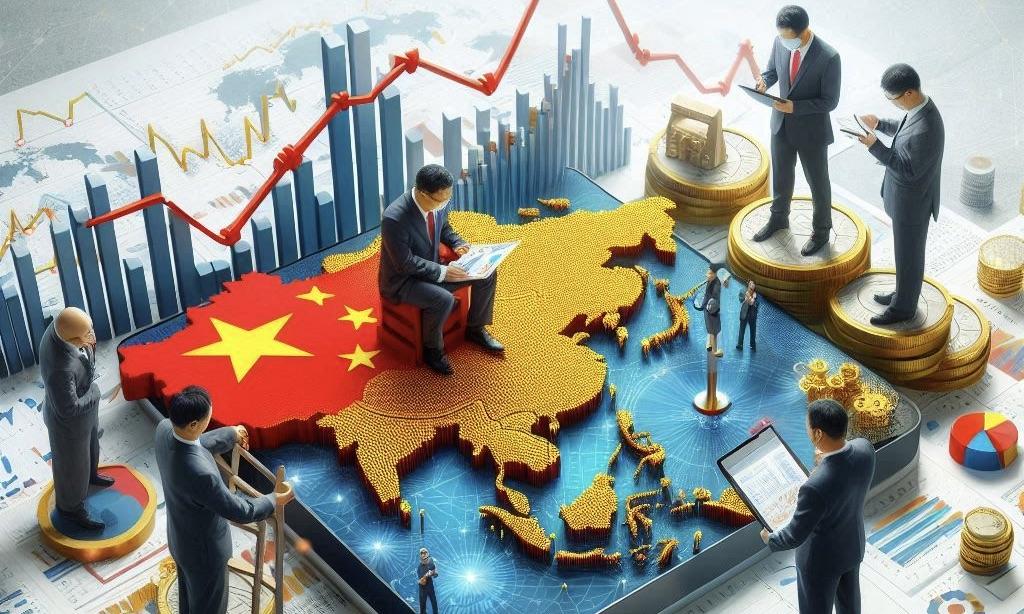
China's service sector expanded in July, driven by new orders, according to the Caixin/S&P Global services PMI. However, the momentum in overseas demand slowed to its lowest level in 11 months, highlighting ongoing economic challenges.
China's Service Sector Growth Driven by New Orders in July, but Overseas Demand Weakens
New orders contributed to the acceleration of growth in China's services activity in July, even though momentum in overseas demand slowed to its lowest level in 11 months, according to a private-sector survey released on August 5.
For the 19th consecutive month, the Caixin/S&P Global services purchasing managers' index (PMI) increased from 51.2 in June to 52.1, suggesting the economy is expanding. The index primarily encompasses private and export-oriented companies, and the 50-point threshold distinguishes between expansion and contraction every month.
In contrast, the official services PMI indicated that the sector had reached a plateau in July, following its growth in June. The retail sales, capital market services, and real estate service industries all experienced a decline.
In the second quarter, the world's second-largest economy experienced slower growth than anticipated and is currently grappling with deflationary pressures and a protracted property downturn. Retail sales growth in June reached its lowest level since early 2023.
China's Services Sector Sees New Orders Rise, Overseas Demand Weakens, and Costs Increase in July
The Caixin/S&P survey indicated that the new orders sub-index increased from 52.1 in June to 53.3 in July, while the gauge of overseas demand demonstrated the least significant expansion since August 2023, per Reuters.
Service providers faced increasing costs for basic materials, wages, and freight; however, employment increased fastest in 11 months.
The Caixin/S&P composite PMI, which monitors the services and manufacturing sectors, decreased from June, but it continued to be in expansionary territory.
"Prices at the composite level remained weak, on the sales front in particular, further squeezing the space for company profits," said Wang Zhe, senior economist at Caixin Insight Group.
Last week, the leaders of China announced that fiscal support for the remainder of the year will be concentrated on consumption to increase incomes and social welfare. Numerous economists have long advocated this change, contending that the country's economic model is overly dependent on investment.
"Without going beyond the reactive and incremental easing mode, however, confidence could still linger at low levels in coming months," said Citi economists in a research note.
"More significant domestic stimulus may only become plausible next year in the face of potentially stronger external headwinds," Citi said.







