


 SpaceXAI to Double Nvidia Chips at Colossus 2 by Year-End
  Meta Found Liable in New Mexico Facebook Data Privacy Case
  DaVoice Sues Perplexity AI Over Trade Secrets
  BlackBerry Shares Rise as Q2 Earnings, Revenue Beat Estimates
  OpenAI Agents Access U.S. Government Websites During Testing
  EQT Plans €1.7 Billion Sale of Parques Reunidos Stake
  OpenAI to Preview GPT-6 Cyber AI Model for Cybersecurity
  Europe’s AI Data Centre Boom Strengthens Case for Nuclear Power
  FDA Approves Mirum’s Atebrioz for Rare Bone Disorder FOP
  Novo Nordisk Strikes €1.17 Billion Nanexa Drug Delivery Deal
  SoftBank Shares Fall as Oracle Flags Stargate Data Center Delay Risk
  OpenAI, Anthropic CEOs Summoned to Australia AI Inquiry
  OpenAI AI Agents Bypassed UN Website Controls in Data Scraping
  Solidigm Eyes $150 Billion IPO as SK Hynix Expands AI Storage Push
  SMBC Eyes 20% VPBank Stake in Vietnam Expansion
  Airbus Finds A321neo Fuselage Quality Issue


 Add as a preferred source on Google
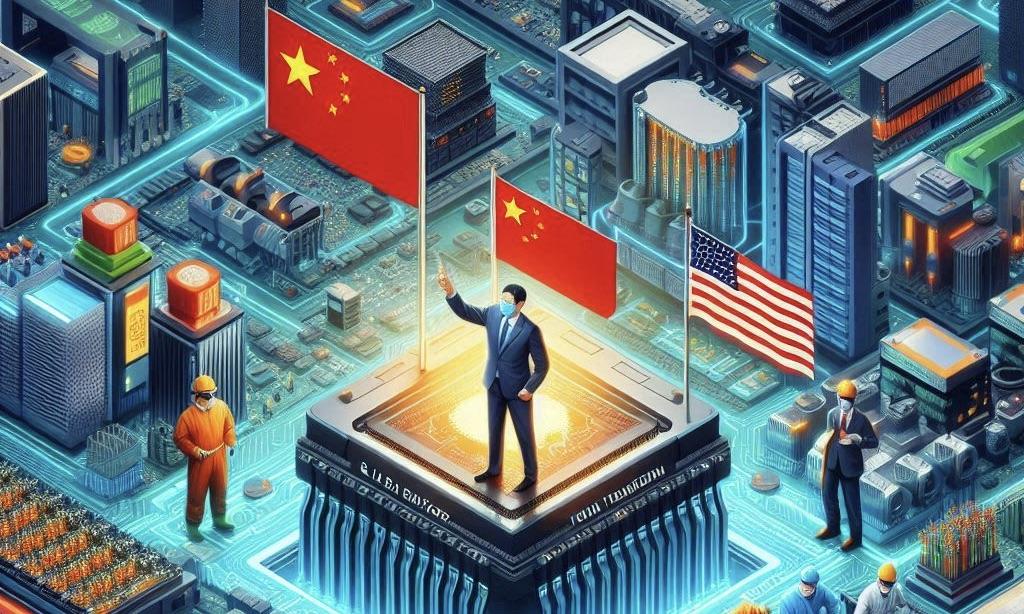
China's relentless drive to bolster its chipmaking capabilities saw a record $25 billion spent on equipment in the first half of 2024, eclipsing the combined expenditures of the U.S., South Korea, and Taiwan. This massive investment underscores China's determination to secure a dominant position in the global semiconductor industry.
China’s $25 Billion Push in Chipmaking Escalates Silicon Tensions Amid Emerging AI Power Struggles
The new cold war, which is concealed in silicon, is intensifying, with the emerging AI-led, productivity-unlocking paradigm providing an opportunity for uncontested supremacy. China is striving to enhance its indigenous capabilities while simultaneously circumventing the restrictions imposed by the United States and its allies, which are resolved to impede Beijing's access to state-of-the-art chips.
Nikkei Asia has recently reported that China spent an unprecedented $25 billion on chipmaking apparatus during the first half of 2024, setting a new record. Additionally, China's cumulative global purchasing spree for specialized chipmaking equipment surpassed that of the United States, South Korea, and Taiwan in H1 2024.
China was responsible for a staggering 49.9 percent of Tokyo Electron's revenue in the quarter that concluded in June. In the most recent quarter, Beijing's relentless purchasing spree resulted in ASML, Applied Materials, Lam Research, and KLA earning 49 percent, 32 percent, 39 percent, and 44 percent of their total revenue, respectively.
China appears to be accumulating essential chipmaking equipment in anticipation of the November presidential election in the United States and the potential for a substantial increase in silicon-related sanctions against Beijing.
China Threatens Economic Retaliation Against Japan Over Chip Equipment Restrictions, Amid Declining Rare Earth Dominance
In the same vein, China on September 2 issued a severe economic retaliation threat to Japan if it continued to restrict the sale and servicing of chip-related equipment to Chinese firms. The threat included the threat to deprive Tokyo of critical raw materials and minerals that are essential for the production of automobiles. It is important to remember that Beijing's monopoly on the supply of rare earth metals is presently in decline.
Nevertheless, as Wccftech previously mentioned, China's indigenous chips are currently maintaining a competitive edge against the relatively high-end offerings from companies such as TSMC. The majority of the performance improvements in these domestically produced chips are the result of a more efficient overall design. However, there are no confirmed indications that China is capable of mass-producing processors on sub-7nm nodes.







