


 Yen Near 40-Year Low as USD/JPY Approaches Key 162 Level, Raising Intervention Concerns
  Japan Manufacturing Growth Accelerates in June as Orders Surge Despite Iran War Cost Pressures
  Wall Street Ends Mixed as Alphabet Slumps, Middle East Developments and Fed Outlook Weigh on Markets
  U.S.-Iran Diplomacy Helps Drive Gasoline Prices Down 15% From May Highs
  South Korea’s KOSPI Rebounds as Samsung and SK Hynix Lead Tech Stock Recovery
  Tesla and NatPower Partner on $5 Billion Battery Storage Expansion in Europe
  Asian Stocks Slip as Oil Rebounds Amid Fed Rate Hike Fears
  SK Hynix Moves Closer to New York ADR Listing Amid AI Chip Boom
  FedEx Stock Drops After Weak 2026 Earnings Forecast Despite Strong Q4 Results
  US Dollar Hits One-Year High as Hawkish Fed Outlook Overshadows Middle East Developments
  Cerebras Revenue Forecast Tops Expectations, but Margin Concerns Weigh on Stock
  Apollo Debt Solutions Limits Redemptions as Withdrawal Requests Surge
  Gold Prices Mixed as Stronger Dollar Offsets Safe-Haven Demand Amid U.S.-Iran Peace Talks
  NHTSA Investigates Fatal Tesla Model 3 Crash in Texas Amid Ongoing Autopilot and FSD Safety Scrutiny
  Heineken Names JDE Peet’s CEO Rafael Oliveira as New Chief Executive
  Qualcomm Nears $4 Billion Acquisition of AI Chip Startup Modular
  Meta Pauses Employee Activity Tracking Program Over Data Security Concerns



In its latest move to spur business investment, the government will extend its $150,000 instant assets write-off until the end of the year.
The six-months extension, which will be legislated, will cost $300 million in revenue over the forward estimates.
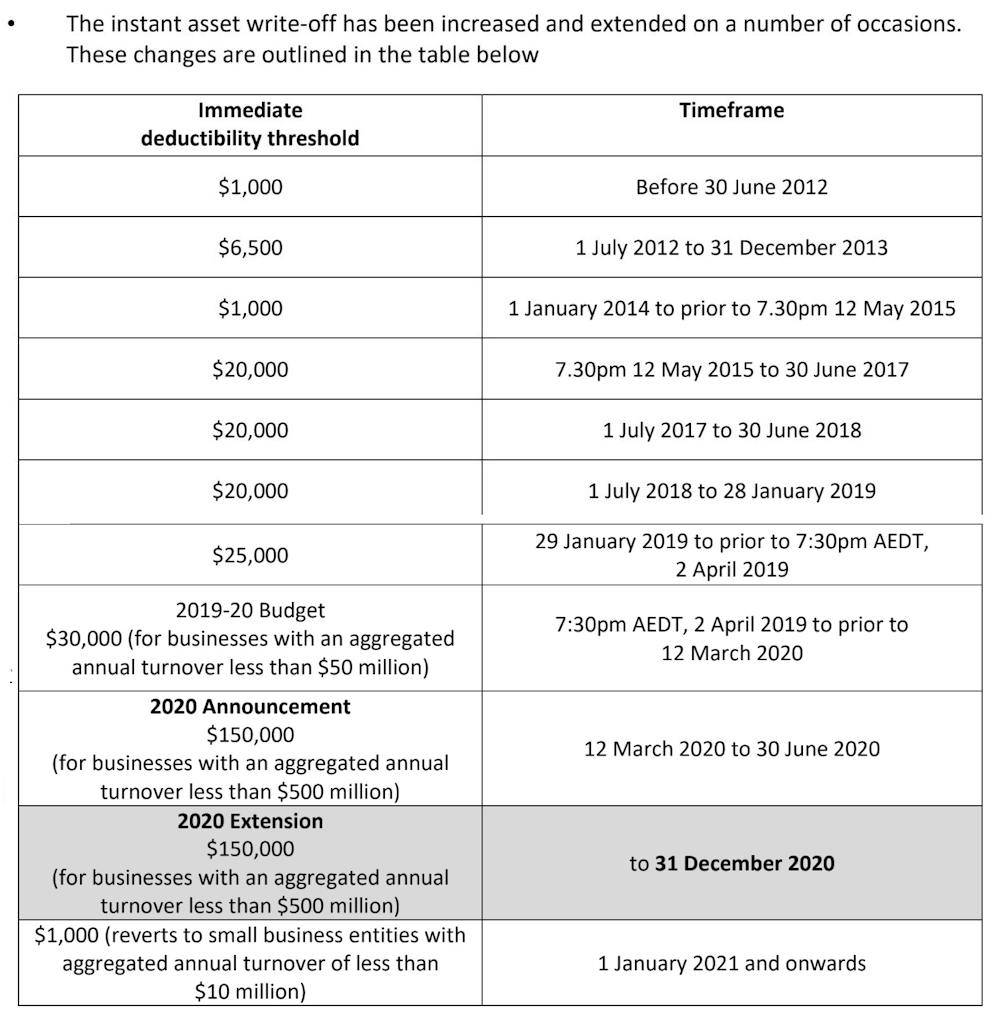
As part of the government’s pandemic emergency measures, in March it announced that until June 30 the write-off threshold would be $150,000 and the size of businesses eligible would be those with turnovers of under $500 million.
The government is battling a major investment slump. Bureau of Statistics capital expenditure figures show non-mining investment fell 23% in the March quarter and 9% over the year to March.
Spending on plant and equipment fell 21%, spending on buildings and equipment plunged 25%.
An extra six months
Apart from giving businesses generally more time to claim the write-off, the government says the extension will help those which have been hit by supply chain delays caused by the pandemic.
The write-off helps businesses’ cash flow by bringing forward tax deductions. The $150,000 applies to individual assets – new or secondhand - therefore a single enterprise can write off a number of assets under the concession.
With rain breaking the drought in many areas, farm businesses are getting back into production, so the government will hope the extension will encourage spending on agricultural equipment.
About 3.5 million businesses are eligible under the scheme.
The instant asset write-off has been extended a number of times over the years, and its (much more modest) thresholds altered.
On the government’s revised timetable, from January 1 the write-off is due to be scaled down dramatically, reducing to a threshold of $1000 and with eligibility being confined to small businesses – those with an annual turnover of below $10 million.
But there will be pressure to continue with more generous arrangements, to head off the danger of a fresh collapse in investment.
In a statement, treasurer Josh Frydenberg and small business minister Michaelia Cash said the government’s actions “are designed to support business sticking with investment they had planned, and encourage them to bring investment forward to support economic growth over the near term”.
Commonwealth Government







