


 Trump Administration Plans New Drug Pricing Deals With Biotech Firms
  Adidas, Puma Shares Fall as Dick’s Sporting Goods Cuts Outlook
  Meta, U.S. States Discuss Settlement in Teen Addiction Trial
  What’s the difference between baking powder and baking soda? It’s subtle, but significant
  Tokio Marine Eyes Multibillion-Dollar Suncorp Takeover
  Why a ‘rip-off’ degree might be worth the money after all – research study
  Heritage, desire and diplomacy: why China still values scotch whisky
  Office design isn’t keeping up with post-COVID work styles - here’s what workers really want
  Why financial hardship is more likely if you’re disabled or sick
  AI is driving down the price of knowledge – universities have to rethink what they offer
  SK Biopharmaceuticals Secures Global Rights to Biohaven Epilepsy Drug Opakalim
  Yindjibarndi Appeals Fortescue Mining Compensation Ruling
  BNP Paribas, KB Kookmin Eye $2 Billion Techcombank Stake
  Trump Buys SpaceX Shares After Record IPO
  Salesforce Shares Surge as AI Demand Powers Q2 Earnings Beat
  Every generation thinks they had it the toughest, but for Gen Z, they’re probably right


 Add as a preferred source on Google
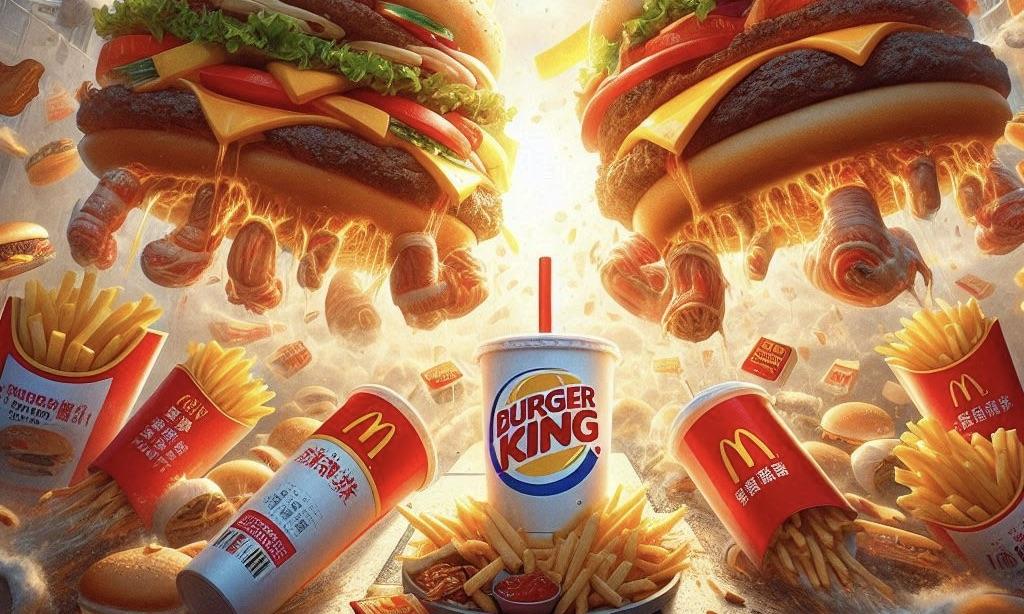
U.S. fast food giant Burger King will kick off its "9.9-yuan ($1.37) era" on Monday, introducing its cheapest-ever burger in China. This aggressive promotional activity aims to seize market share amid rising competition from foreign and domestic brands.
Starting Monday, four of Burger King's signature burgers will be priced at 9.9 yuan each for four consecutive weeks. For instance, the price of a fruitwood grilled chicken burger will drop from 24 yuan to 9.9 yuan. Similar price cuts will be applied to other burgers, marking an unprecedented move designed to attract consumers across dine-in, delivery, and e-commerce platforms without membership restrictions.
This promotion follows Burger King's strategy of frequent low-price promotions in the second half of this year. This mirrors McDonald's recent campaign, which offered burgers starting at 10 yuan for 14 consecutive days, beginning in early July.
Tang Junzhang, Burger King China's chief marketing officer, noted that burgers cost 2-2.5 times that of coffee, meaning that selling them at 9.9 yuan won't bring immediate profits. However, the company may struggle to survive without price promotions in the fiercely competitive fast-food market. Consumers in the current Chinese market are highly price-sensitive, making discount offerings crucial for influencing purchasing decisions.
As foreign fast-food chains roll out aggressive promotional activities, domestic brands like Wallace (Hua Lai Shi in Chinese) rapidly expand with low average transaction values, further intensifying competition in China's fast-food sector. With multiple market challenges, Burger King, positioned in the medium- to high-end segment, has been compelled to join the price competition.
Burger King’s expansion plans in China continue unabated. At the end of last year, the company announced plans to open more than 200 new stores in 2024. While currently concentrated in first- and second-tier cities, Burger King will expand into more third- and fourth-tier cities.
The overall scale of the Western fast-food market in China has been growing steadily. According to the iiMedia Research Institute, the market reached 368.78 billion yuan in 2023, a 36.3 percent year-on-year increase, surpassing the average growth rate of the entire catering industry. The market is expected to reach 427.78 billion yuan this year, indicating significant growth potential amid the faster-paced lifestyles of urban residents.
Multiple factors drive the price competition among Western fast-food brands. This year's intense competition calls for competitive pricing strategies to gain market share. Zhao Jingqiao, director of the Service Economy and Catering Industry Research Center under the Chinese Academy of Social Sciences, highlighted that domestic private enterprises are also rapidly expanding into the Western fast-food sector, adding to the competitive pressure.
Despite the challenges, foreign food and beverage enterprises remain optimistic about the domestic consumption market. With China's large population and significant consumption potential in third- and fourth-tier cities, there are numerous opportunities in these lower-tier markets. The ongoing price wars reflect a broader strategy to tap into this vast, underserved market segment to secure long-term growth and dominance.







