


 Wells Fargo Expands Stablecoin Plans With 20 Major Banks
  Arm Shares Fall Over 3% After Qualcomm Wins License Dispute
  ASML Raises 2026 Sales Forecast as AI Chip Demand Surges
  TSMC Profit Set to Surge 65% as AI Chip Demand Drives Record Earnings
  Nvidia CEO Jensen Huang Open to Cutting Chip Supply Over Unsafe AI
  Moonshot AI Executives Seek Settlement Ahead of Hong Kong IPO
  Samsung, SK Hynix Shares Fall as China's CXMT Advances DRAM Technology
  Amazon in Talks to Acquire AI Startup Decart for $7 Billion
  Trezor Cuts Reseller Network After Ledger Security Breach
  Citi Upgrades Galaxy Digital Stock, Raises Price Target to $28
  Alibaba Unveils Qwen AI Smart Glasses, Shares Rise 2%
  New York Times, AFP Join Coalition to Protect Content From AI
  Arm Breaches Qualcomm License Deal, Jury Awards $2
  Arthur Hayes Announces FLOP Testnet Launch Within Weeks
  ASX CEO Pushes for Faster T+1 Trade Settlement in Australia
  OpenAI Uses AI to Uncover Hidden Recording Device, FBI Makes Arrest


 Add as a preferred source on Google
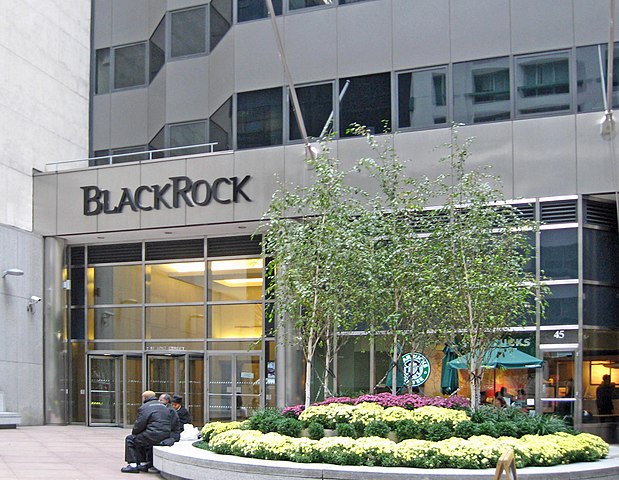
BlackRock CEO Larry Fink has warned that a nationwide halt to data center construction could push the United States into a recession, highlighting the growing importance of artificial intelligence (AI) investment to the US economy.
Speaking to CNBC on Wednesday, October 14, Fink argued that massive spending on AI infrastructure has become a major driver of economic growth, supporting employment, construction activity, and technology development.
“If we have a moratorium of some sort in this country, we will be in a recession,” Fink said.
His warning came shortly after BlackRock, the world's largest asset manager, reported record assets under management of $15.5 trillion.
Fink emphasized that capital expenditures on data centers, advanced semiconductors, and electricity infrastructure are increasingly essential to US economic expansion. Wall Street analysts estimate that AI-related spending could exceed $1 trillion in 2027 and surpass $5 trillion by 2030.
The economic significance of technology investment has already become evident. Harvard economist Jason Furman estimated that technology-related investment accounted for approximately 92% of US economic growth during the first half of 2025.
Fink also defended data center expansion as a major source of employment, pointing to increased demand for construction workers, computing equipment, and power infrastructure.
However, opposition to large-scale AI facilities continues to grow across the country. Communities have raised concerns about rising electricity costs, substantial water consumption, environmental consequences, and limited transparency surrounding development projects.
In July, New York became the first state to introduce a statewide pause on new data center permits, lasting up to one year while regulators develop additional requirements.
BlackRock itself has significant exposure to the AI infrastructure boom. Its third-quarter financial filing revealed that the firm's AI Infrastructure Partnership completed its first investment deployment during the quarter.
Meanwhile, concerns about excessive AI valuations are intensifying. Broadcom CEO Hock Tan recently compared speculative AI investing to casino gambling, while billionaire investor Ray Dalio warned that an AI market bubble could be approaching a breaking point.
Fink's comments also come ahead of the November 3 US midterm elections, when data center development and its economic consequences could influence voters.
The debate underscores a growing challenge for policymakers: balancing AI-driven economic growth against rising public concerns over infrastructure costs and environmental sustainability.







