


 Apple Stock Slides 7% as Weak Sales Forecast Overshadows Quarterly Earnings Beat
  SoftBank Q1 Profit Beats Forecast as Intel Rally and OpenAI Investments Boost Returns
  DeepSeek to Raise AI API Prices as Demand for New Models Surges
  Meta Ordered to Pay $567M Over Child Safety Violations in New Mexico
  Cloudflare Stock Jumps 15% as Earnings Beat Estimates, 2026 Outlook Raised
  Western Digital Q4 Earnings Beat Estimates as FY2027 Outlook Tops Expectations
  Qantas Shares Climb as Long-Haul Pilot Deal Eases Strike Concerns
  DoorDash Q2 Revenue Jumps 36% as Orders and DashPass Growth Drive Results
  Infineon Raises 2026 Revenue Outlook as AI Data Center Demand Fuels Record Quarterly Sales
  SpaceX Targets Starship Flight 14 With First V3 Starlink Satellite Launch
  Palantir Stock Soars as AI Demand Drives Strong Q2 Earnings and Higher 2026 Outlook
  Siemens Energy Q3 Profit Beats Forecast as AI-Driven Power Demand Fuels Growth
  T-Mobile Executives Reportedly Oppose $300 Billion Deutsche Telekom Merger
  Moderna Wins FDA Approval for mFLUSIVA mRNA Flu Vaccine for Adults 50+
  Alphabet Stock Slides as Google AI Pioneer Jeff Dean Exits to Launch Discovery Loop
  SanDisk Q4 Earnings Beat Estimates as Q1 Revenue Outlook Meets Expectations
  AI Data Center Boom Faces New Risks as Public Backlash and Policy Scrutiny Grow


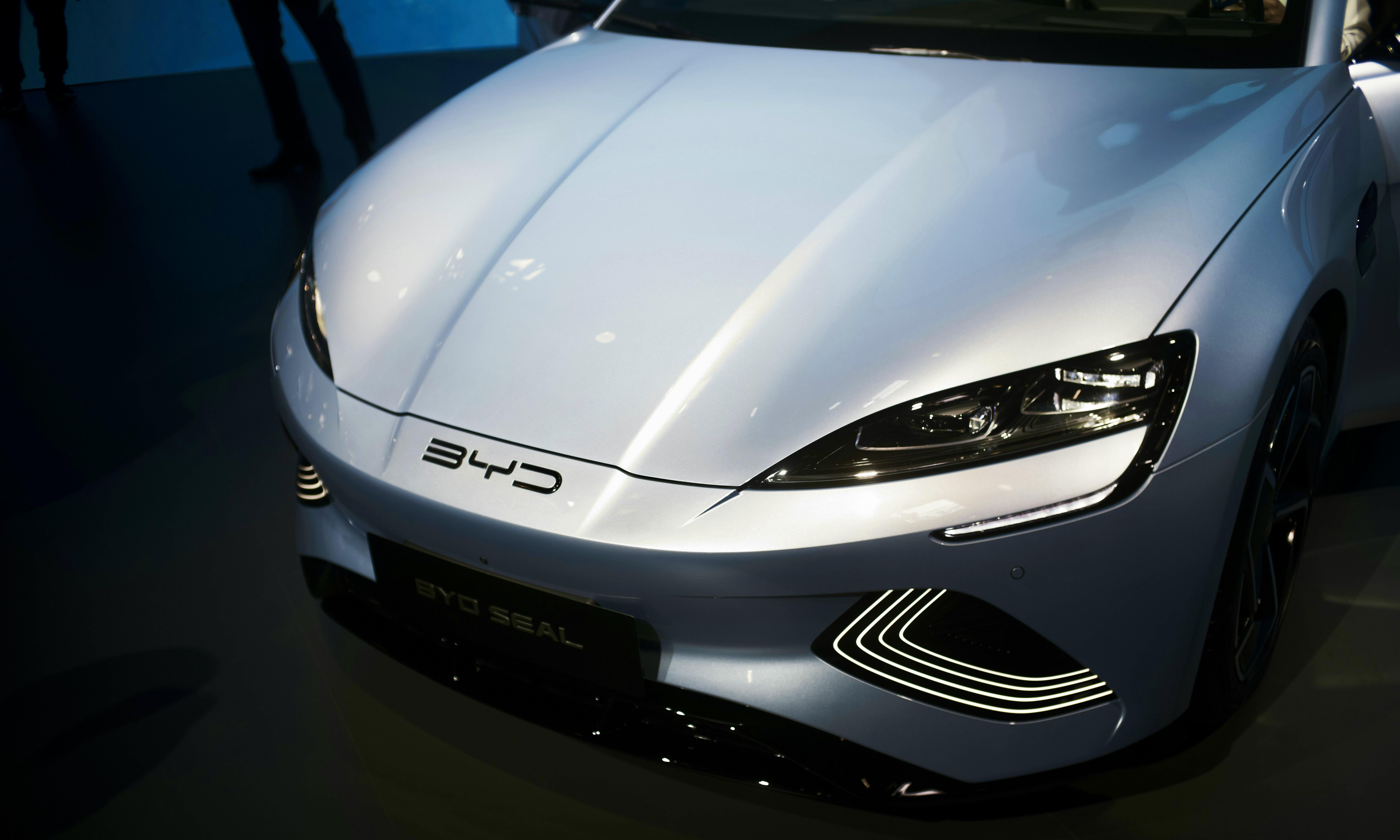
BYD's workforce has surged to 700,000, doubling since 2019, as the company unveils new hybrid technology, heightening its rivalry with Toyota
BYD Workforce Outpaces Toyota
Privately held companies, like BYD and others in the EV industry, drive job development in China. According to statistics, China had approximately 30.57 million employees by the end of 2023, a 13% increase from 2019. Private enterprises contributed 81% of the growth or 2.85 million employment.
BYD's workforce is now roughly twice that of Toyota, which is an indirect effect of this growth. With an additional 470,000 employees since 2019, BYD's workforce has grown to nearly 700,000, and Toyota currently has 375,000.
Electrek.co reports that the key drivers of China's job development are automobiles, electric devices, and semiconductors, all of which are driving the country's burgeoning electric vehicle market. According to the IEA's Global Electric Vehicle (EV) Outlook 2024, China accounted for 60% of global EV and PHEV sales last year.
China emerged as the global leader in automobile exports. 1.2 million of them were NEVs, representing an 80% year-over-year increase. As the surge in EV sales continues, the report projects that by 2030, one in every three vehicles in China will be electric.
One of the most critical elements in exporting nearly 4 million cars last year was the already low costs. 55% of electric vehicles sold in China in 2022 were less expensive than their average internal combustion engine equivalent, based on an IEA report.
Hybrid Technology Advancements by BYD
Competition between the two continues. On Tuesday, BYD launched the latest version of a plug-in hybrid technology that enhances fuel efficiency and cost savings, intensifying competition with Toyota and Volkswagen, which still offer primarily gasoline vehicles.
Assuming a full tank of gas and a fully charged battery, the technology can guarantee a range of 2,100 kilometers.
At an event in Xian, the capital of Shaanxi province, Wang Chuanfu, head of BYD, showed off the fifth generation of hybrid technology. This generation uses a record-low 2.9 liters of fuel per 100 km (62.1 miles) of driving on fully charged batteries.
Rising Rivalry in the EV Market
As per Yahoo News, Japanese automakers are facing more competition from BYD and other Chinese electric vehicle (EV) companies in areas outside of Japan, like Southeast Asia, Australia, and the Middle East, where trade barriers and tariffs are lower.
Photo: Michael Förtsch/Unsplash







