


 Trump Plans Federal AI Force and AI Czar
  US Federal Register Drops Alibaba Qwen AI Search Tool
  Trump Bans CNN, MS NOW and Politico From White House
  SoftBank Launches $11 Billion Bond Sale to Fund OpenAI Investment
  France Urges Faster AI Push Despite Safety Risks
  Burnham Eyes UK Leadership Role in AI Ahead of Trump Meeting
  NASA, Boeing Discuss Expanding Starliner Missions
  Paramount-Warner Bros $110 Billion Deal Draws Antitrust Backlash
  Westinghouse Targets $50 Billion Valuation in U.S. IPO
  Rosenblatt Starts Nokia at Buy on AI Networking Growth
  Meta Partners With Shopify to Bring Shop Pay Checkout to Muse AI
  Nvidia CEO Jensen Huang Expected at Trump-Xi State Dinner
  Hyundai CEO Warns Chinese Automakers Could Disrupt US Market
  Meta CEO Zuckerberg Backs Independent AI Safety Reviews Over Development Slowdown
  FAA Allows Boeing to Sell 35 More 777F Freighters Beyond 2028
  OpenAI Urges US-Led Global Standards for Frontier AI
  Guterres Urges Stronger Global AI Safeguards Ahead of UN Assembly


 Add as a preferred source on Google
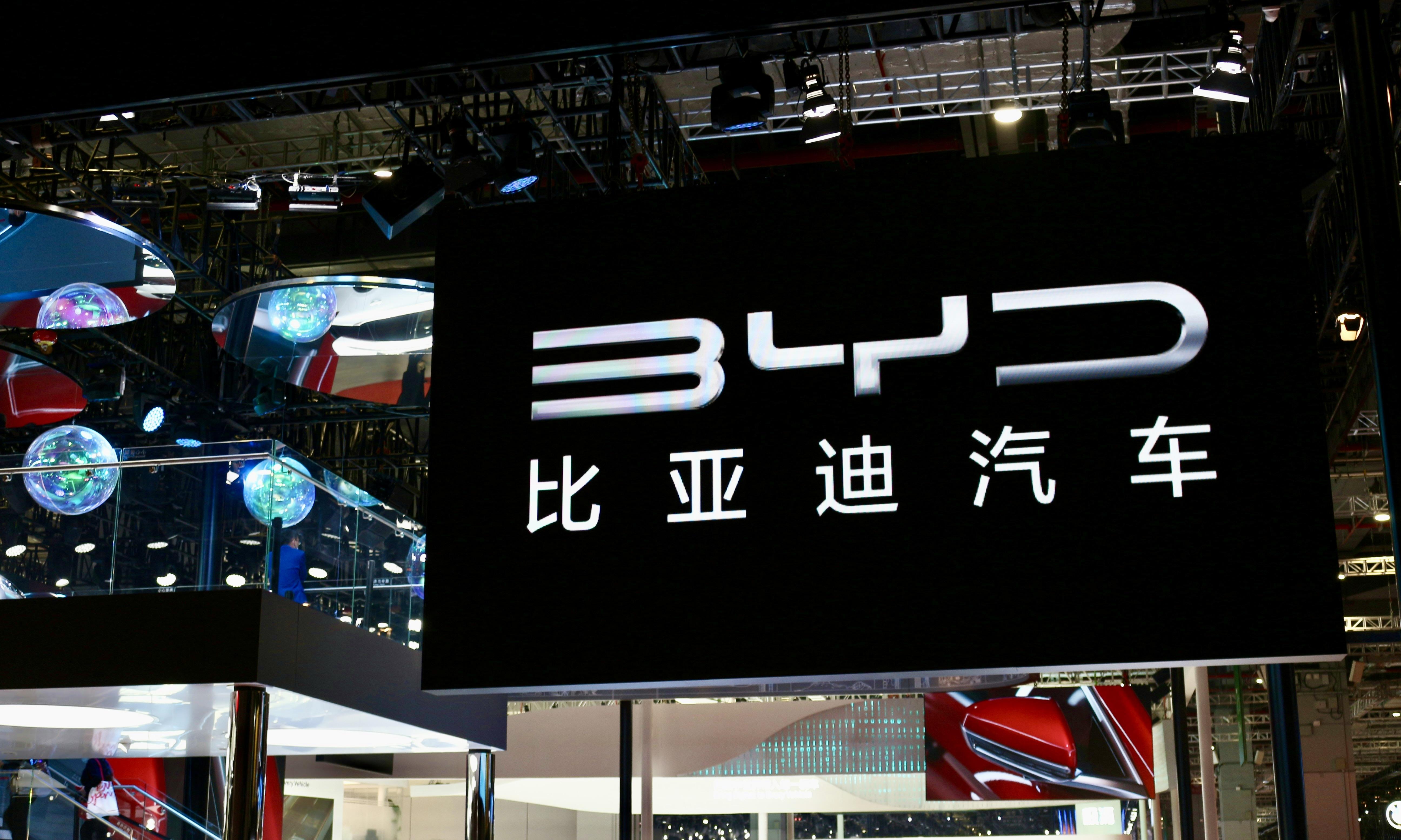
BYD Auto Co. plans to enter the South Korean EV market with its $25,000 Seal EV, potentially disrupting Hyundai and Kia's lead.
BYD Targets South Korean EV Market
Per Yonhap News Agency, industry watchers forecasted on Tuesday that BYD Auto Co. of China would join the South Korean consumer electric vehicle (EV) market this year, increasing competition in the low-cost segment. This category has recently witnessed a slowdown in growth due to the so-called EV adoption chasm, and the industry is bracing for more disruption in this space.
Initiating its domestic release procedure, the Chinese EV producer BYD submitted a noise and emissions certification application for its midsized EV car Seal to the National Institute of Environmental Research under the South Korean Environment Ministry on June 5.
The procedure typically takes two or three months to complete, during which variables like battery life on a single charge are examined. Separate from the review for electric vehicle subsidies, the Korea Environment Corp. conducts performance evaluations.
Affordable Seal EV to Rival Tesla and Local Brands
Electrek shares that BYD intends to introduce the Seal EV in Korea for less than $25,000, competing with Tesla's Model 3. After its 2022 introduction in China, the all-electric vehicle will enter additional regions such as Europe, Australia, and Brazil.
At 4,800 mm in length, 1,875 mm in width, and 1,460 mm in height, BYD's Seal is a sporty electric sedan. Its dimensions are 4,694 mm in length, 1,849 mm in width, and 1,442 mm in height, making it comparable to the Tesla Model 3 in size and performance.
In March 2024, China's Seal EV Honor Edition electric vehicle cost $25,000 (179,800) and has a CLTC range of 342 mi (550 km). With a WLTP range of up to 354 miles (570 km), the Seal EV may be purchased in Europe for approximately $48,500 (45,000 euros).
Market Dynamics: Hyundai and Kia vs. BYD
Six models, including the Seal, Dolphin, and Atto, have already been trademarked in the domestic market by BYD.
Hyundai Motor and Kia are the current market leaders in South Korea's electric vehicle industry. Still, BYD might shake things up if it successfully introduces its passenger EV cars at competitive prices.
When Tesla's Model Y electric vehicles were released in China, South Korean automakers' domestic market share fell by 3.5 percentage points to 76.6% last year.
Photo: P. L./Unsplash







