


 Asian Stocks Slide as Chip Selloff Deepens Ahead of TSMC Earnings
  US Inflation Expected to Ease in June, but Fed Rate Hike Risks Persist Amid Middle East Tensions
  China Home Prices Fall Again in June Despite Slower Pace of Decline
  Japanese Yen Holds Steady as Intervention Hopes Grow Ahead of U.S. CPI Data
  Best Gold Stocks to Buy Now: AABB, GOLD, GDX
  Asian Currencies Hold Steady as Middle East Tensions Offset Weaker US Dollar
  Dollar Slides as Softer US Inflation Dims Fed Rate Hike Expectations
  Gold Prices Fall Amid Rate Jitters; Copper Steady as China Stimulus Eyed
  China Q2 2026 GDP Misses Forecast as Weak Domestic Demand Offsets Export Strength
  Asian Stocks Slide as Oil Surge, U.S.-Iran Tensions and Fed Rate Bets Weigh on Markets


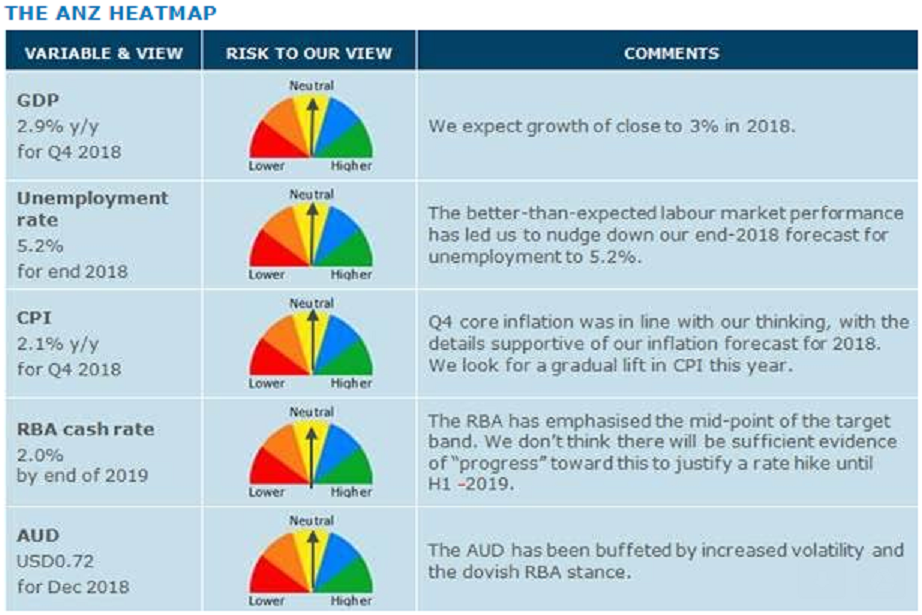
Australia’s employment growth is expected to continue, while wage growth is seen to await its turn, according to the latest report from ANZ Research. The leading indicators point to continued strength in employment and a decline in the unemployment rate to around 5 percent by the end of the year.
A sharp spike in the reported difficulty of finding labor points to the second half of this year as the time when wage growth might start to materially pick up. At the same time, however, low inflation expectations on the part of businesses may delay this.
Assistant Governor (Economic) of the RBA, Luci Ellis, highlighted this point in a speech on February 13 when she said that, "even when facing strong demand and rising cost pressures, firms seem reluctant to raise their prices…They appear to believe that competition is so intense that they would lose too much business if they did so. So they are especially reluctant to grant wage rises because this would increase one of their most important costs".
Higher productivity is one ‘solution’ to this reluctance. It allows faster wage growth without pressure on costs. Capital deepening through more non-mining business investment should boost productivity and hence wages, but this will take time, the report added.
Lastly, FxWirePro has launched Absolute Return Managed Program. For more details, visit http://www.fxwirepro.com/invest







