


 BHP's Incoming CEO Visits China Amid Pricing Dispute with CMRG
  Ford Issues Major Recall on Over 422,000 Vehicles Due to Windshield Wiper Defect
  Foreign Investors Pour $18.65 Billion into Japanese Stocks Amid Market Stabilization
  Bank of America Identifies Top Asia-Pacific Semiconductor Stocks Poised for AI-Driven Growth
  Pilots Fear Retaliation for Refusing Middle East Flights Amid Ongoing Conflict
  Bendigo and Adelaide Bank Posts Strong Q3 Earnings, Announces AI-Driven Job Cuts
  China Vanke Seeks Bond Extension Amid Mounting Debt Crisis
  Abbott Laboratories Ordered to Pay $53 Million in Premature Infant Formula Lawsuit
  Anthropic Fights Pentagon Blacklisting in Dual Federal Court Battles
  FedEx Pilots and Union Reach Tentative Agreement on 40% Pay Increase
  NIO ES9 SUV Launch Sends HK Shares Down 7% Despite Bold Pricing Strategy
  Disney Plans to Cut 1,000 Jobs Amid Ongoing Restructuring Efforts
  Kia Cuts EV Sales Target for 2030 Amid Slowing Demand and U.S. Policy Shifts
  Tokyo Electric Power Attracts Major Investors Amid Billion-Dollar Restructuring Push
  San Francisco Suspect Arrested After Molotov Cocktail Attack on OpenAI CEO Sam Altman's Home
  OpenAI Addresses Security Vulnerability in macOS App Certification Process


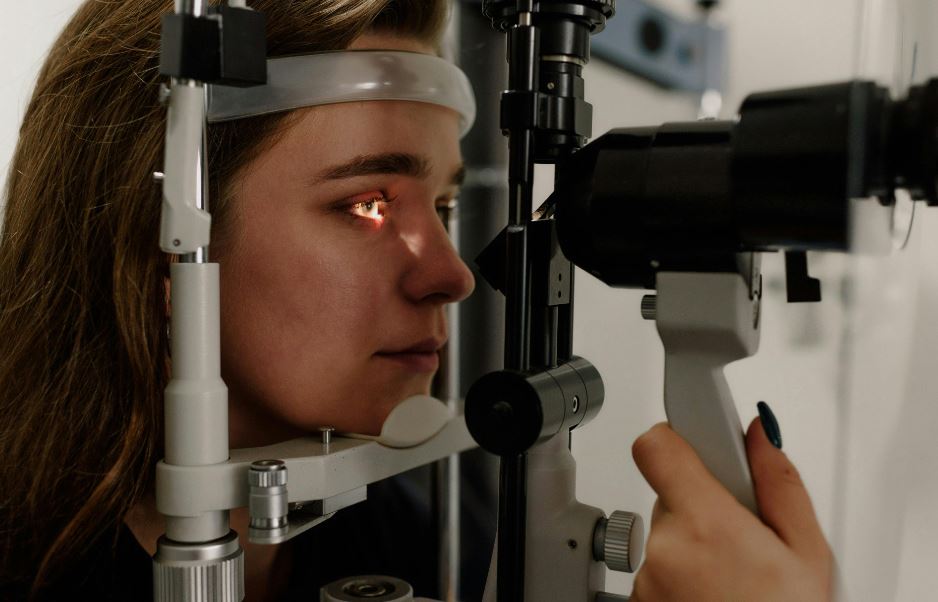
Thanks to constant innovations, diagnostics and decision-making have become faster and easier than ever for eye care practitioners. Most recently, tech startup Eyebot developed a self-service kiosk that can conduct a vision test in just 90 seconds. The kiosk, installed in shopping centers, uses advanced imaging to assess a patient’s vision and can detect a range of eye conditions, including refractive errors and cataracts. Eyebot founder Matthias Hofmann stated that the kiosk’s goal is to eliminate barriers to vision care by providing quick, accessible, and affordable eye exams.
According to the American Optometric Association, millions of Americans delay or avoid necessary eye exams due to factors such as cost, time constraints, and lack of access. Eyebot’s innovative kiosk aims to address these issues by providing a convenient and affordable alternative to traditional eye exams.
How traditional eye exams work
The American Optometric Association recommends getting routine comprehensive eye exams by a doctor of optometry as part of preventive eye health care. Early diagnosis and treatment of eye and vision problems can help prevent more severe issues like vision loss. An eye exam will typically start with your doctor asking about any eye or vision problems you may be experiencing and your overall health. Afterwards, the eye exam involves visual acuity measurements, where you're invited to read letters on charts at different distances.
Nowadays, eyewear providers make eye care services much more accessible via their website or app. LensCrafters offers users an easy way to find the nearest local LensCrafters for an eye exam, which may include visual acuity tests, refraction tests to determine your prescription, eye muscle coordination tests, and examinations of your eyes' internal and external structures. Customers can then upload their results on the company's website and choose from a wide range of prescription glasses from major brands like Ray-Ban, Oakley, and Persol. Depending on their preferred vision insurance plans, patients can also check with insurance companies for coverage and potential out-of-pocket expenses.
The case for eye exams delivered by humans
While new technologies like Eyebot for eye care and eye exams certainly sound promising, it may be worth arguing that humans still provide the best eye exam results.
In our introduction to Eyebot’s self-service kiosks, we highlighted that the machine’s eye exam results still require final analysis and review from a licensed optometrist. The optometrist also has the final say on prescriptions and whether or not a patient may need to be referred for further evaluation.
Similarly, traditional eye exams involve an in-depth examination of a patient’s eye health history, which comes from straightforward questions from your eye doctor. While there’s certainly a future where technologies like AI or a chatbot can handle this part of the eye exam, having a human eye doctor ask the questions can potentially shed light on unknown symptoms or complaints a patient may have that a bot may not be programmed to ask about or elaborate on.
The future of eye care
Eyebot’s self-service kiosks are only one of many emerging developments transforming how people can access eye care. In 2023, the World Health Organization launched WHOeyes, a free app for the general public to better keep track of their visual health. The app checks visual acuity to help determine if someone has a vision impairment.
According to Dr. Bente Mikkelsen, WHO Director for Noncommunicable Diseases, the WHOeyes app can help people quickly and easily identify potential vision issues that merit further checking by a qualified professional. Similarly, companies like Kubota Pharmaceutical are taking an innovative approach to addressing common eye issues like myopia. Their specially designed glasses, dubbed Kubota Glass, shine tiny lights into the retina to simulate short-distance blurring. This forces the eyes to look further ahead and thereby prevents the axial deformation of the eyeballs, which leads to myopia. Although long-term testing is still needed to see the extent of the glasses' effects, Kubota Glass has been approved as a medical device in both Taiwan and the United States.
Finally, featured in the Association for Research in Vision and Ophthalmology’s Translational Vision Science and Technology journal is RadiusXR. The company offers a wearable mobile headset and a diagnostic platform to provide a patient-guided exam process. Unlike other repurposed gaming headsets on the market, the RadiusXR headset is a purpose-built, medical-grade precision instrument that can make eye health screening and early detection more accessible.
With these innovative new products growing more readily available, people can access vision care more conveniently and affordably. Still, the value of human care and compassion should not be underestimated; by combining this personal approach with a tech-based service, patients can have an easier time keeping their eyes healthy.
This article does not necessarily reflect the opinions of the editors or management of EconoTimes.







