


 Novartis M&A Strategy Faces Investor Scrutiny After Drug Setbacks
  FDA Weighs Safety Standards for Psychedelic Therapies
  US-Backed Pediatric HIV Treatment Drops After Foreign Aid Changes, Study Finds
  SK Biopharmaceuticals Secures Global Rights to Biohaven Epilepsy Drug Opakalim
  Venezuela Earthquake Health Risks Rise as Disease Monitoring Intensifies
  AstraZeneca Halts Phase III Volrustomig Lung Cancer Trial After Efficacy Setback
  New Mexico Measles Outbreak Cost Reached $5.4 Million, Study Finds
  Novo Nordisk Raises 2025 Outlook Despite Wegovy Pill Miss and CagriSema Setback
  GSK Unveils $2.52 Billion Cost-Cutting Plan to Accelerate Drug Pipeline
  Moderna Wins FDA Approval for mFLUSIVA mRNA Flu Vaccine for Adults 50+
  Novo Nordisk Eyes Turnaround as Oral Wegovy Challenges Eli Lilly in Weight-Loss Drug Race
  Moderna Short Sellers Hit With $4.8 Billion Loss as Stock Soars
  Eli Lilly Eyes AtaiBeckley Acquisition to Expand Psychedelic Mental Health Pipeline


 Add as a preferred source on Google
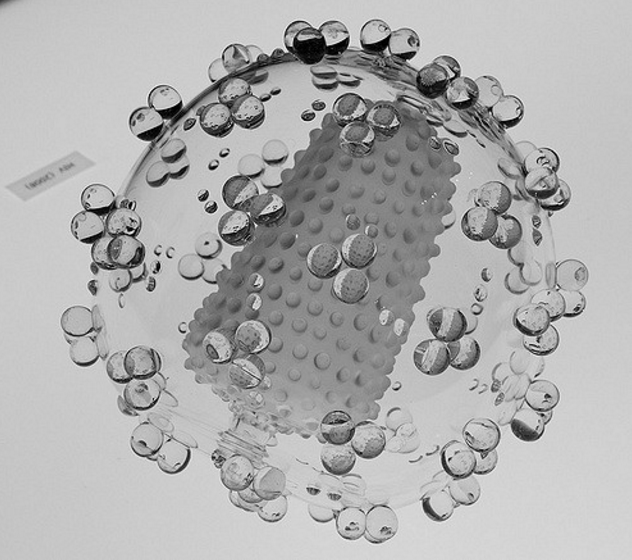
Imagine a seasonal jab of antibodies that could neutralise the HIV virus. Such an injection could prove to be next best alternative to an HIV vaccine, which has proven elusive to date.
American and German researchers have demonstrated that by injecting macaques with neutralising antibodies, they successfully shielded the monkeys from HIV virus infection for as long as six months.
Immune response
After infection, HIV methodically weakens the immune system to the extent that a simple cold can escalate to fatal pneumonia.
But what if you could give your body some warning of HIV infection in advance by training the immune system with anti-HIV antibodies?
This was the thinking of the researchers behind this study. They purified four antibodies produced by patients infected with HIV, and then injected the macaques each with a different type.
The macaques were then exposed to the monkey equivalent of HIV, named appropriately SIV (simian immunodeficiency virus). Results showed that the antibodies were able to provide the macaques with protection for three to six months, even after the monkeys were repeatedly exposed to SIV.
Associate Professor Sarah Palmer, from The Westmead Institute for Medical Research, who was not involved in the study, said although the research was conducted in a monkey model, the findings showed promise in preventing new HIV infections in humans.
“This is potentially significant,” she said. “The study indicates that an injectable antibody product given once every three to four months could effectively protect high-risk individuals from HIV infection.”
University of Melbourne professor and director of the Doherty Institute, Sharon Lewin, agreed. She also said that what set the study apart was the use of a macaque monkey model to evaluate each antibody separately.
“It indeed looks very impressive, namely protection from infection in monkeys after multiple challenges,” she said.
However, the approach of using neutralising antibodies to pre-emptively prime the immune system is not novel.
“The potency of each of these antibodies has been reported before. There has been an explosion of work regarding broadly neutralising antibodies in the last few years, in vitro [in cell models], in mice and in macaques, and also humans,” said Prof Lewin.
In addition, Assoc Prof Palmer emphasised that the study provides only a small fraction of the answers to developing a highly effective HIV treatment.
“Currently we have very limited clinical data as to the effectiveness of passively transfused anti-HIV antibodies to protect from new HIV infections and, more importantly, repeated exposures to HIV,” she said.
“We do not know what dosage of antibody is required to protect against HIV infection or whether these injectable antibodies are available in human tissues such as the mucosal."
According to Assoc Prof Palmer, the next step is for additional proof-of-concept trials in humans.
“They are needed to provide important data as to how effective these antibodies are in preventing HIV-1 infection,” she said.
Long road
Prof Lewin said the study showcased how a strategy using neutralising antibodies could also protect against HIV infection for a limited time following a single dose, albeit in an animal model.
But the need for continual injections every eight weeks showed that antibody injections still had their limitations.
“I doubt these antibodies will ever be used as a single passive administration in practise,” she said.
Prof Lewin said that the next logical step for the study would be to generate the same response and antibody levels without it waning over time, referring to the Hepatitis A vaccine as a success story.
“We need a way to continually have the antibody there without having to have repeated injections,” she said.
The study was published last week in Nature.
 Ivy Shih, Editor, The Conversation
Sharon Lewin, Consultant physician, Department of Infectious Diseases, Alfred Hospital & Director, The Peter Doherty Institute for Infection and Immunity
Sarah Palmer, Associate Professor and Deputy Director, Centre for Virus Research , The Westmead Institute for Medical Research
This article was originally published on The Conversation. Read the original article.







