


 Guterres Urges Stronger Global AI Safeguards Ahead of UN Assembly
  China Reviews Broadcom Switch Use in State Data Centres
  Databricks to Invest $350 Million in Singapore AI Expansion
  OpenAI Urges US-Led Global Standards for Frontier AI
  France Urges Faster AI Push Despite Safety Risks
  US Federal Register Drops Alibaba Qwen AI Search Tool
  Apple Pay Set for India Launch With Axis Bank
  NASA, Boeing Discuss Expanding Starliner Missions
  Physicists zoom into the birth of cosmic rainstorms with new CERN study
  SpaceX Nasdaq 100 Weight to More Than Double in Rebalance
  SK Hynix, Intel Discuss U.S. Memory Chip Production Deal
  Nvidia CEO Jensen Huang Expected at Trump-Xi State Dinner
  Who should own the knowledge that underpins AI technology?
  Meta CEO Zuckerberg Backs Independent AI Safety Reviews Over Development Slowdown
  Scott Bessent Eyed as Trump’s New AI Czar
  DOJ Will Investigate AI-Related Crimes, Attorney General Blanche Says
  AI is supercharging money scams – here’s what you can do to protect yourself


 Add as a preferred source on Google
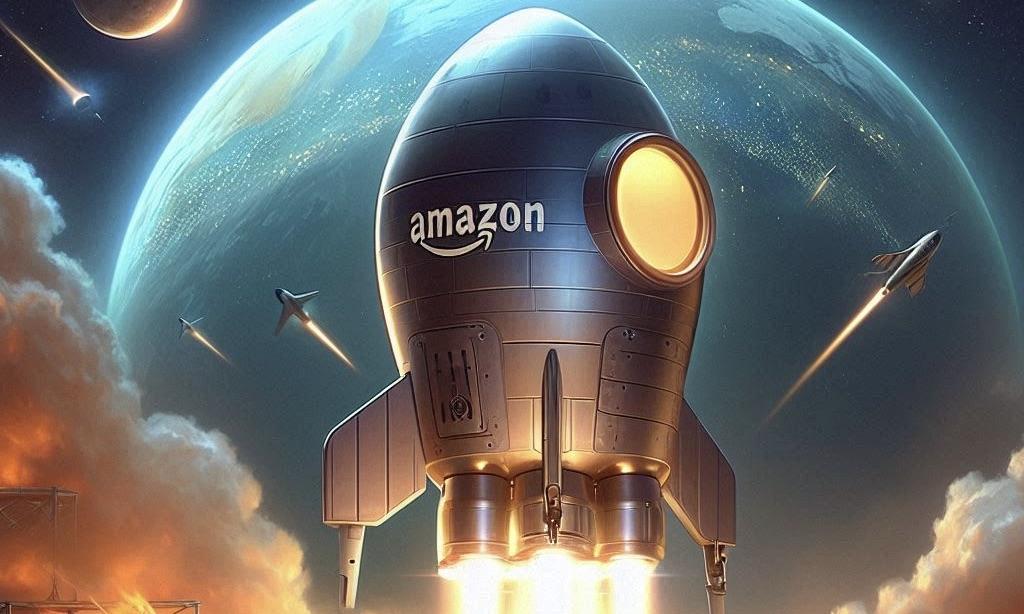
Amazon's Project Kuiper, a rival to Starlink, has postponed its initial satellite launch to the fourth quarter of 2024, according to a recent blog post. The beta trials for the satellite internet system will now begin in early 2025, impacting the rollout schedule.
Amazon's Project Kuiper Launch Delayed to Q4 2024, Beta Trials Pushed to 2025
Project Kuiper, Amazon's competitor to Starlink, appears to be experiencing delays. As per a blog post from Amazon, the initial launch of Project Kuiper is now anticipated to occur in the fourth quarter of 2024. According to Teslarati, Project Kuiper's initial production satellites were expected to be launched in the first half of 2024.
In a blog post, Amazon disclosed its revised Project Kuiper timeline. The e-commerce behemoth anticipates that the first completed production Project Kuiper satellites will be delivered to launch sites this summer, paving the way for an exciting future. The satellites are expected to be launched in the fourth quarter, and satellite production is anticipated to increase in the years leading up to 2025, promising a robust and efficient system.
“We expect to ship our first completed production satellites this summer, and we’re targeting our first full-scale Kuiper mission for Q4 aboard an Atlas V rocket from ULA (United Launch Alliance). We will continue to increase our rates of satellite production and deployment heading into 2025, and we remain on track to begin offering service to customers next year,” Amazon wrote in its blog post.
Amazon's beta trials of its satellite internet system have been postponed until the following year, following the postponement of Project Kuiper's initial launch to Q4. The company previously anticipated that the beta trials would commence with commercial customers later this year. In a statement to PCMag, Amazon stated that the beta trials will occur the following year. "We anticipate that we will commence providing demonstrations to enterprise customers in early 2025."
Launch Partner Issues and FCC Pressure Contribute to Amazon's Project Kuiper Delays
PCMag reported that problems with the satellite internet system's launch partners may have been a significant factor in the delays of Project Kuiper. However, Amazon did not explain this. In 2022, Amazon disclosed that it intended to use next-generation Blue Origin, Arianespace, and ULA rockets to facilitate Project Kuiper's launches. Nevertheless, developing and deploying their next-generation rockets has been challenging for the ULA, Arianespace, and Blue Origin thus far.
Amazon hinted at this in its blog post, stating that it would be employing the Altas V, an older rocket from ULA, for the initial launch of Project Kuiper later this year. Amazon may also be experiencing some pressure from the FCC, as the agency reportedly mandates that half of its proposed satellite constellation for Project Kuiper be launched by July 2026.
Photo: Microsoft Bing







