


 Z.AI Shares Slide 7% After $5 Billion Fundraising
  MediaTek Unveils 2nm Dimensity 9600 Pro AI Chip
  Who should own the knowledge that underpins AI technology?
  Trump Vows to Keep U.S. Ahead of China in AI Race
  Physicists zoom into the birth of cosmic rainstorms with new CERN study
  Cyber attacks? Bioterrorism? To ‘Pace the Frontier’ of AI effectively, we must improve our anticipatory thinking
  DOJ Will Investigate AI-Related Crimes, Attorney General Blanche Says
  Unsustainable – or manageable? We don’t yet know how data centres will impact Australia’s environment
  Europe can’t achieve space sovereignty alone. Here’s why
  Meta CEO Zuckerberg Backs Independent AI Safety Reviews Over Development Slowdown
  Rosenblatt Starts Nokia at Buy on AI Networking Growth
  Nvidia CEO Jensen Huang Expected at Trump-Xi State Dinner
  Big AI wants to slow down AI research. Is it a safety pause or a strategic retreat?
  SoftBank Shares Jump 8% as SB Energy IPO Optimism Builds
  Cathie Wood Backs AI Slowdown as Safety Concerns Grow
  SK Hynix, Intel Discuss U.S. Memory Chip Production Deal
  Synthetic data could ease people’s concerns about privacy breaches. But who gets to create it?


 Add as a preferred source on Google

For all the attention on flashy new artificial intelligence tools like ChatGPT, the challenges of regulating AI, and doomsday scenarios of superintelligent machines, AI is a useful tool in many fields. In fact, it has enormous potential to benefit humanity.
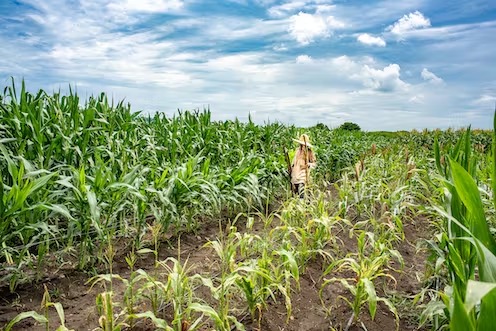
In agriculture, farmers are increasingly using AI-powered tools to tackle challenges that threaten human health, the environment and food security. Researchers forecast the market for these tools to reach US$12 billion by 2032.
As a researcher studying agricultural and rural policy, I see three promising developments in agricultural AI: federated learning, pest and disease detection and forecasting prices.
Pooling data without sharing it
Robotics, sensors and information technology are increasingly used in agriculture. These tools aim to help farmers improve efficiency and reduce chemical use. In addition, data collected by these tools can be used in software that uses machine learning to improve management systems and decision-making. However, these applications typically require data sharing among stakeholders.
A survey of U.S. farmers found that more than half of respondents said they do not trust federal agencies or private companies with their data. This lack of trust is linked to concerns about sensitive information becoming compromised or being used to manipulate markets and regulations. Machine learning could reduce these concerns.
Federated learning is a technique that trains a machine learning algorithm on data from multiple parties without the parties having to reveal their data to each other. With federated learning, a farmer puts data on a local computer that the algorithm can access rather than sharing the data on a central server. This method increases privacy and reduces the risk of compromise.
If farmers can be persuaded to share their data this way, they can contribute to a collaborative system that helps them make better decisions and meet their sustainability goals. For example, farmers could pool data about conditions for their chickpea crops, and a model trained on all of their data could give each of them better forecasts for their chickpea yields than models trained only on their own data.
An AI-driven giant robot armed with lasers is a major threat – to weeds.
Detecting pests and disease
Farmer livelihoods and global food security are increasingly at risk from plant disease and pests. The Food and Agriculture Organization estimates that worldwide annual losses from disease and pests total $290 billion, with 40% of global crop production affected.
Farmers typically spray crops with chemicals to preempt outbreaks. However, the overuse of these chemicals is linked to harmful effects on human health, soil and water quality and biodiversity. Worryingly, many pathogens are becoming resistant to existing treatments, and developing new ones is proving to be difficult.
Reducing the amount of chemicals used is therefore paramount, and AI may be part of a solution.
The Consortium of International Agricultural Research Centers has created a mobile phone app that identifies pests and disease. The app, “Tumaini,” allows users to upload a photo of a suspected pest or disease, which the AI compares with a database of 50,000 images. The app also provides analysis and can recommend treatment programs.
If used with farm management tools, apps like this can improve farmers’ ability to target their spraying and improve accuracy in deciding how much chemical to use. Ultimately, these efficiencies may reduce pesticide use, lessen the risk of resistance and prevent spillovers that cause harm to both humans and the environment.
Crystal ball for prices
Market volatility and fluctuating prices affect how farmers invest and decide what to grow. This uncertainty can also prevent farmers from taking risks on new developments.
AI can help reduce this uncertainty by forecasting prices. For example, services from companies such as Agtools, Agremo and GeoPard provide AI-powered farm decision tools. These tools allow for real-time analysis of price points and market data and present farmers with data on long-term trends that can help optimize production.
This data allows farmers to react to price changes and allows them to plan more strategically. If farmers’ economic resilience improves, it increases the likelihood that they can invest in new opportunities and technologies that benefit both farms and the larger food system.
AI for good
Human innovation has always produced winners and losers. The dangers of AI are apparent, including biased algorithms, data privacy violations and the manipulation of human behavior. However, it is also a technology that has the potential to solve many problems.
These uses for AI in agriculture are a cause for optimism among farmers. If the agriculture industry can promote the utility of these inventions while developing strong and sensible frameworks to minimize harms, AI can help reduce modern agriculture’s impact on human health and the environment while helping improve global food security in the 21st century.







