


 Google's TurboQuant Algorithm Sends Memory Chip Stocks Tumbling
  Elon Musk Ties SpaceX IPO Access to Mandatory Grok AI Subscriptions
  NASA Artemis II: First Crewed Moon Mission Since Apollo Takes Four Astronauts on 10-Day Lunar Journey
  Microsoft Eyes $7B Texas Energy Deal to Power AI Data Centers
  OpenAI Pulls the Plug on Sora, Ending $1 Billion Disney Partnership
  Meta Ties Executive Pay to Aggressive Stock Price Targets in Major Retention Push
  MATCH Act Targets ASML and Chinese Chipmakers in New U.S. Export Crackdown
  Australia's Social Media Ban for Under-16s Sparks Global Movement
  Golden Dome Missile Defense: Anduril and Palantir Join Forces on Trump's $185B Space Shield
  California's AI Executive Order Pushes Responsible Tech Use in State Contracts
  SpaceX Eyes Historic IPO at $1.75 Trillion Valuation
  AWS Bahrain Region Disrupted by Drone Activity Amid Middle East Conflict
  Annie Altman Amends Sexual Abuse Lawsuit Against OpenAI CEO Sam Altman
  NASA's Artemis II Crew Arrives in Florida for Historic Moon Mission
  Rubio Directs U.S. Diplomats to Use X and Military Psyops to Counter Foreign Propaganda


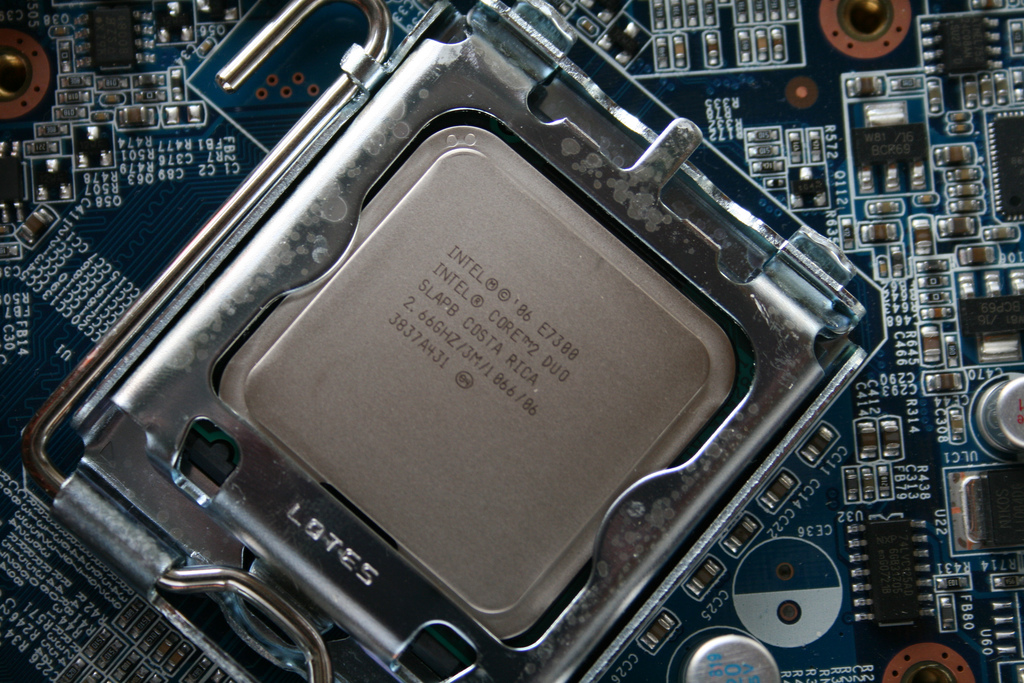
Right now, most standard computers and laptops only have up 16 cores in terms of the processors that they use, and the higher the number of cores the more efficient the performance of the device will be. With the unveiling of the 1,000 core CPU that UC Davis researchers created this reportedly 100 times more efficient than standard CPUs, one has to wonder what on earth that kind of processing power would be used for.
The researchers actually collaborated with IBM in order to create what they are calling the KiloCore, according to PC Mag. Each core can work independently with each other and can shut down or turn on whenever they are needed to process particular functions. Not only does this allow for maximum output when performing tasks with the computer such as performing calculations, it also enables the processor to use energy more efficiently.
The KiloCore is so effective at using energy in fact that it can actually be powered by a single AA battery. The researchers published a press release about the CPU, with UC Davis Professor of Electrical and Computer Engineering, Bevan Baas saying that their 1,000 core processor is the first in the world.
"Based on the best of our knowledge, it is the world's first 1,000-processor chip and it is the highest clock-rate processor ever designed in a university," he said.
Much like the KiloCore, other processors that featured more than 16 cores were developed in laboratories in order to perform specific functions which would not necessarily be needed for commercial purposes. As BGR pointed out, very few people would have any need for a CPU that has over 1,000 cores. Even something like the 72-core Xeon Phi by Intel is already considered overkill by modern standards.
More than that, GPUs not CPUs are necessary for most modern needs, particularly in the video game and virtual reality industries. Even so, a KiloCore is a huge engineering feat that’s worth celebrating.







