


 China Agrees to Buy 20 Million Tons of U.S. Coal
  Japanese Bank Stocks Surge as Bond Yields Fuel Rate Hike Bets
  Gold Holds Near $4,275 as Rising Treasury Yields Fuel Fed Rate Hike Bets
  UK PM Burnham to Unveil Economic Vision at Labour Conference
  Trump to Ease U.S. Fuel-Economy Standards
  Fed Unveils Stablecoin Rules Under GENIUS Act
  FxWirePro: Daily Commodity Tracker - 21st March, 2022
  U.S. Treasury Yields Surge as 30-Year Hits 22-Year High
  Japanese Yen Rebounds as Trump Flags Currency Weakness


 Add as a preferred source on Google
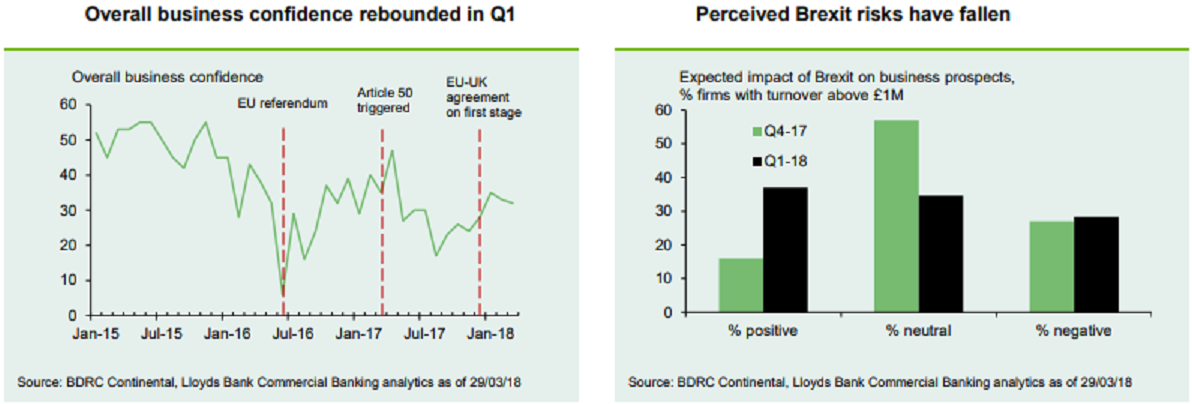
The United Kingdom’s overall business confidence – an average of firms’ own business prospects and their optimism regarding the economy – fell by 1 point in March to 32 percent. Business prospects increased by 1 point to 36 percent, while economic optimism fell by 3 points to 28 percent.
Still, for Q1 as a whole, overall confidence averaged 33 percent, compared with 26 percent in Q4 2017. The improvement over the quarter was led by the increase in economic optimism which, despite the fall in March, jumped to 30 percent in Q1 from 8 percent in the prior quarter. Business prospects, meanwhile, moved down to 37 percent in Q1 from 44 percent in Q4.
The sharp rise in economic optimism during the quarter coincided with evidence from the survey that companies were less concerned (or more positive) about the impact of Brexit for their business activity following the December agreement on the first round of negotiations.
In Q1, 37 percent of companies with a turnover above GBP1 million said that the UK’s decision to leave the EU was having a positive impact on their expectations for activity. That was a 21-point rise from 16 percent in Q4.
The share of firms reporting that Brexit was having a negative effect was almost unchanged at 28 percent in Q1, compared with 27 percent in Q4. This month’s responses were taken before the post-Brexit transitional deal was announced.
Lastly, FxWirePro has launched Absolute Return Managed Program. For more details, visit http://www.fxwirepro.com/invest







