


 Fungi are among the planet’s most important organisms — yet they continue to be overlooked in conservation strategies
  Rice feeds billions of people – but its role in fueling climate change is growing
  LA fires: Long-term exposure to wildfire smoke is poorly understood − and a growing risk
  Ukraine minerals deal: the idea that natural resource extraction can build peace has been around for decades
  Swimming in the sweet spot: how marine animals save energy on long journeys
  Burkina Faso and Mali’s fabulous flora: new plant life record released
  Parasites are ecological dark matter – and they need protecting
  How ongoing deforestation is rooted in colonialism and its management practices
  What’s so special about Ukraine’s minerals? A geologist explains
  Drug pollution in water is making salmon take more risks – new research
  An unexpected anomaly was found in the Pacific Ocean – and it could be a global time marker
  Lake beds are rich environmental records — studying them reveals much about a place’s history
  GesiaPlatform Launches Carbon-Neutral Lifestyle App ‘Net Zero Heroes’


 Add as a preferred source on Google
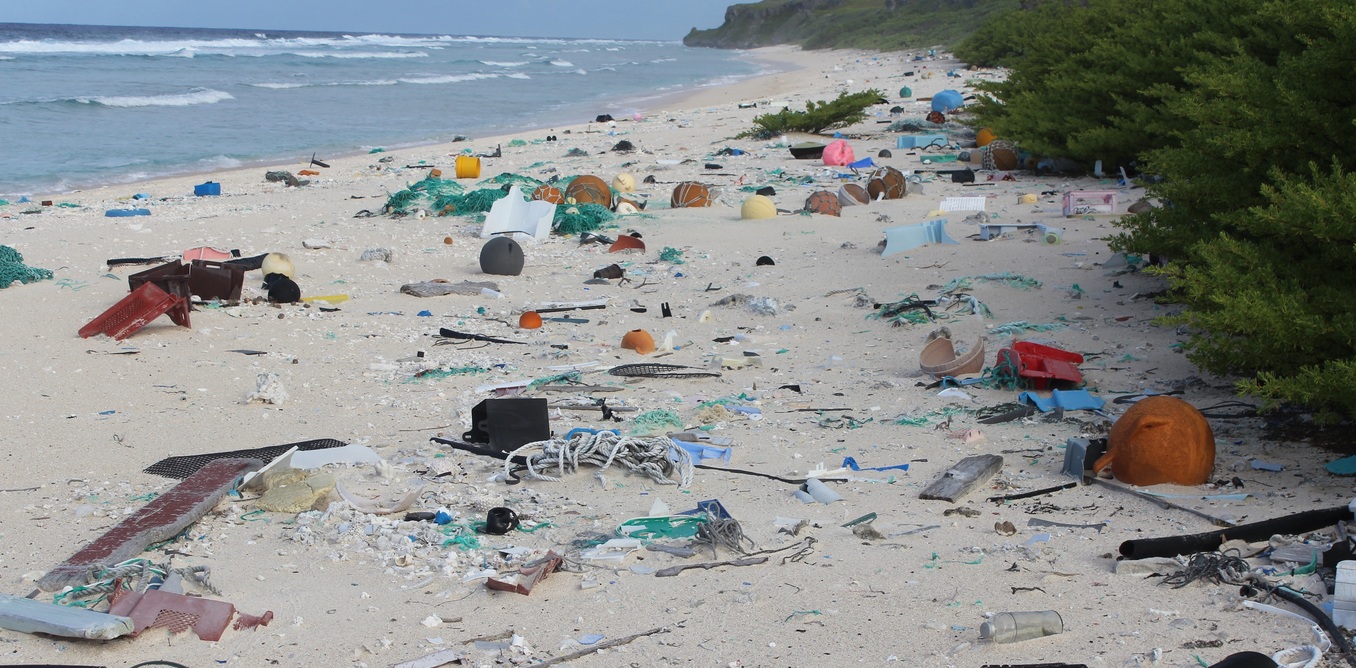
A remote South Pacific island has the highest density of plastic debris reported anywhere on the planet, our new study has found.
Our study, published in the journal Proceedings of the National Academy of Sciences, estimated that more than 17 tonnes of plastic debris has washed up on Henderson Island, with more than 3,570 new pieces of litter arriving every day on one beach alone.

Our study probably actually underestimates the extent of plastic pollution on Henderson Island, as we were only able to sample pieces bigger than two millimetres down to a depth of 10 centimetres. We also could not sample along cliffs. Jennifer Lavers, Author provided
It is estimated that there are nearly 38 million pieces of plastic on the island, which is near the centre of the South Pacific Gyre ocean current.
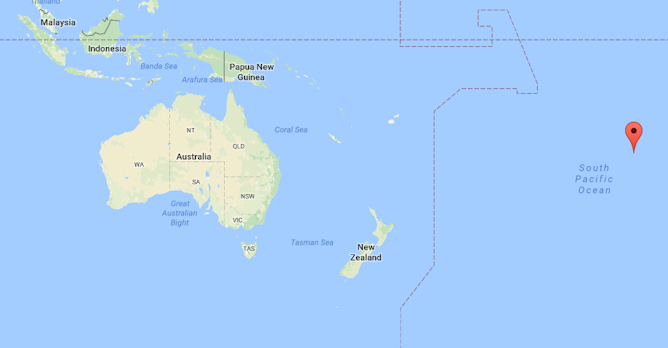
Henderson Island, marked here by the red pin, is in the UK’s Pitcairn Islands territory and is more than 5,000 kilometres from the nearest major population centre. That shows plastic pollution ends up everywhere, even in the most remote parts of the world. Google Maps
A 2014 paper published in the journal PLOS One used data from surface water all over the world. The researchers estimated that there are 5.25 trillion pieces of plastic in the top 10 centimetres of the world’s oceans.
Plastics pose a major threat to seabirds and other animals, and most don’t ever break down – they just break up. Every piece of petrochemical-derived plastic ever made still exists on the planet.
The Henderson research program was funded through overseas agencies, primarily UK based philanthropy. A complete list is in the acknowledgements of the published paper here http://www.pnas.org/content/early/2017/05/09/1619818114.abstract. For the Henderson Island project, Jennifer Lavers is affiliated with the University of Tasmania, the Institute for Marine and Antarctic Studies and the RSPB Centre for Conservation Science, Royal Society for the Protection of Birds in the United Kingdom.







