


 Eli Lilly’s Inluriyo Gains FDA Approval for Advanced Breast Cancer Treatment
  Trump Signs Executive Order to Boost AI Research in Childhood Cancer
  Blue Origin New Glenn Explosion Could Delay Launch Operations Until 2028
  SpaceX Pivots Toward Moon City as Musk Reframes Long-Term Space Vision
  SpaceX Prioritizes Moon Mission Before Mars as Starship Development Accelerates
  China vs. NASA: The New Moon Race and What's at Stake by 2030
  NASA Cuts Boeing Starliner Missions as SpaceX Pulls Ahead
  FDA Adds Fatal Risk Warning to J&J and Legend Biotech’s Carvykti Cancer Therapy
  SpaceX Delays Starship V3 Launch Ahead of Potential Record IPO
  SpaceX’s Starship Completes 11th Test Flight, Paving Way for Moon and Mars Missions
  Trump Administration to Launch Autism Initiatives Targeting Acetaminophen Use and New Treatment Options
  Is space worth the cost? Accounting experts say its value can’t be found in spreadsheets


 Add as a preferred source on Google
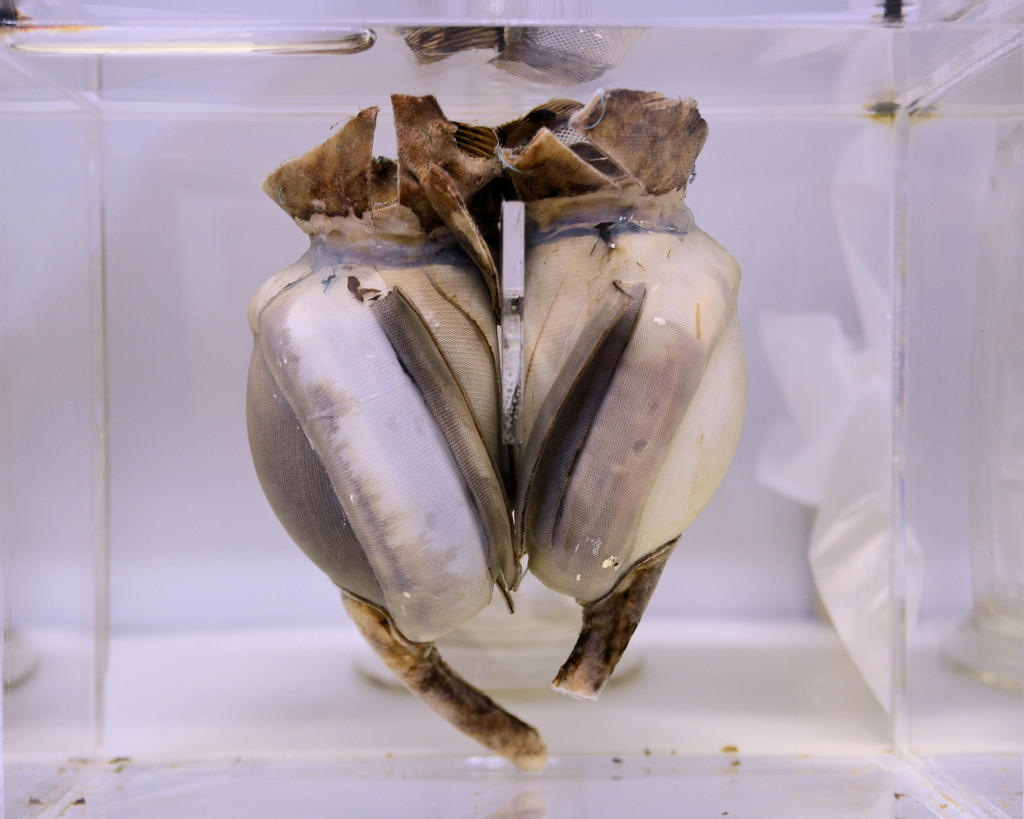
Scientists have been trying to create artificial versions of human organs for decades, be it the liver, skin, eyes, and above all, the heart. These efforts are aimed at solving one of the biggest challenges in the medical industry, which is the limited number of organs for transplants. In any case, scientists recently succeeded in 3D-printing an artificial heart that could work just as well as a real one.
While engineers, doctors, and practically the entirety of the medical community have been invested in artificial organs for a long time, most of the resulting examples have not been ideal. As Futurism notes, many of them were clunky and are difficult to integrate into human bodies.
Thanks to advancements in 3D-printing, however, scientists now have access to more refined methods that allow for the use of softer materials and the creation of a synthetic heart that is only a single part. The team that made this achievement is made up of Swiss scientists and is led by Nicholas Cohrs.
In the press release announcing the new development, Cohrs notes how current methods of keeping humans alive without an actual heart are not ideal due to their physiological effects. Blood-pumping machines, for example, are prone to glitches and there is the marked absence of a pulse to consider.
“Therefore, our goal is to develop an artificial heart that is roughly the same size as the patient’s own one and which imitates the human heart as closely as possible in form and function,” says Cohrs.
The result of their work is a 390g silicone-base heart that is a monoblock that consists of a complex internal structure. Since there are no parts to attach to one another, the heart can function as one complete entity.
Unfortunately, the heart is simply in its concept phase and is nowhere near ready for actual tests. On the other hand, it does provide an encouraging picture to those who are waiting for a heart transplant.







