


 Australia Inflation Accelerates to 4% After RBA Rate Hike
  Gold Prices Slip as High Treasury Yields Weigh on Bullion
  Nasdaq Futures Jump as Micron Earnings Boost AI Trade
  Asian Stocks Fall as Bond Yields and Oil Prices Surge
  South Korea Exports Surge 83.5% on AI Chip Boom
  Gold Plunges 4% as Treasury Yields Surge and Fed Rate Hike Bets Rise
  Dollar Hits Three-Month High as US Treasury Yields Surge
  Australia Trade Surplus Shrinks Sharply as Imports Surge
  US Dollar Hits Two-Month High as Aussie, Pound Slide
  US Alcohol Ban Exposes Canada’s Internal Trade Barriers
  Gold Steady as Softer U.S. Inflation Eases Fed Rate Hike Bets
  US Stocks Slip as Treasury Yields Ease, AI Trade Rebounds


 Add as a preferred source on Google
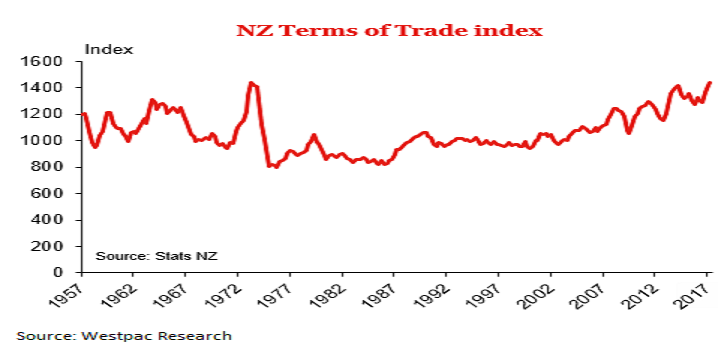
New Zealand’s terms of trade rose during the second quarter of this year, albeit at a slower rate, supported by a rise in export prices, especially that of meat and dairy products. In addition, the terms of trade fell slightly short of the record high that markets were anticipating.
The country’s Q2 terms of trade rose 1.5 percent in the June quarter, a bit less than what markets had expected. In addition, the March quarter increase was marked down from 5.1 percent to 3.9 percent, due to a revision to the price/volume split for forestry exports.
Export prices rose by 2.4 percent, led by a 9 percent rise in meat prices and a 4 percent rise in dairy prices. Most export commodities performed well over the quarter, with the exception of a 3 percent drop in wool prices. Manufactured goods prices were down 2 percent, although that followed a 6 percent jump last quarter.
Import prices rose by 0.9 percent. Petroleum prices fell by 4 percent, but there were price gains across a range of manufactured goods. A slightly lower exchange rate over the quarter will have contributed to higher import prices.
Further, export volumes rose 6.8 percent in the quarter, reversing much of the 8.4 percent cumulative decline over the previous three-quarters. Dairy export volumes rebounded by 19 percent, reflecting both an improvement in milk production over the first half of this year and the delayed timing of some export shipments. Import volumes rose 2.3 percent, largely due to a lumpy quarter for petroleum imports, which are up 18.5 percent.
Meanwhile, FxWirePro launches Absolute Return Managed Program. For more details, visit http://www.fxwirepro.com/invest







