


 Why have so few atrocities ever been recognised as genocide?
  UK Housebuilder Stocks Surge on New First-Time Buyer Loan Scheme
  Want to cut your energy bills? Here’s how five experts are doing it
  Hong Kong Home Prices Stabilize in August After July Decline
  Goldman Sachs Eyes John Waldron as CEO Successor
  UK PM Burnham to Unveil Economic Vision at Labour Conference
  Google promotes ‘teacher approved’ apps for kids. Here’s what parents should know
  Pi Network Price Holds $0.087 as Protocol 28 Mainnet Upgrade Nears
  Britain has almost 1 million young people not in work or education – here’s what evidence shows can change that
  South Korea Exports Set for 16th Monthly Gain on AI Chip Demand
  1 in 3 uni students experience serious financial hardship. Could concession cards for all help?
  Asian Stocks Fall as Oil Surge, Bond Yields and AI Concerns Hit Markets
  What is Zionism? The different meanings of a contested term
  Vitalik Buterin Says Hegota Could Be Ethereum’s Last Conventional Fork
  Franklin Templeton Partners With Bybit for Tokenized Fund Collateral
  Stellar Hits Record 217 TPS as Institutional RWA Activity Surges


 Add as a preferred source on Google
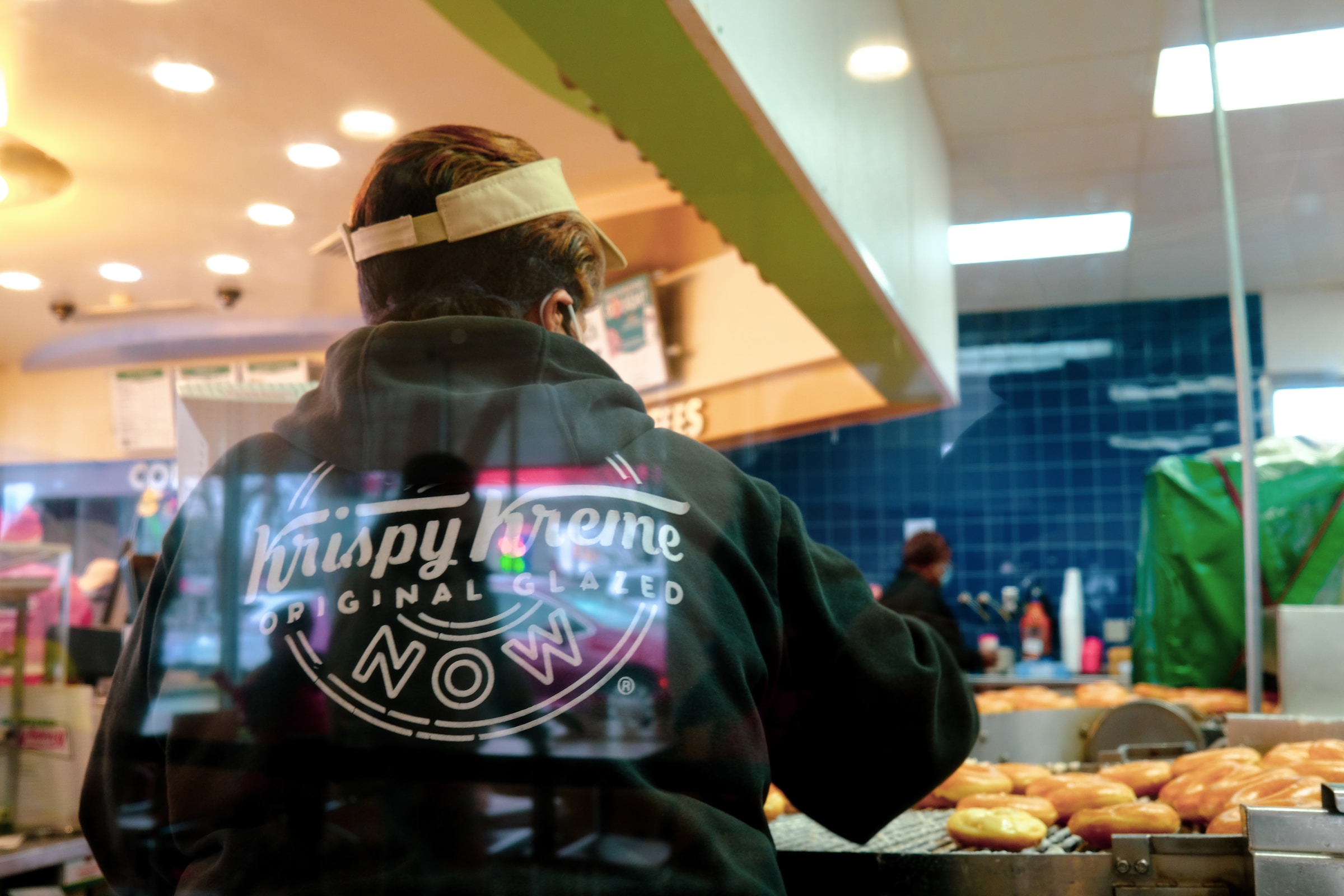
Krispy Kreme's pilot with 160 McDonald's outlets in Kentucky has showcased its potential for serving fast-food chains and the promise of soaring sales. With the success of the drive-thru feature, Krispy Kreme's CFO, Josh Charlesworth, is optimistic about forging a broader partnership.
Even better, these McDonald's locations have drive-thrus, adding to the convenience for customers. Based on this success, Charlesworth expressed confidence in expanding their partnership with McDonald's to more locations.
However, while the test has been successful, it also highlights Krispy Kreme's limitations. The chain doesn't have unlimited hubs where they make and deliver doughnuts to what they call "DFD doors" (points of access with a limited selection of doughnuts). There are whole markets in the U.S. without Krispy Kreme's presence, which may affect the feasibility of a national rollout with McDonald's alone.
As a result, Krispy Kreme is considering expansion beyond just the McDonald's test. They want to sell their doughnuts in more locations nationwide, but this requires increasing their doughnut-making capacity in different regions. Charlesworth recognizes that with their growth rate in various channels, such as QSR, grocery, convenience, and club, they must plan for future expansion.
One possible solution to meet this increased demand is optimizing their existing hubs by adjusting operating hours, doughnut processing, packing layouts, and delivery windows. Krispy Kreme currently has 225 hubs in the U.S. and 45 franchisee-owned locations that could contribute to the production process. With strategic improvements, Charlesworth believes they could potentially double the number of doors their hubs serve.
However, compared to McDonald's 13,500 locations, it's clear that Krispy Kreme still has room to grow. Charlesworth suggests adding 8,000 to 10,000 DFD doors over time with a 10% to 15% increase in hubs. Additionally, the company is evolving its hubs into more efficient production facilities.
In the second quarter, Krispy Kreme experienced a revenue growth of 9%, driven in part by expanding their points of access to include 462 new locations. Their partnerships with renowned restaurants and retailers like McDonald's, Amazon, and Costco have significantly influenced this growth.
Photo: Ravi Palwe/Unsplash







