


 Gold Plunges 4% as Treasury Yields Surge and Fed Rate Hike Bets Rise
  Oil Prices Jump Nearly 3% as Iran Holds Firm on Hormuz Conditions
  Europe’s AI Data Centre Boom Strengthens Case for Nuclear Power
  Oil Prices Rise as Iran Holds Firm on Strait of Hormuz Deal
  China Industrial Profit Growth Slows as Weak Demand Offsets AI Gains
  UK Housebuilder Stocks Surge on New First-Time Buyer Loan Scheme
  U.S. Stock Futures Fall as Iran, Oil and AI Risks Rattle Markets
  Samsung Invests $1 Billion in KKR’s Helix AI Infrastructure
  Rise of the Zombie Bugs takes readers on a jaw-dropping tour of the parasite world
  How to create a thriving forest, not box-checking ‘tree cover’
  Pi Network Price Holds $0.087 as Protocol 28 Mainnet Upgrade Nears
  What’s so special about Ukraine’s minerals? A geologist explains
  Swimming in the sweet spot: how marine animals save energy on long journeys
  Unsustainable – or manageable? We don’t yet know how data centres will impact Australia’s environment
  Morgan Stanley Raises TD Synnex Price Target to $359 on Strong AI Demand
  Nissan Targets US Hybrid Growth With Rogue e-Power Launch
  Goldman Sachs Eyes John Waldron as CEO Successor


 Add as a preferred source on Google
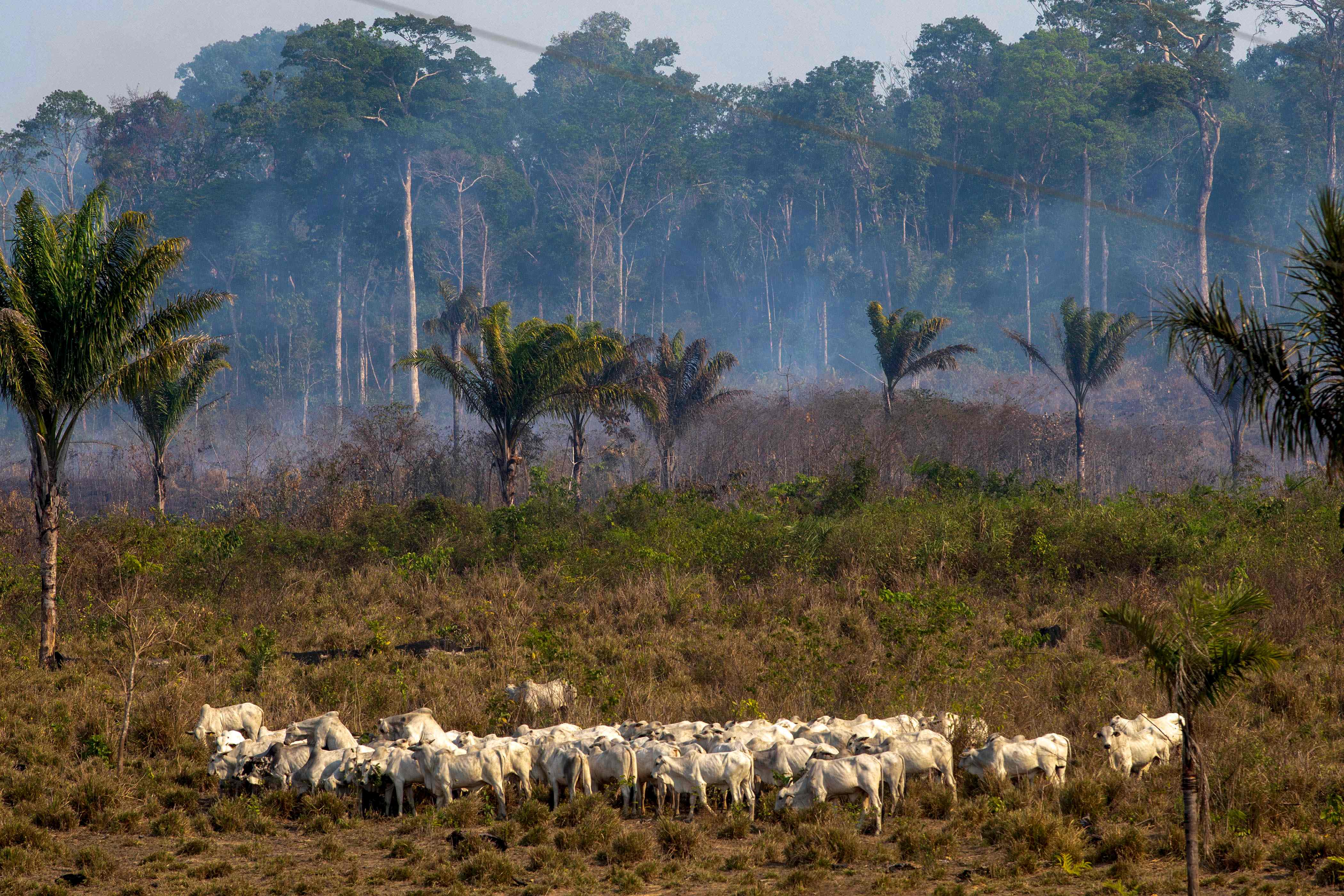
A new report from sustainability organization Slow Factory Foundation and Stand.earth found that cattle farmers who produce leather for fashion brands such Nike, Adidas, H&M, Zara, and Coach are intensifying the deforestation of the Amazon rainforest.
The organization tracked down the leather exports and customs data and identified two main industries buying it: the auto industry for car seats and the fashion industry for shoes, handbags, and accessories.
The group also identified dozens of fashion brands that source hides from Amazon.
Greg Higgs, who led the study as director of research at Stand.earth, noted that cattle farming was a big part of the problem because ranchers clear the forests to create land for cows to graze.
While cutting down trees for cattle farming is illegal, the practice is unregulated.
Higgs says small-scale farmers, many living below the poverty line, shouldn't be blamed.
Rather, the fault belongs to the companies who are buying their hides.
According to the United Nations trade data, about 20 percent of leather is derived from the Brazilian Amazon.
The Amazon rainforest is crucial in fighting global warming because its trees absorb millions of tons of carbon dioxide annually.
Thus, by sourcing leather from the Amazon rainforest, fashion brands contribute to the problem.
The study's authors suggested that the fashion labels could change this by choosing more sustainable leather alternatives.
Adidas, Nike, and Coach all said that they are against Amazon deforestation and are part of the Leather Working Group, a nonprofit that certifies that leather is sustainably sourced.
However, the LWG only rates tanneries on their ability to trace leather back to slaughterhouses, not farms.
Meanwhile, H&M claims it has banned leather from Brazil since 2019 but admitted that it could be hard to trace the leather in its supply chain.







