


 Zcash Plans Quantum-Resistant Security Upgrade for January
  Dogecoin Liquidations Surge as DOGE Bulls Face Heavy Losses
  Chainlink Price Drops 3% Despite New CCIP Vault Launch
  Crypto Liquidation Flush: BTC & ETH at a Glance
  XRP Ledger Agentic Payments Surge Past 13 Million Transactions
  Dogecoin Price Rises as Bitwise Plans DOGE ETF Closure
  BNB Price Faces Pressure as DOJ Investigates Binance
  XRP Price Eyes $1.50 as ETFs Attract $8.17M Inflows
  Jameson Lopp Downplays AI Threat to Bitcoin Cryptography
  Bitcoin Rebounds to $82K as Crypto Market Faces Weekly Losses
  Morgan Stanley Raises Coinbase Stock Price Target to $258 Ahead of Earnings
  Solana Whale Moves $51M in SOL to Coinbase Amid Price Drop
  Ledger Investigates Alleged $86 Million Crypto Wallet Theft
  DWF Labs Sues BitGo for $114 Million Over Alleged Token Sales Breach
  MSTR Stock Rises as Barclays Raises Price Target to $175
  XRP Ledger Activates New Security Feature for Banks and Stablecoins


 Add as a preferred source on Google
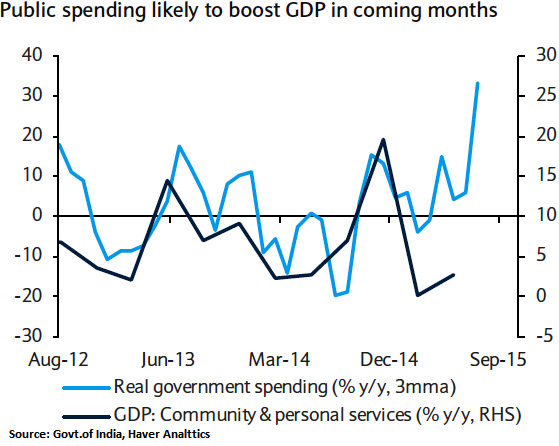
Given the revenue boost from rising indirect tax receipts (+35.3% y/y fiscal YTD), which reflects a surge in excise and services tax collections, expenditure momentum has picked up considerably, leading a revival in the capex cycle.
Government expenditure has risen sharply, led by a jump in both capital and revenue spending - central government expenditure (less interest payments) has risen 35% YoY which in turn contributed to healthy GDP growth. GDP grew 7.0% y/y in Q2 2015.
Implementation of a goods and service tax (GST) remains a critical milestone for the reform agenda
Relying on below driving forces that ensure to maintain current fiscal policies in long run, we target the 10y Indian government bonds yield at 7.25% by year-end (current: 7.75%).
Sharp disinflation has opened room for rate cuts
Demand-supply dynamics are being boosted by ongoing fiscal consolidation
Normalizing household financial savings and higher FII limits
India's fiscal policy is turning more growth-supportive, in sharp contrast to the past four years of deficit compression and austerity.
We project the INR to remain an EM FX outperformer on a total return basis and forecast USDINR to reach 68.3 by end 2015. Lower oil prices have brought about improvements in India's current account and fiscal balances, and we see scope for more rate cuts to support growth. However, the RBI will remain mindful of REER strength.

- News

- Economy

- Central Banks
- Investing
- Research
- Roundups
- Digital Currency
- Insights
- Technical Analysis
- Technology
- Business
- Law
- Health
- Nature
- Fintech
- Science
- Topic
- Opinions
- ©Econometrics LLC . All Rights Reserved.
FxWirePro: Conducive Indian fiscal policies to drive growth - long 15y government bonds
Monday, September 28, 2015 1:10 PM UTC
Editor's Picks



- Market Data
Most Popular




