


 Gold Tops $4,500 as Dollar Slides After Treasury Bond Move
  Asian Stocks Rise as Korea Tech Shares Rebound
  Gold’s Bull Run Intact: Safe-Haven Bids Overpower Treasury Yield Pressure
  Chile Central Bank Holds Interest Rate at 4.5% as Inflation and Global Risks Persist
  China Set to Hold Benchmark Lending Rates Steady for 15th Month
  Japan Government Backs Earlier BOJ Rate Hike as Inflation Pressures Build
  Japan Services Producer Prices Rise 3.2% in June, Supporting BOJ Rate Hike Expectations
  Australia Inflation Cools as Core CPI Misses Forecasts, Easing RBA Rate Hike Pressure
  Trump Eyes 15% Tariff on Canadian Auto Imports in New Trade Deal
  US Dollar Hits Three-Month Low as Treasury Yields Fall
  Moody’s Affirms NVIDIA Aa1 Rating as AI Data Center Guarantees Reach $105 Billion
  Asian Currencies Steady as Dollar Weakens After Treasury Bond Buybacks


 Add as a preferred source on Google
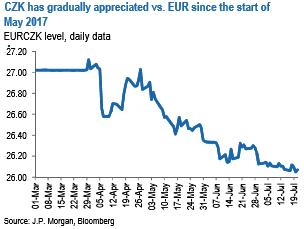
On the back of formidable economic data and the improved outlook for both domestic and foreign demand, we have revised our calls on GDP dynamics, the labor market, CNB policy, and the financial markets. We now expect two CNB hikes in 2017 (on 3 August and subsequently in 4Q’17), and three more hikes in 2018. The koruna is set to appreciate to EURCZK 25.70 in 3Q’17 and to EURCZK 25.00 by end-2018.
CZK is around 5% undervalued based on our BEER and FEER models. While the already long CZK positioning may prove a hurdle for short-term appreciation (the latest JPM Client Survey shows investor longs remain at record highs), we think the currency will find support from a central bank that is gradually turning hawkish.
We continue to hold shorts in EURCZK forwards exchange contracts of 27-Nov-17 expiries. The call is revised our end-2017 EURCZK forecast up to 25, given the lower than expected volatility of the currency post floor removal.
Further robust domestic macroeconomic performance and a forthcoming CNB rate hiking cycle reinforce our bullish koruna stance. The koruna has steadily appreciated against the euro since the start of May (following the exit of the EURCZK floor on 6th April), briefly trading below 26.00 this week (refer above diagram). We expect further appreciation of the currency and hold existing allocations and trades.







