

 Menu
Menu

 Search

- News

- Economy

- Central Banks
- Investing
- Research
- Roundups
- Digital Currency
- Insights
- Technical Analysis
- Technology
- Business
- Law
- Health
- Nature
- Fintech
- Science
- Topic
- Opinions
- ©Econometrics LLC . All Rights Reserved.
Emily Baulch
PhD Candidate in Publishing Studies, The University of Queensland
Emily Baulch is a PhD Candidate in publishing studies at The University of Queensland (UQ). She studies reading practices and the publishing industry. Her work was published in Bookshelves in the Age of the COVID-19 Pandemic.
She is also a sessional academic at The University of Queensland, where she coordinated the third-year course, Publishing, Editing, and Authorship. Emily also completed a research placement at The University of Queensland Press in 2022.

Less 

Emily Booth
Research assistant, University of Technology Sydney
Emily Booth is a casual academic and research assistant at the University of Technology in Sydney, Australia. Her PhD research explored how teenagers respond to adult influence on their reading practices in the contexts of leisure reading, school reading, and industry engagement. In 2019, she was awarded the UTS Social Impact Grant in-full for her project, ‘Investigating the publication of Australian picture books by and about people from diverse communities in 2018’, in partnership with Australian advocacy group Voices From the Intersection. In 2021, she received the Frances Henne Research Grant from the Young Adult Library Services Association (YALSA) for her project exploring connections between teenagers fiction reading and online misinformation practices. She is the inaugural student member of the UTS Human Research Ethics Committee, and is also a member of the University Student Conduct Committee (USCC) and Student Misconduct Appeals Committee (SMAC). She has published widely on diversity in Australia’s young adult fiction publishing industry.
Outside of academia, she's worked in the publishing industry for a decade as a specialist in children's and young adult literature. She created and hosted the 'YABookmeet' event (2015-2020), hosting monthly interviews with 50+ local and international authors and academics and discussion groups with readers of all ages. In 2018, Emily became the first internationally-based contributor to global readers’ advisory service NoveList. She has presented at writers' festivals and conferences, and in 2019 she hosted the sold-out Sydney event for New York Times Best-Selling author Sarah J. Maas on her 'Kingdom of Ash' World Tour at City Recital Hall, at the request of Bloomsbury Australia. In 2021, she hosted the Australia and New Zealand event for Sarah J. Maas' 'A Court of Silver Flames' World Tour. In her role as a founding member of the Executive Board of the international YA Studies Association (YASA) (2020—), she has co-organised two international conferences in 2020 and 2022. The first featured 600+ attendees and presenters from 45 countries, 70+ individual pre-recorded papers, and 28 live events including roundtables, workshops, and social events.
Less
Emily Brindal
Research Scientist, CSIRO
I studied Psychology in undergraduate, but have since worked largely applying my knowledge to nutrition and health.
Less
Emily Coombs
Master's student, Werklund School of Education, University of Calgary
Emily Coombs is a queer autistic researcher under Dr. Meredith Maroney, studying the intersection of autism and LGBTQ+ identity, the experiences of autistic women and lesbian mental health. EC also is affiliated with the University of Alberta and the University of Victoria, where they study autistic adults' experiences with higher education and autonomy.
Research Interests: Intersectionality of Autism & LGBTQ+ identities, Autistic gender expressions, Indigenous-autistic lived experiences, Autistic ventures with higher education, Femme & Queer Theory, Lesbian sense of community
Less
Emily Crawford
Professor of International Law and Director, Sydney Centre for International Law, University of Sydney
Emily Crawford is a Professor at the University of Sydney Law School, where she teaches and researches in international law, international humanitarian law, and international criminal law. She has published widely in the field of international humanitarian law, including three monographs (The Treatment of Combatants and Insurgents under the Law of Armed Conflict (OUP 2010), Identifying the Enemy: Civilian Participation in Hostilities (OUP 2015) and Non-Binding Norms in International Humanitarian Law: Efficacy, Legitimacy and Legality (OUP 2021)) and two textbooks (International Humanitarian Law (with Alison Pert, 3rd edition, CUP 2024) and Public International Law (co-edited with Alison Pert and Ben Saul, CUP 2023). She is Director of the Sydney Centre for International Law at the University of Sydney, and a co-editor of the Journal of International Humanitarian Studies. In recognition of her outstanding contribution to international law research, she was awarded the Max Planck-Cambridge Prize for International Law in 2023.
Less
Emily Cullen
Assistant Professor of Creative Writing and Meskell Poet in Residence, University of Limerick
Dr. Emily Cullen is the UL Meskell Poet in Residence and a lecturer on the MA in Creative Writing programme. Emily devised and oversees the regular ‘Espresso Shot of Thought’ poetry series in collaboration with the MA students. Emily has published three collections: Conditional Perfect (Doire Press, 2019), In Between Angels and Animals (Arlen House, 2013) and No Vague Utopia (Ainnir Publishing, 2003). Conditional Perfect was included in The Irish Times round-up of “the best new poetry of 2019.” Emily is also a cultural producer and harper who has performed throughout Europe, Australia and the United States. She was awarded an IRC fellowship for her doctoral research on the Irish harp and gained a PhD in English in 2008. Emily frequently publishes essays on Irish music and cultural history, as well as on modernist and contemporary poetry. Emily has served as Arts Officer of the University of Galway (1999-2002), Director of the Patrick Kavanagh Centenary (2004) and Director of Cúirt International Festival of Literature (2017-2019). Her eco-poem about the River Shannon, "I Am Sionann," has just been realised as a poem film by Luke Morgan with the support of an Arts Council of Ireland Agility Award.
Less
Emily Doyle
Postdoctoral Fellow, School of Science and the Environment, Grenfell campus, Memorial University of Newfoundland
Emily Doyle is a postdoctoral fellow at Grenfell campus of Memorial University of NL. Under the supervision of Dr. Vodden at the Rural Resilience Lab, Emily’s main focus is on coordinating the PhiLab Atlantic Hub. PhiLab is a SSHRC funded partnership research project focused on investigating the social and environmental impact and engagement of philanthropy. Emily is currently engaged in research about the interaction of food systems and philanthropy working in partnership with the Three Rivers Mi’kmaq Band. Other areas of current research include investigating the Living Lab as an innovative practice, investigating promising models of school food programs and understanding health systems and accountability.
Less

Emily Farran
Professor of Cognitive Development, University of Surrey
Emily Farran is a Professor of Cognitive Development at the University of Surrey and Director of the Cognition Genes and Developmental Variability lab (CoGDeV Lab). She is interested in the development of visual and spatial cognition in both typical and atypical populations. Her most recent research focuses on: the relationship between spatial thinking and Science, Technology, Engineering and Maths (STEM) in primary school age children; and large scale spatial ability (navigation) in atypical populations such as Williams syndrome and Down syndrome. She is also an advocate for open research. Her efforts formed an integral part to the University of Surrey joining the UK Reproducibility Network in December 2019. This was coupled with her appointment as Academic Lead for Research Integrity and Culture in November 2019.
Less
Emily Farris
Associate Professor of Political Science, Texas Christian University
Emily Farris (M.A., Ph.D. Brown University; B.A. Furman University) is an associate professor in Political Science at TCU, who currently completing a book on the power of U.S. sheriffs.
Less

Emily Finer
Senior Lecturer, School of Modern Languages, University of St Andrews
I work on transnational and multilingual interactions between English, Polish, Ukrainian, Yiddish and Russian language cultures. In addition to teaching in the Department of Russian, I was the founding convenor of the degree in Comparative Literature which brings together all the languages and cultures taught in the School of Modern Languages at St Andrews. I currently hold a St Andrews / Emory Collaborative Grant for a project researching multilingual children’s print culture of Ukraine and am joint PI on the Ostroh Academy/University of St Andrews Partnership for Advancing the Public Humanities funded by UUKi.
My second research focus is on intersections between global science fiction, exoplanet science, and space policy. I am PI for a STAIRS grant ‘Forecasting Reproduction in Space’ which asks whether science fiction and scientific papers address similar issues around reproduction and agency and investigates the techniques used in literary and scientific writing to communicate complex ethical issues. This follows my earlier research and monograph on Viktor Shklovskii, a literary theorist who aimed to make literary analysis more scientific. I am Co-Director of an interdisciplinary research centre: St Andrews Centre for Exoplanet Science and content advisor to the exhibition Alien Worlds at the Wardlaw Museum, St Andrews.
I have been an interviewee and researcher on The Cultural Front (BBC Radio 4), The Sunday Feature (BBC Radio 3), the Red Mars Series (BBC Radio 4), and In Our Time with Melvyn Bragg (BBC Radio 4).
Less
Emily Fletcher
Ph.D. Candidate in Archaeology, Purdue University
Emily Fletcher is a digital archaeologist interested in software development, data management, decolonizing archaeology, and technological innovation. She attended Kalamazoo College for her undergraduate studies, where people are often surprised to learn she double majored in computer science and history. She worked as a software developer for a year before coming to Purdue in 2019 to pursue a graduate degree.
In Emily's research, she writes software to bring new life to archaeological legacy data (records from previous research). She specifically focuses on the Gulkana Site, an important but understudied Native Alaskan heritage site where people created a variety of copper tools roughly a thousand years ago. She hopes that her software can make data about this site easier for archaeologists and descendants to interact with.
Less
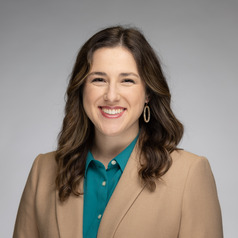
Emily Frazier
Assistant Professor of Human Geography and Sustainability, Missouri State University
Emily Frazier is a human geographer studying immigrant incorporation, refugee resettlement, and faith-based groups in the U.S. She received her PhD in Geography from the University of Tennessee, Knoxville, and is currently an Assistant Professor at Missouri State University. She is currently a Fellow of the Religion, Spirituality, and Democratic Renewal program of The Social Science Research Council, and her research has also been supported by a Pipeline Early Career Scholar Award from the Russell Sage Foundation.
Less
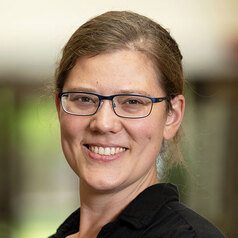
Emily Grubert
Associate Professor of Sustainable Energy Policy, University of Notre Dame
Emily Grubert is a civil engineer and environmental sociologist who studies how we can make better decisions about large infrastructure systems, particularly related to justice-centering decarbonization of the US energy system. Specifically, she studies life cycle socioenvironmental impacts associated with future policy and infrastructure and how community and societal priorities can be better incorporated into multicriteria policy and project decisions. Her major methods include scenario analysis, life cycle assessment, survey and interview research, and text mining.
Less
Emily Harper
PhD Candidate, School of Animal, Rural & Environmental Sciences, Nottingham Trent University
Emily Harper is an ecologist specialising in hedgehog health, behaviour and stress. Her research focuses on parasites and their relationships with their host, the hedgehog. She is interested in the way parasites can impact health, change behaviour and the interactions between parasites and stress.
Harper is a part-time PhD candidate at Nottingham Trent University after completing a MSc in Applied Ecology at the University of Gloucestershire, where she continues to guest lectures on wildlife rehabilitation ethics.
She is the manager at Wild Hogs Hedgehog Rescue, a well established hedgehog charity that has been running since 2016. Wild Hogs Hedgehog Rescue admits over 500 hedgehogs into rehabilitation annually and Harper is dedicated to rescuing hedgehogs and improving the care hedgehogs receive in rehabilitation.
Less
Emily Hauser
Senior Lecturer in Classics, University of Exeter
My research centres on the intersection between gender and poetics in the ancient world (particularly ancient Greek poetry) and its contemporary reception. Broadly speaking, there are three major strands to my work:
Authorship and gender in antiquity: My current research focuses on figurations of authorship in Greek poetry, particularly as they relate to gender. I'm fascinated by the self-portrayal of female authors like Sappho within the constraints of a gendered language, and how that language was both policed and problematised by male and female authors alike. I have published two articles based on this research. These form the basis for my current book, Authoress: Gendering Poets in Ancient Greece (forthcoming with Princeton University Press).
Women in Homeric epic: I am particularly interested in the relationship between women in Homeric epic and literary tropes, attempting to unpack the interconnection between women and poetry in Homer. I have worked on Penelope and the teleology of the Odyssey (an article on this topic was published in Helios in 2020), and (together with Lilah Grace Canevaro) co-organised a workshop in April 2018, entitled ‘New Approaches to Gender in Ancient Literature’. I also have a book under contract with Liverpool University Press on Women in Homer, which will be aimed at undergraduates interested in looking further into Homer's women and their reception.
Classical reception in contemporary women’s writing: Although I am interested in many areas of classical reception, my main interest is in the reception of female figures from classical literature by contemporary women writers. I look at women’s writing from 1970 on, studying authors and poets from Margaret Atwood to Adrienne Rich, Ursula Le Guin, Louise Glück, Rita Dove and Carol Ann Duffy. A recent article in TAPA (2019) looks at the relationship between Classics and creativity, with a particular focus on women's writing.
I am also an author of historical fiction, and have published three historical novels reworking the women of classical myth with Penguin Random House: For the Most Beautiful, For the Winner and For the Immortal. I am particularly passionate about outreach and have given talks at school and university Classics across the UK, and my work has been covered in the Times and Guardian, with appearances on local and national BBC Radio.
You can find out more about my research and writing on my website, www.emilyhauser.com.
Less

Emily Ireland
Lecturer in Law, University of Liverpool
Emily is a lecturer in Law at the University of Liverpool. Emily’s research interests are in eighteenth and nineteenth-century legal history, particularly socio-legal and feminist histories of the criminal law, equity, and family law. She is interested in how subordinated peoples have negotiated the law over time.
Emily is the author of a growing number of publications on eighteenth and nineteenth-century women and the law. As part of her work on the Australian Research Council funded ‘A New History of the Law in Post-Revolutionary England’ project (a collaboration between the Universities of Adelaide and Liverpool), she is currently drafting chapters on gender and the law and legal personhood for the Oxford History of the Laws: Volume IX.
As part of her commitment to expanding the reach and inclusivity of legal history, Emily is co-director of Selden's Sister, a network for women in legal history, and the Northern Legal History Group, a research initiative based in the North West of England.
Less
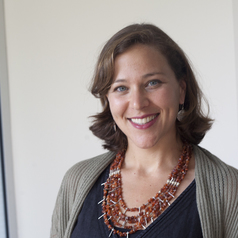
Emily J. Blanchard
Associate Professor, Dartmouth College
Emily Blanchard is an Associate Professor (Economics) at the Tuck School of Business at Dartmouth College. Her research centers on the economics and policy implications of globalization.
Less
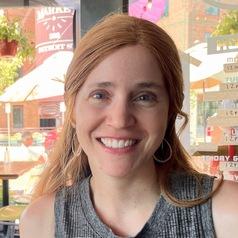
Emily Katz
Associate Professor of Ancient Greek Philosophy, Michigan State University
My primary research interests are ancient Greek mathematics and metaphysics (especially Aristotle’s metaphysics, natural science, and philosophy of mathematics), as well as the question of how much we can understand about Aristotle’s predecessors and contemporaries from his discussions of their views. I am available to work with incoming graduate students as a committee member and/or teaching mentor.
Less
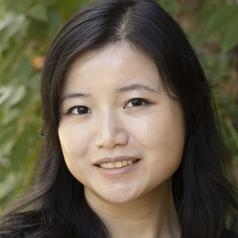
Emily Lau
Staff Attorney, State Democracy Research Initiative, University of Wisconsin-Madison
Emily Lau is a Staff Attorney with the State Democracy Research Initiative.
She joins the Initiative after earning her law degree from Yale Law School. While in law school, Emily was an intern at the San Francisco City Attorney's Office in the Complex and Affirmative Litigation Team and a student in the San Francisco Affirmative Litigation Project clinic, helping the San Francisco City Attorney's Office litigate cases under the California Unfair Competition Law. She was also an editor on the Yale Journal of Law and Feminism and a member of the First Generation Professionals board.
Before law school, Emily worked in the California Governor's Office in the Brown and Newsom administrations.
Less
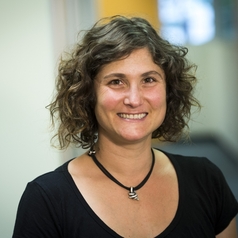
Emily Lenton
Research officer, La Trobe University
Emily Lenton is a Research and Project Officer at the Australian Research Centre in Sex, Health and Society, La Trobe University, working on the design and implementation of qualitative projects that seek to improve the lives of people affected by blood-borne viruses and people who use drugs.
Less
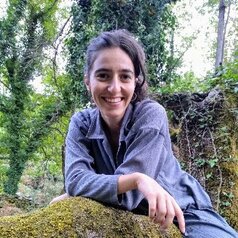
Emily Magkourilou
PhD Candidate in Soil Ecology, University of Sheffield
I am currently a PhD Researcher based at The University of Sheffield and supervised by Professor Katie Field, Professor Urwin (University of Leeds) and Professor Tim Daniell.
My work is focused around understanding the role of arbuscular mycorrhizal fungal networks in modulating symbioses between competing root symbionts.
Less
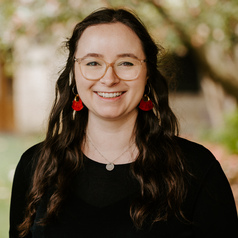
Emily McColl-Gausden
Research fellow, The University of Melbourne
Emily McColl-Gausden is an ecologist working in the Quantitative and Applied Ecology Group in the School of Agriculture, Food and Ecosystem Sciences at the University of Melbourne.
Less
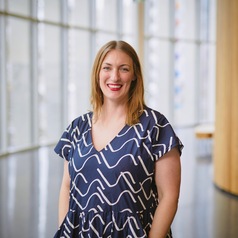
Emily O'Hara
Senior Lecturer, Spatial Design + Temporary Practices, Auckland University of Technology
Bachelor of Design (Spatial)
Masters of Art + Design
Doctor of Philosophy
I have worked at Auckland University of Technology in a variety of roles (both academic and professional) for the last eight years. The academic role constitutes teaching within the school of Art + Design in the Spatial Design Major, and in the Temporary Practices Minor. My creative led interdisciplinary research practice fluctuates between installation-as-performance, object, sculpture, photography and moving image. My work circulates around questions of language, silence and ineffability in relation to mourning, the maternal and otherness. A keen focus on temporality and extended duration underpins my spatial practice.
Less

Emily Reeve
Senior Research Fellow in the Centre for Medicine Use and Safety , Monash University
I am a Senior Research Fellow with the Centre for Medicine Use and Safety. I am currently funded by an NHMRC Investigator Grant (EL2: 2021-2025). I am also a qualified pharmacist with experience working as a clinical pharmacist in a large tertiary teaching hospital. I completed my PhD at the University of South Australia in 2014 and was awarded the medal from the School of Pharmacy and Medical Sciences for my thesis work. Following this I was a postdoctoral research associate at the University of Sydney with the NHMRC Cognitive Decline Partnership Centre. I also spent two months as a visiting researcher at the Brocher Foundation (Geneva, Switzerland) in 2014. I previously held an NHMRC-ARC Dementia Research Development Fellowship. The first two years of this fellowship were undertaken in Canada with the University of Sydney and the Department of Medicine at Dalhousie University, with the final two years completed at University of South Australia.
Less
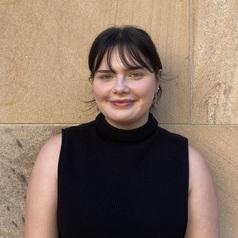
Emily Roberts
PhD Candidate, Psychology, Bond University
Emily Roberts is a PhD Candidate and Sessional Teaching Fellow at Bond University. She has expertise on and has taught foundational psychological theory, statistics and positive well-being courses.
Less
Emily Robinson
Post-Graduate Researcher and Food Education Manager, University of Guelph
I have a focus on research with impact-
In my Master of Science I researched barriers to reducing single-use plastics in restaurants. Other significant research I’ve done has focused on assessing the sustainability initiatives and barriers in SME restaurants, diving into the challenges of managing foodservice sustainability initiatives during the COVID-19 pandemic, the impact of food waste in institutional settings, and the effectiveness of sustainability education training for foodservice employees.
I am an experienced food educator-
Professionally, I have taught and developed materials for foodservice management and food science courses at a University faculty level.
In my most recent role have also managed the Anita Stewart Memorial Food Lab on the UofG campus, overseeing events and courses in the lab.
On a volunteer basis, I have developed and taught environmental outreach programs in local schools.
I have a solid industry foundation-
I have worked for local SME restaurants, as well as world-renowned brands such as Four Seasons and Relais & Chateau.
Recent Accolades-
Governor General Gold Medal Nominee
D.F. Forster Medal Magistrate Nominee
OMAFRA Highly Qualified Personnel Scholar
Kostuch Media Top 30 Under 30 in Canadian Hospitality
Less

Emily Scicluna
Research Associate – Thylacine Integrated Genomic Restoration Research Laboratory, University of Melbourne, The University of Melbourne
Research Associate – Thylacine Integrated Genomic Restoration Research Laboratory (TIGRR), University of Melbourne
PhD candidate - La Trobe University. Major research focus of endangered species conservation (particularly carnivorous marsupials), behaviour, skull morphology, captive breeding and reintroduction, with a soft spot for fat-tailed dunnarts.
Less

Emily Spencer
PhD Candidate, Olfaction, Edinburgh Napier University
Emily Spencer is a PhD candidate at Edinburgh Napier University. Her primary research area is in sensory perception, and she is currently investigating the ways in which the olfactory senses can be retrained following a loss of the sense of smell. As part of her research, Emily has delivered olfactory training and testing to numerous people living with olfactory dysfunction.
After completing an undergraduate degree in Psychology with Sociology, Emily worked as a research assistant on various projects. These have included an investigation into the determinants of psychological distress in teenagers and young people affected by cancer, a study that focused on the link between socioeconomic factors and children’s cognitive development, and research into the effects of noise on creativity in the classroom.
Less

Emily Suski
Emily Suski is an Assistant Clinical Professor at Georgia State University College of Law. Previously, she has taught at the University of Virginia School of Law and Georgetown University Law Center. She teaches, researches, and writes in the area of education law, disability law, and family law.
Professor Suski received her J.D., M.S.W., and B.A. from the University of North Carolina at Chapel Hill. She received her LL.M. from Georgetown University Law Center.
Professor Suski's research and scholarship centers on the responsibilities and obligations of institutions, including schools and families, for children as well as people with disabilities. Her articles on these topics have been published in the Case Western Reserve Law Review, the Georgetown Journal of Poverty Law and Policy, the UCLA Women's Law Journal, and the Cleveland State Law Review.
Professor Suski was also a staff attorney with the JustChildren Program of the Legal Aid Justice Center in Charlottesville, Virginia.
Less

Emily Toth Martin
Emily Toth Martin is an Assistant Professor of Epidemiology at the University of Michigan School of Public Health. She currently teaches courses in molecular epidemiology and her laboratory researches the molecular detection of infectious diseases.
Less
Emily Wertans
PhD candidate, criminology, University of Leicester
Emily's research focuses on hate studies, prejudice and homelessness. Within this, Emily employs creative, non-traditional and trauma-informed research methods in order to support engagement with research in meaningful ways from seldom-heard voices and communities.
Less
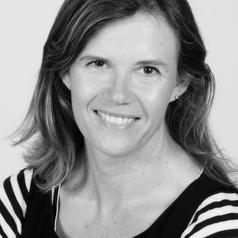
Emily West
Professor of American History, University of Reading
I am a professor of American history at the University of Reading. I research and write on the history of slavery in the US South, especially the everyday lives of enslaved women.
Less


- Market Data




