


 US Dollar Climbs to One-Year High as Fed Rate Hike Expectations Surge
  China Keeps Loan Prime Rates Unchanged for 13th Straight Month as Policymakers Prioritize Credit Demand Recovery
  Wall Street Ends Mixed as Alphabet Slumps, Middle East Developments and Fed Outlook Weigh on Markets
  Asian Stocks Slide as AI Rally Pauses, South Korean Chipmakers Lead Regional Decline
  Gold Prices Mixed as Stronger Dollar Offsets Safe-Haven Demand Amid U.S.-Iran Peace Talks
  U.S.-Iran Diplomacy Helps Drive Gasoline Prices Down 15% From May Highs
  New Zealand Fast-Tracks Gold Mining as Industry Revival Gains Momentum
  Oil Prices Fall as Iran Peace Talks Progress, Hormuz Reopens, and U.S. SPR Hits 1983 Low
  South Korea Stocks Tumble as AI-Fueled Rally Faces Profit-Taking Pressure


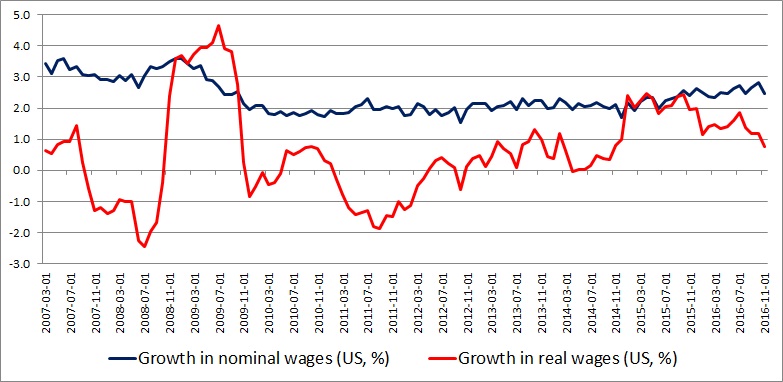
The US Federal reserve is right to worry on looming inflation, as higher inflation without compensatory growth would eat away the purchasing powers of the consumers. In addition to that, a higher inflation uptick means that the FED would have to unwind its asset portfolio fairly quickly.
Since the great recession of 2008/09 the growth in the nominal wages in the economy remained fairly stagnant, despite a steady decline in the unemployment rate from 10 percent to 4.8 percent. Only since 2015, it has shown some upward pace. Several times, throughout the past year, several times the FOMC has mentioned in their statement that the household earnings remained solid and indicated in 2015 that the drop in the oil price would benefit the consumers by increasing their spending powers or real wages.
However, the same Federal Reserve failed to mention, what we can see from that graph that since November 2015 there has been a steady decline in real wages as inflation rose at a faster pace compared to the real wages. While the nominal wage growth (2.5 percent) has hit the highest level since the crisis, real wage growth (0.8 percent) has touched the lowest level in more than 2 years.







