


 Bank of America Upgrades T-Mobile to Buy, Says LEO Satellite Fears Are Overdone
  Bernstein Names IAG, Ryanair as Top European Airline Stocks Ahead of Earnings
  Goldman Sachs Raises USD/JPY Forecast, Sees Yen Weakness Persist Through 2027
  Gold Surges Past $4150 on Dovish Fed Signals and Weak Jobs Data; Bullish Outlook Prevails
  Buy the Dip: Gold Holds Strong at $3980, Targets $4150
  State of emergency in Crimea as Ukraine focuses pressure on ‘jewel in Putin’s crown’
  Elon Musk is remaking the world, like Henry Ford before him – but more dangerously
  Goldman Sachs Flags 3 Key Risks Ahead of Europe’s Earnings Season
  AI can be a personal trainer in your pocket – but is it safe?
  Vietnam’s population hit the 100 million milestone. Where’s it headed?


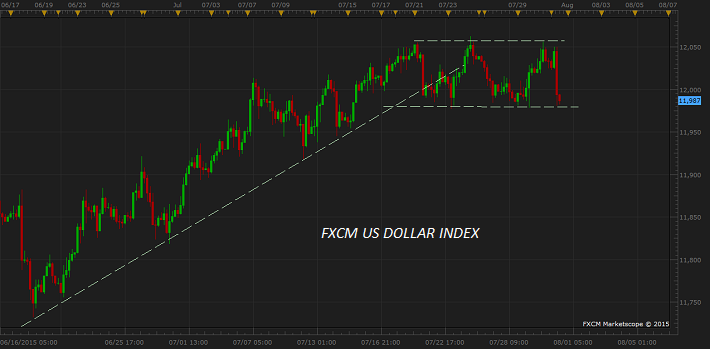
Today's employment cost index, which has historically been a low key data, just added heavy volatility in the market and revealed how fragile dollar bulls have become.
Dollar bulls are clearly not having their best times since March this year after ground breaking performance from summer last year.
As of now it seems like the wait for better wage growth is likely to get longer.
- Wages and salaries for US workers rose by the smallest amount for a quarter since 1982, which poses doubts over the recovery.
- US employment costs increased 0.2 per cent in the second quarter from the first quarter. The figure was well short of 0.6% expectations.
Wages actually rose by 0.7% in the first quarter, when economy shrank by -0.2%.
Dollar has taken a sharp beating against majors.
- Euro is currently trading at 1.106, up from 1.097 before the release.
- Pound is up more than 100 pips from 1.566 after the release.
- Yen gained more than 50 pips.
FXCM US dollar index is currently trading at 11988, close to key support. Dollar would fall sharply if key support gets broken 11980.







