


 GSK Unveils $2.52 Billion Cost-Cutting Plan to Accelerate Drug Pipeline
  FDA Investigates New Cyclospora Outbreak as U.S. Cases Continue to Rise
  Hanmi Pharm Soars 30% on $2.3 Billion Genentech Obesity Drug Deal
  Alcohol is one of the most dangerous drugs, yet its presence is ubiquitous in social settings and celebrations
  ING Says Yen Is 20% Undervalued Against Dollar
  Trump Signs Order to Cut Routine Childhood Vaccines
  J.P. Morgan Upgrades Diploma, Lifts Price Target to 8,250p
  The importance of teaching students what AI can’t do
  AstraZeneca Shares Sink After Wainua Trial Misses Key Heart Disease Goal
  Hims & Hers Shares Fall as GLP-1 Costs Widen Q2 Loss


 Add as a preferred source on Google
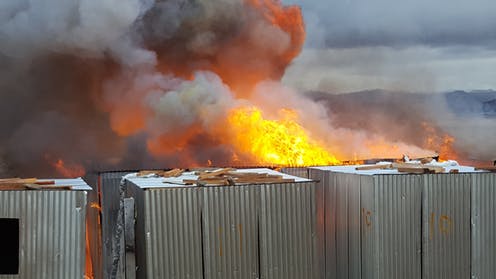


The discovery of fire is often considered to be the most important in the history of humankind. But an untamed fire is also insidious and destructive.
In South Africa, untamed fires are on the rise in informal settlements and in low-income neighbourhoods, in and around the country’s cities.. Nearly 5000 informal settlement fires were reported between 2009 and 2012. Nearly all happened in neighbourhoods that suffer from energy poverty – the absence of clean, safe, reliable, affordable and environmentally benign energy.
Casualties from fires in poor people’s homes usually reach many thousands every year. The cramped living conditions in informal settlements compounds the risk situation and is the reason that a single fire can destroy tens of homes at a time. In 2015, fire losses in informal settlements were estimated at R132 million.
The main causes of the fires are paraffin stoves, heaters and candle mishaps. Fires are more frequent in winter when everyday energy use is at its highest.
We conducted research to try and establish what was causing the fires. We looked particularly at paraffin stoves which are ubiquitous in communities without electricity. But they are also the riskiest cooking appliances in South Africa and are used by about 3 million households. The design life for these stoves is 500 hours of burn, equal to about six months at two and half hours of use per day.
Research findings
Our research found that a third of a sample of 150 South African Bureau of Standards approved non-pressure paraffin stoves malfunctioned after a few months of use. The malfunctions included technical failures such as leakages, faulty flame regulators and broken self-extinguishing mechanisms. Even though some had visible defects, a number of households continued to use the defective stoves because of financial constraints and a lack of safer alternatives.
The users also tended to believe that the appliances were reliable after the recommended six months design life. One possible reason is that they took the seal of approval as a sign that the stoves were safe.
Earlier research we did showed that the risk of fire and burn injury is highest for homes using paraffin. Paraffin, combined with candles pose an especially high risk.
Why the response is not enough
To respond to the hazards posed by paraffin stoves, the South African Bureau of Standards, in 2006 enacted a national standard for non-pressure paraffin stoves and heaters. The standard was made compulsory in 2007.
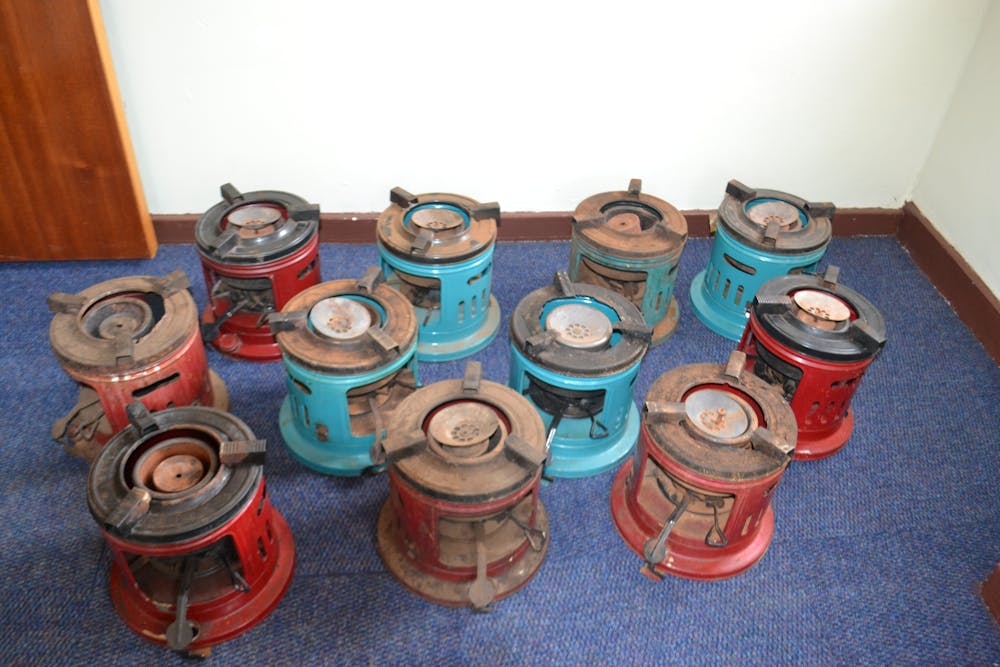
Sample of faulty paraffin stoves. Author supplied
But the mark of approval doesn’t always mean that the stoves have been manufactured to a safe standard, or is able to maintain its safety features over time. For example, one of the key safety requirements is a self-extinguishing mechanism that puts out the flame if the stove is tilted beyond a certain point. But this feature isn’t always working.
This shows that the regulatory role played by the National Regulator for Compulsory Standards has been found wanting. Unsafe stoves continue to be manufactured and distributed with an approval stamp, with nominal, if any, enforcement.
Even though the government sends reminders to communities to use approved stoves only, faulty stoves are still being distributed. Although there’s a tendency to blame manufacturers for unapproved appliances, the problem also lies with government which isn’t tackling non-compliance by licensed manufacturers.
The solutions
Immediate solutions for addressing the problem should include a rigorous scrutiny, review and enforcement of stove safety standards. This could be accompanied by education campaigns that emphasise the safe handling and use of fuels and appliances. Households should be discouraged from using a stove that has visible defects.
Medium term solutions should include the targeted phase-out of paraffin as a domestic fuel and replacement with safer alternatives, such as liquefied petroleum gas for cooking which has a number of advantages over paraffin. It’s already been promoted successfully as a replacement for paraffin and biomass in Indonesia, India and Senegal. Although it was piloted in selected South African communities with some success, efforts at scaling up have not been forthcoming due to cost and policy barriers.
In addition, what’s needed are technological interventions to broaden access to sustainable, cost-effective and especially safe energy. This should include subsidising proven alternative energy technologies, such as liquefied petroleum gas and solar power.







