


 China’s Global Times Slams Anthropic CEO’s AI Slowdown Plan as ‘Cold War’ Strategy
  Europe can’t achieve space sovereignty alone. Here’s why
  South Korea’s Cho Hyun to Meet Rubio in Washington
  Ukraine Races to Counter Russia’s Faster Jet-Powered Drones
  Ovechkin Faces Scrutiny Over United Russia Campaign Video
  Ukraine Tests New Anti-Drone Weapon After Successful Shahed Intercept
  Trump Touts $5,000 Checks if Republicans Win Congress
  Kim Jong Un Pledges Deeper Russia Cooperation
  Vietnam, U.S. Firms Plan 29 Deals Across Energy, Tech and Aviation
  Saudi Arabia Raises Security Alerts as Houthi Attacks Threaten Oil Routes
  Houthis Escalate Saudi Attacks as Red Sea Oil Risks Grow
  US Immigration Arrests Surge as Deportations Lag Behind
  What is Zionism? The different meanings of a contested term
  Sweden Election: Centre-Left Holds Narrow Lead
  Banking scandal rocks Brazil’s politics and the country’s presidential election in October
  Trump Rejects Calls for Tougher AI Regulation
  Takaichi-Backed Koja Wins Okinawa Governor Race


 Add as a preferred source on Google
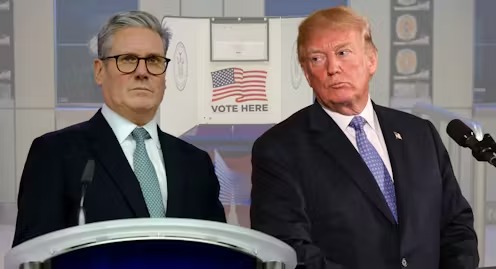

With just two weeks to go until election day, Donald Trump’s presidential campaign filed a complaint with the US Federal Election Commission (FEC), requesting “an immediate investigation” into what it termed “blatant foreign interference” in the election by none other than the UK’s Labour party.
In the letter to the FEC’s acting general counsel, the Trump campaign accused the Labour party of “apparent illegal foreign national contributions” to Harris for President. This is the principal campaign committee of Vice-President Kamala Harris.
The contributions listed in the complaint are: meetings with Harris’ campaign team “to brief Ms Harris’ presidential campaign on Labour’s election-winning approach”, and Labour members’ trips to battleground states to help with the Harris campaign.
Put simply: members of the UK’s Labour party have been travelling to the US to help Harris, the Democratic party candidate, campaign for the presidency.
FEC rules state that foreign nationals “may participate in campaign activities as an uncompensated volunteer”. To that end, the prime minister, Keir Starmer, has said that Labour volunteers are helping the Harris campaign in their spare time, and are funding their own trips.
Indeed, there is a long history of volunteers from both the Labour and Conservative parties supporting their respective “sister” parties in the US, and vice versa.
What does US law say?
To understand the US legal landscape, we must refer both to statutes (laws on the books) and the judicial cases that have put these statutes to the test.
From a statutory point of view, foreign interference into elections is regulated by three main federal laws. These laws, enacted by Congress since 1938, came in response to various scandals involving foreign financing.
They are: the Foreign Agents Registration Act, the Federal Election Campaign Act and the Bipartisan Campaign Reform Act, all consolidated in the United States Code.
The law explicitly prohibits foreign nationals (excluding permanent residents) from making contributions or donations to elections. It reads:
It shall be unlawful for:
A foreign national, directly or indirectly, to make –
(A) a contribution or donation of money or other thing of value, or to make an express or implied promise to make a contribution or donation, in connection with a Federal, State, or local election;
(B) a contribution or donation to a committee of a political party; or
(C) an expenditure, independent expenditure, or disbursement for an electioneering communication.
The question is, therefore, whether the Labour engagement with the US election falls under the definition of “contribution or donation of money or other thing of value”.
A key legal case
It would seem, looking at judicial precedent, that “contribution or donation” amounts to financial contributions only.
The law was interpreted in 2011 by the US District Court for the District of Columbia (a federal court) in Bluman v FEC.
In this case, the plaintiffs Benjamin Bluman and Asenath Steiman were foreign citizens who lived and worked in the US on temporary visas. They wanted to donate money to candidates in elections and challenged the constitutionality of the law barring them from doing so.
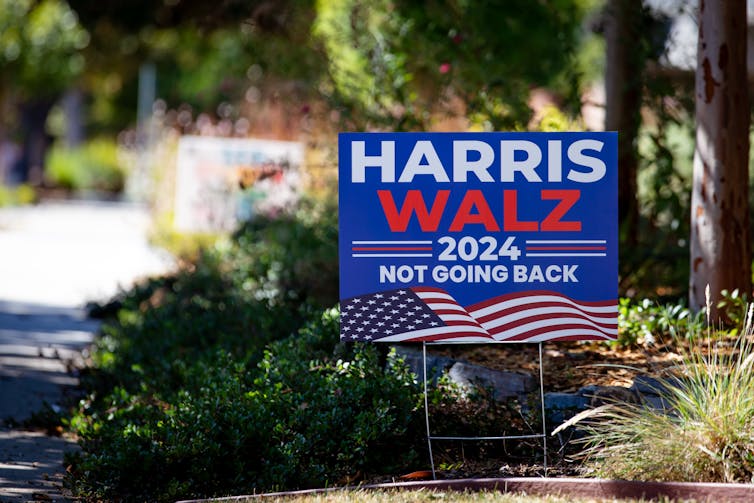
A campaign sign for Kamala Harris. Bluestork/Shutterstock
The decision was authored by then Judge Brett Kavanaugh (who, seven years later, was appointed by Trump as Supreme Court justice). Kavanaugh argued that political contributions in the form of expenditure – so, financial contributions – were an integral part of the elections process. As such, it was right that foreign nationals be prohibited from making financial contributions.
He emphasised, however, that this decision was limited to expenditure, and that it should not be read as support for bans on other types of engagement with elections. These would be protected by First Amendment free speech protections, which apply to foreign nationals within the US.
We do not decide whether Congress could prohibit foreign nationals from engaging in speech other than contributions to candidates and parties, express-advocacy expenditures, and donations to outside groups … Plaintiffs … express concern that Congress might bar them from issue advocacy and speaking out on issues of public policy. Our holding does not address such questions, and our holding should not be read to support such bans.
This decision was affirmed by the Supreme Court and so constitutes a convincing precedent.
In a nutshell, US law prohibits foreign nationals from financing domestic election activity, but this is limited to financial contributions. The Labour campaign “contribution” so far does not appear to amount to financial contributions, so as long as this remains the case, it is not illegal.







