


 Cathie Wood Backs AI Slowdown as Safety Concerns Grow
  France Urges Faster AI Push Despite Safety Risks
  Meta Partners With Shopify to Bring Shop Pay Checkout to Muse AI
  Physicists zoom into the birth of cosmic rainstorms with new CERN study
  SpaceX Nasdaq 100 Weight to More Than Double in Rebalance
  Nvidia CEO Jensen Huang Expected at Trump-Xi State Dinner
  MediaTek Unveils 2nm Dimensity 9600 Pro AI Chip
  Big AI wants to slow down AI research. Is it a safety pause or a strategic retreat?
  Rosenblatt Starts Nokia at Buy on AI Networking Growth
  SoftBank Launches $11 Billion Bond Sale to Fund OpenAI Investment
  AI is supercharging money scams – here’s what you can do to protect yourself
  Trump Plans Federal AI Force and AI Czar
  Meta CEO Zuckerberg Backs Independent AI Safety Reviews Over Development Slowdown
  Apple Pay Set for India Launch With Axis Bank
  Hyundai CEO Warns Chinese Automakers Could Disrupt US Market
  US Federal Register Drops Alibaba Qwen AI Search Tool
  Who should own the knowledge that underpins AI technology?


 Add as a preferred source on Google
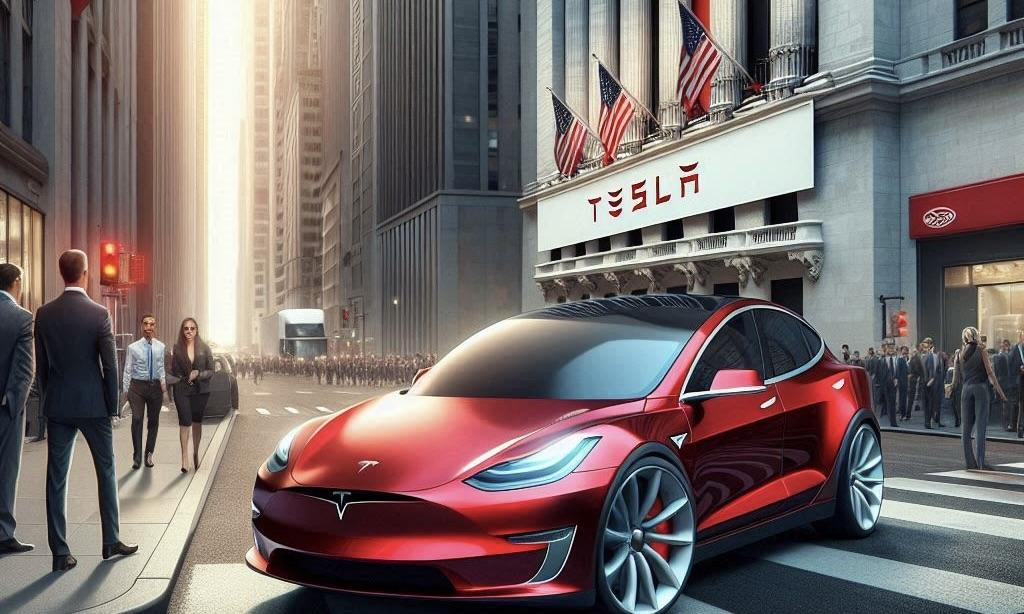
Tesla surprised investors with a 16% surge in shares following its Q3 earnings report, surpassing expectations. Wall Street attributes the auto gross margin increase to factors like volume leverage, lower raw material costs, and Full Self-Driving (FSD) revenue, propelling Tesla’s performance.
Tesla’s Q3 Auto Margins Exceed Expectations, Driven by Volume Leverage, Lower Costs, and FSD Revenue
Tesla has delivered a pleasant surprise to investors after prolonged underperformance. The company's shares surging 16% marks one of its strongest performances to date. Wall Street analysts are now offering critical insights into Tesla's impressive earnings report, shedding light on the factors behind this surge.
On October 23, Tesla reported an auto gross margin (excluding regulatory credits) of 17.05 percent for the recently concluded quarter, surpassing expectations of 14.90 percent. According to Bank of America (BofA), this upside was primarily driven by several factors, including "volume leverage, lower raw material costs, freight, duties, and Full Self-Driving (FSD)."
Tesla's dominant position within the electric vehicle (EV) industry allowed it to negotiate favorable terms with raw material suppliers, especially in lithium procurement, significantly boosting its margins. However, Oppenheimer cautions that this benefit may be short-lived, as it anticipates "diminishing returns once lithium prices stabilize."
The most substantial boost to Tesla's auto gross margin (ex-RC) came from the recognition of deferred revenue related to its FSD program. By introducing new FSD capabilities, such as intelligent summons and auto-park, Tesla recognized $326 million of its deferred FSD revenue in the recent quarter. Goldman Sachs noted that Tesla's auto gross margin (ex-RC) would have been 15.6 percent without this revenue recognition.
Tesla Faces Margin Pressure from Lower ASPs, Aims for Q4 Delivery Surge and Autonomous FSD Rollout
However, Tesla's average selling price (ASP) per vehicle weighed negatively on margins during the third quarter, as the company continued offering financing discounts to sustain sales momentum.
According to Wccftech, Tesla also provided updated delivery expectations for 2024, projecting a slight increase compared to 2023. Tesla delivered 386,810 units in Q1 2024, 443,956 in Q2, and 462,890 in Q3. To match the 1.81 million units delivered in 2023, Tesla must deliver 516,344 units in Q4 2024—a significant challenge.
One point of intrigue lies in the discrepancy between crowd-sourced FSD performance data and Tesla's ambitious claims. While current data shows around 100 miles per critical intervention, Tesla aims for "10K+ miles per critical intervention this year or next," perplexing some analysts, including Goldman Sachs.
Elon Musk announced during the Cybercab reveal event on October 10 that "completely autonomous" unsupervised FSD for Tesla's Model S, 3, X, and Y will roll out next year in Texas and California. Furthermore, Musk revealed during the recent earnings call that Tesla's Cybercab is projected to reach a production volume of 2 million units annually by 2026.







