


 Nvidia Nears $20 Billion OpenAI Investment as AI Funding Race Intensifies
  Nvidia, ByteDance, and the U.S.-China AI Chip Standoff Over H200 Exports
  Oracle Plans $45–$50 Billion Funding Push in 2026 to Expand Cloud and AI Infrastructure
  Google Cloud and Liberty Global Forge Strategic AI Partnership to Transform European Telecom Services
  OpenAI Expands Enterprise AI Strategy With Major Hiring Push Ahead of New Business Offering
  Baidu Approves $5 Billion Share Buyback and Plans First-Ever Dividend in 2026
  Elon Musk’s SpaceX Acquires xAI in Historic Deal Uniting Space and Artificial Intelligence
  SpaceX Seeks FCC Approval for Massive Solar-Powered Satellite Network to Support AI Data Centers
  Elon Musk’s Empire: SpaceX, Tesla, and xAI Merger Talks Spark Investor Debate
  SpaceX Updates Starlink Privacy Policy to Allow AI Training as xAI Merger Talks and IPO Loom
  SoftBank Shares Slide After Arm Earnings Miss Fuels Tech Stock Sell-Off
  Nintendo Shares Slide After Earnings Miss Raises Switch 2 Margin Concerns
  Jensen Huang Urges Taiwan Suppliers to Boost AI Chip Production Amid Surging Demand
  Tencent Shares Slide After WeChat Restricts YuanBao AI Promotional Links
  Instagram Outage Disrupts Thousands of U.S. Users
  Global PC Makers Eye Chinese Memory Chip Suppliers Amid Ongoing Supply Crunch


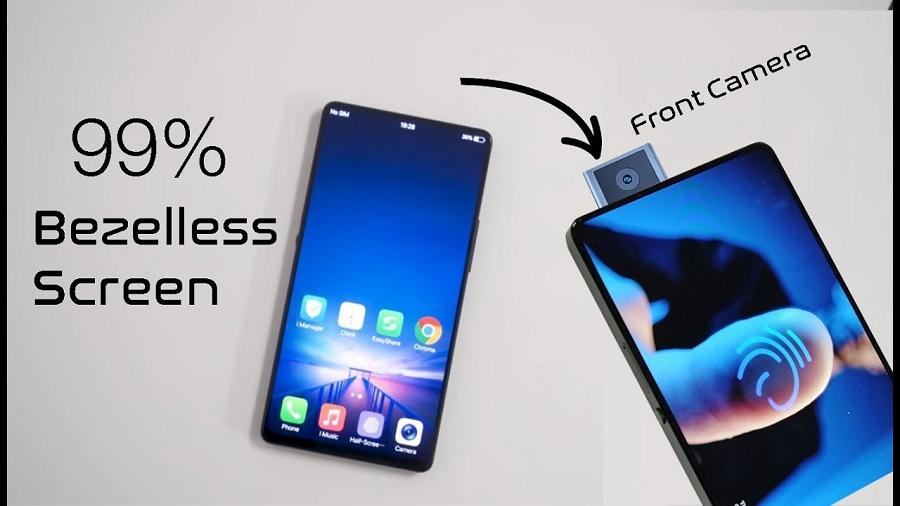
Lenovo recently failed to provide the world with the first true full-screen smartphone with the Z5. This disappointment might have just provided Vivo the opportunity to make history. With its announcement of the smartphone Nex, the Chinese smartphone company promises to succeed where Lenovo failed. Not only will it supposedly be completely bezel-free, it will have no notch.
The Nex is actually based on the Apex, the concept smartphone that Vivo unveiled last February, during the Mobile World Congress, The Verge reports. Much like the final product, the Apex didn’t have a notch and its bezel was so minimal it was practically non-existent. Now, Vivo has launched the Nex to provide consumers with an actual full-screen device.
Introduced in China, where the product is now available for purchase, it comes with several neat features that are worth noting. First would be the pop-up camera, which allows the company to get rid of the notch. The front-facing, image-capture device is an 8MP unit while the back camera offers 12MP.
Due to the design choices that Vivo made, the Nex is 91.24 percent screen. There is still a hint of a chin on the bottom, but this is one aspect that can be easily overlooked.
As for the speaker, the company’s “screen sound casting technology” that involves vibrating glass to produce sound takes care of that. The result is a device that needs no speaker while still producing a relatively decent audio quality.
A firsthand impression of the device is featured by Android Authority via a YouTube video. The publication notes its initial thoughts on what the smartphone offers and what consumers can expect.
With regards to the actual specs, the Nex is equipped with a Qualcomm Snapdragon 845 processor, Engadget reports. It also comes with 8GB of RAM and the Adreno 630 GPU.
Overall, this new smartphone from Vivo holds a ton of promise. Its biggest impact, however, is likely related to the reprieve it provides consumers from the infamous notch. This notch is a trend that was started by Apple with the iPhone X. It has since been adopted by other manufacturers, which many consumers and critics consider to be an eyesore.













