


 Gold Prices Fall Amid Rate Jitters; Copper Steady as China Stimulus Eyed
  Asian Stocks Rebound as Tech Shares Rally on Fed Rate Cut Hopes and Easing Iran Tensions
  Asian Markets Slip as AI Earnings Season Looms, Oil Prices Fall Ahead of Key Fed Signals
  South Korea’s KOSPI Plunges as Samsung, AI Chip Stocks Trigger Market Sell-Off
  China 618 Smartphone Sales Drop 13% as Higher Prices Hurt Demand, Huawei Gains Market Share
  Japan Signals Readiness to Act on Yen as Intervention Speculation Grows
  Oil Prices Rise as Strait of Hormuz Risks Offset OPEC+ Supply Increase
  European Stocks Hold Steady as Consumer Shares Rise, AI Tech Selloff Weighs on Markets
  Asian Currencies Rise as Dollar Weakens; Yen Holds Steady Amid Japan Intervention Watch
  China Services PMI Beats Forecasts as Strong Demand Supports June Growth
  Oil Prices Steady as U.S.-Iran Peace Talks Ease Strait of Hormuz Supply Fears


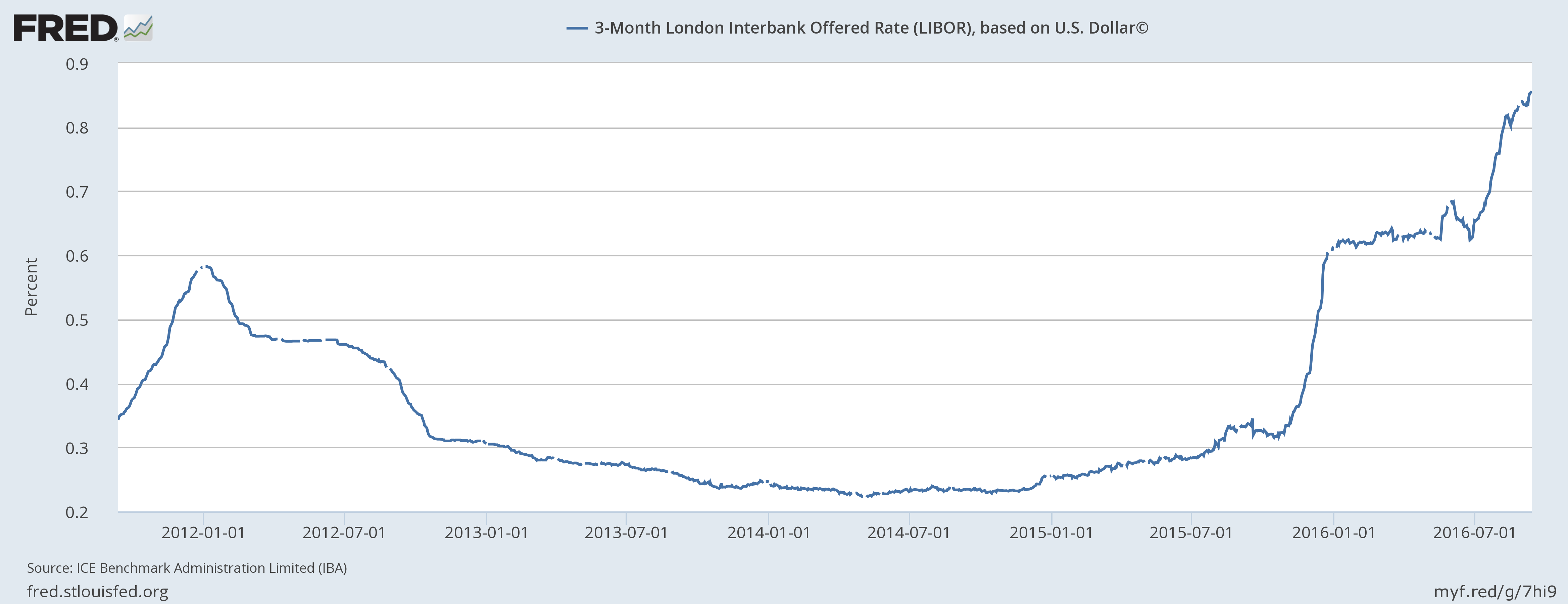
London Interbank Offered Rate (Libor) based on the U.S. dollar has already leaped to the highest level since the 2008/09 crisis and currently hovering around 0.86 percent (3-month). Compared to that, 3-month Libor based on the pound is hovering at 0.38 percent and for Euro, it is around negative 0.3 percent. So, it is clear that there are some shortages, with regard to the USD. We have listed below some of the factors that could be contributing to the rise,
- Rate hike anticipation from the U.S. Federal Reserve
- Increased risks in the financial systems that have been fuelling the demand for dollar-based funding
- The increasing number of corporate defaults, those are now much higher than 100 and at the highest since 2009.
- The major regulation changes would kick in from October on how money market funds operate and it would result in an increased cost of funding for the corporates.
Many market participants and analysts have been saying that the market is doing the tightening on behalf of the Fed, however, we feel that if the Federal Reserve increases interest rate in September (this Wednesday), even then the spread between the Libor and the U.S. treasury unlikely to shrink. We expect the Libor to move above 1 percent.







