


 FxWirePro: Daily Commodity Tracker - 21st March, 2022


 Add as a preferred source on Google
The US federal government reported a monthly budget deficit of $149.2bn for July. Whereas, consensus was expecting the monthly budget deficit to reach $140bn. The monthly deficit widened by about $55bn over the same period last year. Much of this widening was due to calendar effects and the timing of payments, accordingly to CBO analysis. Adjusting for these effects shows a deficit that was $11bn wider from last July.
A $14bn increase in individual income and payroll taxes helped total budget receipts grow 5.1% y/y, notes Barclays. Partially offsetting these gains were small declines in other revenues from fees and fines. On the spending side, outlays reported by the Treasury Department rose 21.2% y/y. CBO analysis suggests outlays would have been up just 6.8% y/y if adjusted for the time-shifting of payments. Much of this increase was driven by increases in entitlement spending; outlays for Medicaid, Medicare and Social Security grew an estimated $8bn.
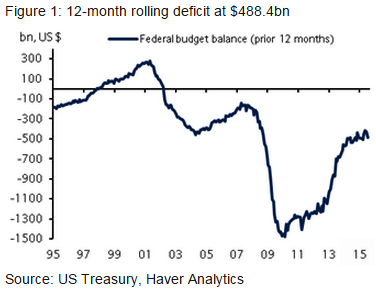
The July data bring the 12-month trailing deficit to $488.4bn, from $433.8bn last month. With just two months remaining in the fiscal year, the CBO projects a FY 2015 deficit of $425bn, notes Barclays.
"US federal government annual budget deficit is expected to reduce by $58bn in 2015 versus FY 2014. We expect the deficit to narrower further in FY 2016 as employment and income gains drive growth in individual income tax receipts", estimates Barclays.

- News

- Economy

- Central Banks
- Investing
- Research
- Roundups
- Digital Currency
- Insights
- Technical Analysis
- Technology
- Business
- Law
- Health
- Nature
- Fintech
- Science
- Topic
- Opinions
- ©Econometrics LLC . All Rights Reserved.
US federal government posts budget deficit of $149.2bn in July
Thursday, August 13, 2015 4:14 AM UTC
Editor's Picks



- Market Data
Most Popular




