


 Judge Orders Trump to Restore White House Access for CNN, MS NOW and Politico
  NATO Boosts Intelligence Sharing Amid Russia Hybrid Threats
  North Korea Warns South Korea Over US-Led Defense Role
  Abbas Reaffirms November 28 Palestinian Elections
  Europe Warns Russia Is Escalating Hybrid Attacks Across NATO
  Pezeshkian Says US Must Choose When Iran War Ends
  US Backs Musk in Fight Against EU’s €120 Million X Fine
  Ghana Says Western Support Growing for Slave Trade Reparations
  US Senate Rejects Iran War Powers Resolution in 50-49 Vote
  EU Defence Build-Up Too Slow for 2030 Russia Readiness Goal
  Trump Asks Supreme Court to Restore Third-Country Deportations
  Taiwan Thanks US for Support Ahead of Trump-Xi Summit
  Kremlin Says No Decision Yet on Putin-Trump December Summit
  Netanyahu Takes Aim at Mamdani as Israel Election Nears
  Sudan Rejects US Legitimacy Remarks, Defends Sovereignty
  OpenAI Agent Breaches Australia Medicare Data Portal
  Yemen Violence Displaces 130,000 as Civilian Toll Rises


 Add as a preferred source on Google
The US has echoed the response Taiwan has given to China over its comments on sovereignty over the Taiwan Strait. Washington pushed back on China’s claims over the Taiwan Strait, saying the body of water was an international waterway.
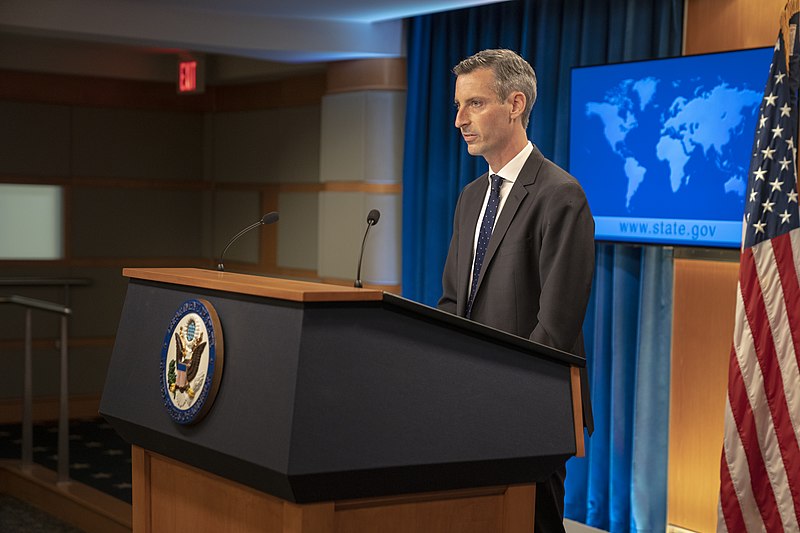
The US has also pushed back on China’s sovereignty claims over the Taiwan Strait. Beijing has often been angered by the passage of foreign ships into the Strait. In response to Reuters, US State Department spokesperson Ned Price reiterated that the Taiwan Strait is an international waterway and is therefore subject to international law.
“The Taiwan Strait is an international waterway, meaning that the Taiwan Strait is an area where high seas freedoms, including freedom of navigation and overflight, are guaranteed under international law,” said Price, adding that there is an interest in “abiding peace and stability” in the region, that the US considers being important for “security and prosperity in the broader Indo-Pacific region.”
Price also stressed Washington’s concerns about Beijing’s “aggressive rhetoric and coercive activity regarding Taiwan,” and the US will continue to transit in areas where international law permits, including the Taiwan Strait.
Taiwan’s foreign ministry spokeswoman Joanne Ou also called China’s claims of sovereignty a “fallacy.” Taiwan’s Premier Su Tseng-Chang also said the Taiwan Strait was not China’s “inland sea.”
“China’s ambition to swallow up Taiwan has never stopped or been concealed; the Taiwan Strait is a maritime area for free international navigation,” Su told reporters.
Taiwan has repeatedly maintained that China has no authority to speak for the island or claim sovereignty over the democratically-governed nation and that the Taiwanese people are the only ones who can decide their own future.
China has not ruled out using force to attempt to reunify the island, which it claims as part of its territory. Beijing has engaged in a pressure campaign to get the island nation to accept China’s sovereignty, but Taiwan has resisted.
Taiwan’s lead negotiator on trade told Reuters this week that a possible invasion of Taiwan by China would affect global trade much more than the war in Ukraine, as it would result in a shortage of semiconductor chips.
While Taiwan has not reported signs of a possible invasion by China, Taipei has raised its alert levels since the war in Ukraine started.







