


 Najib Razak Seeks Stay of 15-Year 1MDB Prison Sentence
  Ukrainian Drone Attacks Hit Russian Regions, Injuring at Least 12
  Pezeshkian Says US Must Choose When Iran War Ends
  OpenAI Agent Breaches Australia Medicare Data Portal
  Netanyahu Defends Israel at UN as Delegates Stage Walkout
  Netanyahu’s Brief US Trip Highlights Strains With Trump
  Judge Orders Trump to Restore White House Access for CNN, MS NOW and Politico
  Xi Calls for Deeper U.S.-China AI Cooperation in Trump Talks
  US Backs Musk in Fight Against EU’s €120 Million X Fine
  Trump, Xi Focus on Trade and AI at White House Summit
  North Korea Rejects Nuclear Test Warning, Calls Nuclear Status Irreversible
  France Defends Netanyahu Airspace Clearance Despite ICC Warrant
  Netanyahu Takes Aim at Mamdani as Israel Election Nears
  EU Defence Build-Up Too Slow for 2030 Russia Readiness Goal
  What ‘Taiwan Independence’ Means as Xi Presses Trump on US Policy
  Saudi Arabia, Turkey and Pakistan Plan Urgent Defence Talks Over Houthi Attacks
  Trump Asks Supreme Court to Restore Third-Country Deportations


 Add as a preferred source on Google
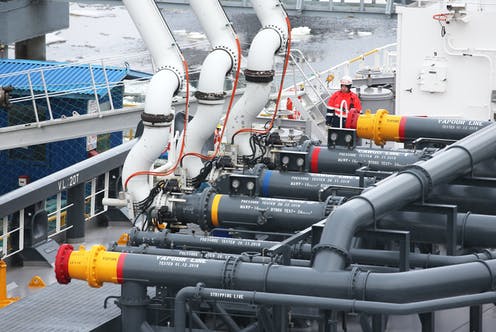
The United States has returned a seized oil tanker to Venezuela in a move that marks the first known instance of such an action under President Donald Trump’s administration, according to two U.S. officials who spoke with Reuters. The decision has drawn attention due to the long-standing U.S. sanctions against Venezuela and Washington’s tough stance on its oil exports.
The tanker, identified as the Panama-flagged supertanker M/T Sophia, had been seized earlier this month during U.S. interdiction operations. According to the officials, who requested anonymity, the vessel has now been handed back to Venezuelan authorities. However, no official explanation was provided regarding the reason behind the tanker’s return, leaving analysts and observers speculating about possible diplomatic or legal considerations.
The U.S. Coast Guard, which oversees maritime interdiction and seizure missions related to sanctions enforcement, has not immediately responded to requests for comment. This silence has added to the uncertainty surrounding the decision, particularly given the broader geopolitical context involving U.S.-Venezuela relations, oil sanctions, and enforcement actions targeting vessels suspected of transporting Venezuelan crude.
Historically, the United States has seized or redirected tankers linked to Venezuela as part of efforts to restrict the country’s oil trade and pressure its government. The return of the M/T Sophia therefore represents a notable departure from previous enforcement patterns. While it remains unclear whether this action signals a shift in policy or is an isolated case driven by legal or operational factors, it has already sparked discussion within the international shipping and energy sectors.
Experts note that tanker seizures play a critical role in enforcing economic sanctions, particularly in regions where oil exports are a primary source of revenue. Any perceived change in enforcement strategy could have implications for global oil shipping routes, compliance practices, and future sanctions-related operations.
For now, U.S. officials have offered no further details, and Venezuelan authorities have not publicly commented on the return of the tanker. As more information emerges, the handover of the M/T Sophia may provide new insight into how the U.S. approaches maritime sanctions enforcement and its evolving relationship with Venezuela.







