


 Trump Plans Federal AI Force and AI Czar
  DOJ Will Investigate AI-Related Crimes, Attorney General Blanche Says
  SoftBank Launches $11 Billion Bond Sale to Fund OpenAI Investment
  Burnham Eyes UK Leadership Role in AI Ahead of Trump Meeting
  Who should own the knowledge that underpins AI technology?
  AI is supercharging money scams – here’s what you can do to protect yourself
  US Federal Register Drops Alibaba Qwen AI Search Tool
  Nvidia CEO Jensen Huang Expected at Trump-Xi State Dinner
  SK Hynix, Intel Discuss U.S. Memory Chip Production Deal
  Qualcomm Gains on $60B Amazon AI Chip Deal
  Rosenblatt Starts Nokia at Buy on AI Networking Growth
  NASA, Boeing Discuss Expanding Starliner Missions
  China Reviews Broadcom Switch Use in State Data Centres
  Big AI wants to slow down AI research. Is it a safety pause or a strategic retreat?
  US Northeast Airports Resume Operations After Telecom Outage Disrupts Thousands of Flights
  MediaTek Unveils 2nm Dimensity 9600 Pro AI Chip
  SpaceX Nasdaq 100 Weight to More Than Double in Rebalance


 Add as a preferred source on Google
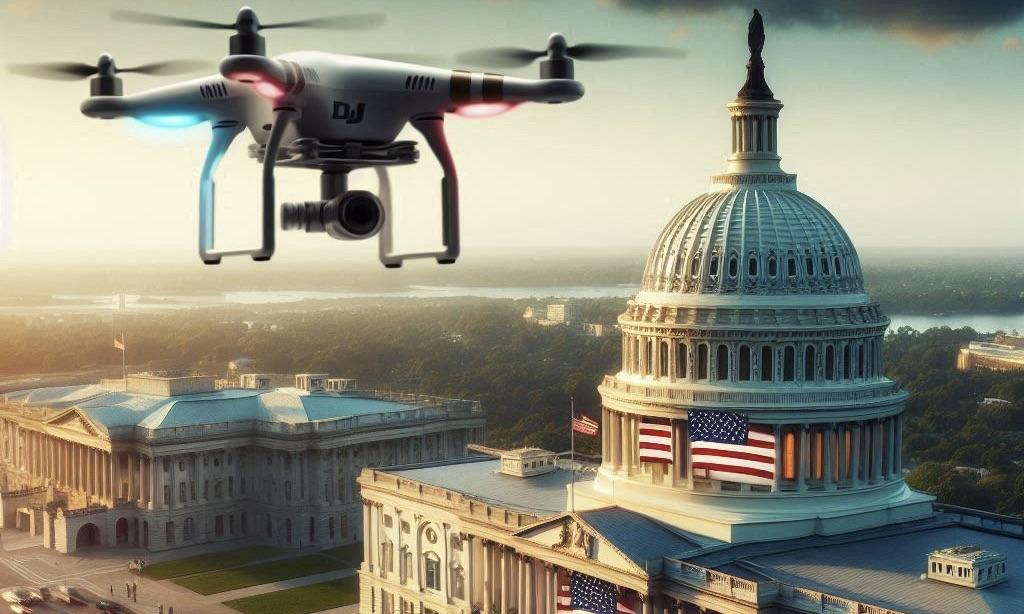
The U.S. House of Representatives passed the "Countering CCP Drones Act," potentially banning all DJI drone sales in the U.S. if the Senate approves the legislation, sparking significant debate over national security and market impact.
U.S. Congress Targets Chinese Drone Giant DJI with New Legislation Amid National Security Concerns
Another significant Chinese corporation is at risk of being targeted by U.S. Congress. On June 14, the United States House of Representatives passed a ban on the future sale of DJI drones in the United States, significantly impacting the drone market. According to Tom’s Hardware, the "Countering CCP Drones Act" is a crucial part of the 2025 National Defense Authorization Act (FY25 NDAA) of the United States, an essential piece of annual legislation that allocates defense expenditures for the future.
DJI, a drone manufacturer headquartered in China, controls over 70% of the global market share. This dominance poses a threat to U.S. legislators. In April, reports indicated that Chinese state-owned businesses hold 6% of DJI stock, raising concerns about potential Chinese government backdoors, national security threats, and other forms of surveillance using the company's drones within China. The more pressing concern for U.S. legislators is that DJI's success could fortify the Chinese economy.
Elise Stefanik, the Republican representative from New York who sponsors the anti-DJI legislation, stated that the drones "present an unacceptable national security risk" and that it is past time to remove drones manufactured by Communist China from the United States.
Despite these concerns, the U.S. military and police complex, which generally supports the use of drones in law enforcement, has not appeared to be phased by this risk. DJI has denied all military use of its drones, but U.S. lawmakers are concerned that DJI products have been used in the Russian conflict against Ukraine.
House Passes NDAA with Countering CCP Drones Act, Setting Stage for Potential DJI Ban in the U.S.
This year's National Defense Authorization Act includes the Countering CCP Drones Act, other personal laws, and cultural measures. The NDAA must be passed annually, although political theater may delay its passage. The spending measure has progressed through the initial stages of the development process in both the House of Representatives and the Senate of the United States Congress.
The bill, including the Countering CCP Drones Act, has been passed by the House. It now awaits the Senate's passage of its version, which will allow the two to be combined and signed into law by President Biden, potentially leading to the ban on DJI drones in the United States.
The current legislation does not prohibit the use of DJI drones already purchased in the United States; it restricts the sale of DJI products in the country. This would result in the abolition of the most widely used and expensive drones in the United States.
Despite its popularity in Congress, the measure could still be halted. U.S. residents dissatisfied with the measure should contact their U.S. Senators and request that the Countering CCP Drones Act be removed from the NDAA.
Although the DJI ban is not as direct an attack on China as specific actions associated with the U.S.-China trade conflict over semiconductors, it continues a precedent of tariffs and bans against successful Chinese companies in the United States. Most bans prevent the most commercially successful companies and entities from operating in the United States, despite legislators asserting that the objective is to ensure safety rather than engage in a trade conflict. Antony Blinken, the Secretary of State of the United States, recently stated, "What we're focused on is only the most sensitive technology that could pose a threat to our security. We're not focused on cutting off trade, or for that matter containing or holding back China."
Photo: Microsoft Bing







