


 Pope Leo Warns UN, Multilateral Groups Face Crisis
  Najib Razak Seeks Stay of 15-Year 1MDB Prison Sentence
  Putin Says Ukraine Peace Proposals Remain on Table
  EU Defence Build-Up Too Slow for 2030 Russia Readiness Goal
  Colombia Extradites FARC Dissident Leader ‘Spider’ to US
  What ‘Taiwan Independence’ Means as Xi Presses Trump on US Policy
  Yemen Violence Displaces 130,000 as Civilian Toll Rises
  Trump, Xi Focus on Trade and AI at White House Summit
  Pope Leo Backs Press Freedom After White House Media Ban
  Trump, Xi Visit US National Archives After White House Summit
  Pezeshkian Says US Must Choose When Iran War Ends
  North Korea Rejects Nuclear Test Warning, Calls Nuclear Status Irreversible
  France Defends Netanyahu Airspace Clearance Despite ICC Warrant
  Netanyahu Defends Israel at UN as Delegates Stage Walkout
  US Supreme Court Revives Trump Administration Voter Citizenship Database
  Ukrainian Drone Attacks Hit Russian Regions, Injuring at Least 12
  Trump Warns China Against Supporting Iran in Xi Talks


 Add as a preferred source on Google
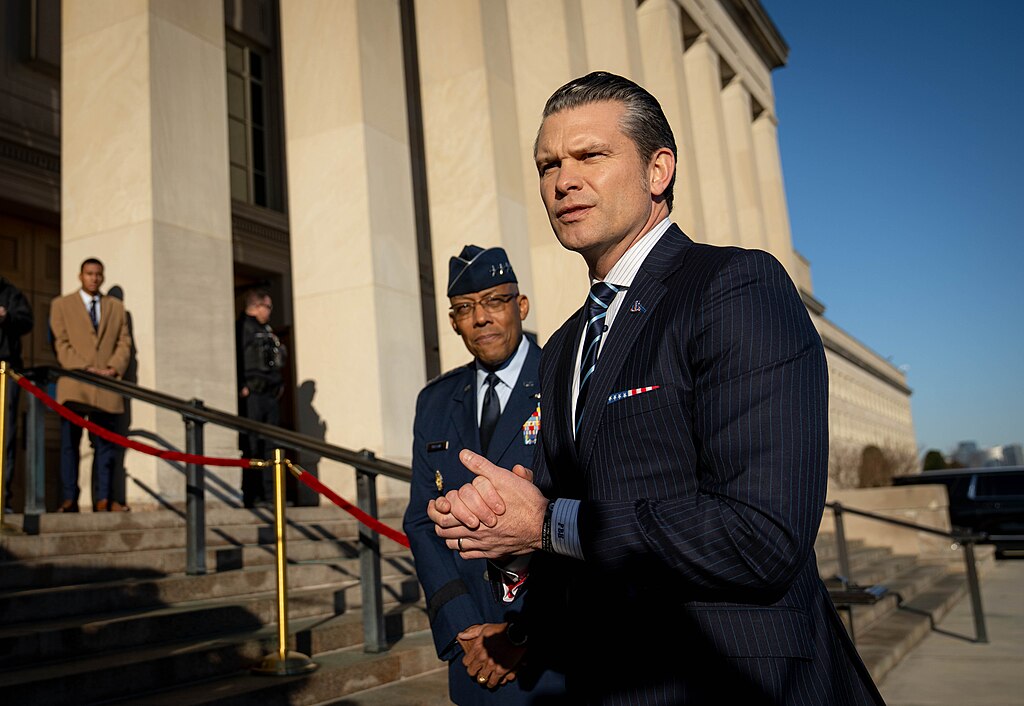
U.S. Defense Secretary Pete Hegseth criticized China on Saturday for escalating “destabilizing actions” in the South China Sea, vowing to strengthen regional security ties and provide Southeast Asian nations with advanced technology to counter Beijing’s growing influence. Speaking in Kuala Lumpur during multilateral talks with defense ministers from Australia, Japan, and the Philippines, Hegseth emphasized the need for a joint maritime awareness initiative to help ASEAN countries respond collectively to Chinese threats.
“You live it—the threats we all face from China’s aggression and conduct in the South China Sea,” Hegseth said, stressing that the United States aims to ensure regional partners are “never alone” in the face of provocation. He added, “No one can innovate and scale like the United States of America, and we’re eager to share those capabilities with allies and partners.”
His remarks followed joint naval exercises by the U.S., Australia, New Zealand, and the Philippines, which China condemned as a move that “undermined peace and stability.” Beijing continues to claim nearly the entire South China Sea, overlapping with the exclusive economic zones of Brunei, Indonesia, Malaysia, the Philippines, and Vietnam. The Chinese Coast Guard has frequently clashed with Philippine vessels and disrupted regional energy exploration efforts—actions Beijing defends as legitimate protection of its sovereignty.
China’s Defense Minister Dong Jun urged ASEAN to “pool Eastern strength” to maintain regional stability. Meanwhile, Hegseth’s Southeast Asia visit came amid heightened tensions following U.S. President Donald Trump’s call to resume nuclear weapons testing after a 33-year halt. Hegseth described the move as “prudent,” underscoring America’s intent to maintain “an unmatched military power” and safeguard peace through strength.
Hegseth reiterated that Washington seeks peace, not conflict, but warned that China’s ambitions to dominate the Indo-Pacific must be closely watched.







