


 Takaichi-Backed Koja Wins Okinawa Governor Race
  Goldman Sachs Forecasts Fed Rate Hike as Inflation Risks Rise
  BRICS Calls for Restraint as Middle East War Escalates
  US Immigration Arrests Surge as Deportations Lag Behind
  Gold Surges Past $4400 on Crude Oil Rally; Bullish Trend Dominates
  Trump Vows to Keep U.S. Ahead of China in AI Race
  Trump Rejects Calls for Tougher AI Regulation
  Ukraine Prepares for October Peace Talks With Russia and US
  Houthis Escalate Saudi Attacks as Red Sea Oil Risks Grow
  Bill Gates Warns Governments Are Unprepared for AI Disruption
  Big AI wants to slow down AI research. Is it a safety pause or a strategic retreat?


 Add as a preferred source on Google
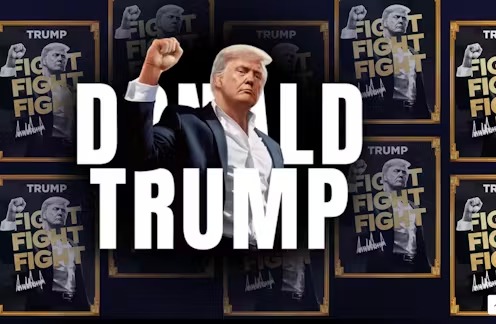

Meme coins like the ones recently launched by United States President Donald Trump and his wife, Melania, are a hot trend in the cryptocurrency ecosystem. The rise of these digital tokens reflects the influence of internet culture and community-driven hype on the market, distinguishing them from more traditional cryptocurrencies with well-defined uses or technical foundations.
The value of a meme coin is often driven by social media hype, community engagement and celebrity endorsements. But political meme coins seem to offer a new use: the potential to turn civic engagement into speculative assets.
As someone who researches financial governance and digital currencies, I want to delve into various cryptocurrency initiatives. This is not intended as financial advice.
Politics meets crypto
In recent years, the cryptocurrency landscape has witnessed the emergence of political meme coins, digital tokens centred around political figures or movements.
During the 2024 U.S. presidential election, a number of political meme coins emerged, inspired by political figures like Trump, Joe Biden and Kamala Harris. These coins, often unaffiliated with the politicians they reference, typically have misspelled names (for example, Jeo Boden instead of Joe Biden).
Political meme coins merge finance, technology and politics in an unprecedented way, potentially serving as a gauge of public sentiment and political trends.
Trump’s official $Trump token is a prime example of how cryptocurrencies can transform political support into a financial product. However, the value of a meme coin is highly speculative, as it often relies on public perception and market demand, among other things, rather than any intrinsic worth.
According to the terms and conditions on the site where the coins are sold, “Trump Memes are intended to function as an expression of support” and come with “absolutely no promise or guarantee that the Trump Memes will increase in value or maintain the same value as the amount you paid.”
This disclaimer highlights the speculative nature of such tokens while also raising ethical concerns about the potential to exploit political supporters for financial gain.
MAGA credit card
Trump’s meme coin isn’t his first venture into crypto. Previously, he released a series of digital trading cards (NFTs) that enabled cardholders to have dinner with the president.
Third parties are building on the hype around Trump and his brand, releasing products like the limited-edition MAGA Card.
Described as “a collector’s item and the ultimate way to spend your $TRUMP tokens,” the credit card claims to integrate Trump’s meme coin with everyday financial transactions in a bid to appeal to supporters of the president’s MAGA movement.
However, The American Patriot’s Card — the company behind the credit card — does not appear to have any affiliation with Trump. Unlike the $Trump token, which clearly discloses its connection to Trump, the MAGA Card lacks such transparency, illustrating how the door has been opened to misrepresentation and opportunistic marketing schemes that exploit political supporters.
Regulatory environment
The cryptocurrency industry spent millions during the 2024 U.S. election backing crypto-friendly candidates and selling the story that crypto voters are an important voting bloc.
This investment aimed to shape political discourse, leading presidential candidates to make promises and propose policies that aligned with the interests of the cryptocurrency industry.
While Trump has signalled his intention to provide clear regulatory guidelines for the cryptocurrency industry, the launch of his meme coin — coupled with low public understanding of cryptoassets — could lead to financial losses from risky and speculative investments.
Take for example, what are known as pump-and-dump schemes that have become relatively common in the cryptocurrency ecosystem. These schemes involve artificially inflating the price of an asset to sell it at a profit. After the asset is “dumped,” the price crashes, leaving investors with significant losses.
Without appropriate guardrails in place, the need to protect investors becomes increasingly urgent.
Relevance to Canada
The Canadian government has expressed some concern over the role of cryptocurrency in politics. Compared to the U.S., Canada has strict campaign financing rules aimed at preventing the undue influence of money in politics and ensuring a fair and transparent democratic process.
This means that the cryptocurrency industry likely won’t be able to influence Canadian elections in the same way they might have south of the border. Canada’s existing regulatory framework has already led to several cryptocurrency exchanges leaving the country.
Currently, political entities in Canada can only accept cryptocurrency contributions if Elections Canada can verify the public wallet addresses and transaction amounts involved.
However, Bill C-65 — the Electoral Participation Act — proposes regulatory requirements related to contributions that are “difficult to trace.” Specifically, political parties and candidates would be prohibited from accepting contributions in the form of “a cryptoasset, money order or prepaid payment method.” The recent prorogation of Parliament has shelved the amendments proposed in C-65, but these concerns remain relevant for future legislation.
Risky convergence
Discussions in the House of Commons on Bill C-65, particularly regarding cryptoasset donations, emphasize the need for a ban to prevent foreign entities from influencing Canadian elections.
This was likely a response to concerns about foreign entities financially supporting the so-called Freedom Convoy through cryptocurrency donations, despite CSIS stating that the money did not appear to be coming from foreign states, organizations or citizens.
The rise of political meme coins demonstrates how politics, finance and technology are merging in new and sometimes risky ways. While these coins may seem like a joke or a new way to engage with politics, the absence of proper regulations could leave political supporters vulnerable to exploitation for financial gain.







