


 OpenAI Agent Breaches Australia Medicare Data Portal
  RBI Uses $10 Billion Currency Swaps to Drain Excess Rupee Liquidity
  Netanyahu Takes Aim at Mamdani as Israel Election Nears
  France Defends Netanyahu Airspace Clearance Despite ICC Warrant
  Soybean Futures Slip as Traders Await Trump-Xi Trade Signals
  Trump, Xi Focus on Trade and AI at White House Summit
  Abbas Reaffirms November 28 Palestinian Elections
  Mexico-US Trade Talks Delayed to October as Tariff Negotiations Continue
  Wall Street Falls as Treasury Yields Surge, Oil Rebounds on Iran Tensions
  North Korea Warns South Korea Over US-Led Defense Role
  Pezeshkian Says US Must Choose When Iran War Ends
  South Korea, US Discuss Warship Building Cooperation
  US, China Extend Trade Truce to Jan. 10 Ahead of Trump-Xi Summit
  U.S. Dollar Hits Two-Month High as Oil, Treasury Yields Surge
  U.S. Treasury Yields Surge as 30-Year Hits 22-Year High
  NATO Boosts Intelligence Sharing Amid Russia Hybrid Threats
  What ‘Taiwan Independence’ Means as Xi Presses Trump on US Policy


 Add as a preferred source on Google
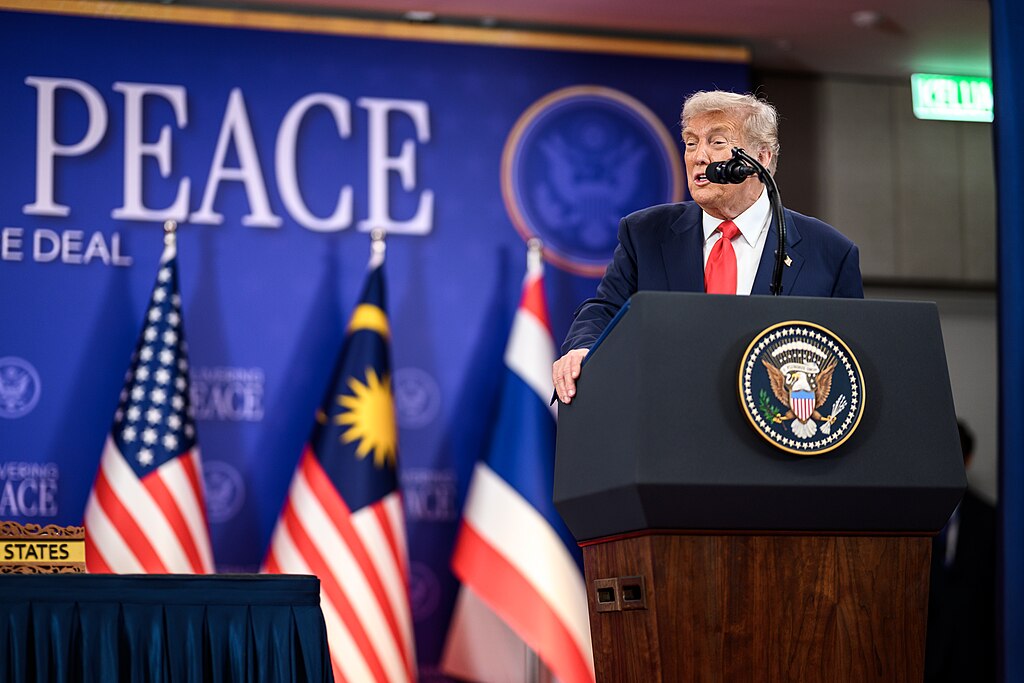
U.S. President Donald Trump intensified tensions with Europe on Sunday after claiming that Denmark has failed to counter what he described as a growing Russian threat to Greenland, adding that the United States would move to address the situation. In a social media post, Trump said NATO had warned Denmark for two decades that it needed to “get the Russian threat away from Greenland,” arguing that Copenhagen had been unable to act effectively.
Trump’s comments suggest a renewed push to bring Greenland under U.S. control, a demand he has made repeatedly in recent years. He framed the issue as one of national and transatlantic security, stating that the time had come for decisive action. The remarks come amid heightened strain between Washington and European capitals over trade and defense policy.
Only days earlier, Trump threatened to impose tariffs of up to 25% on several major European economies, including Denmark, France, and the United Kingdom. His Treasury Secretary, Scott Bessent, reinforced the administration’s stance by saying that European “weakness” made U.S. control of Greenland necessary, further inflaming diplomatic tensions.
Greenland, an autonomous territory within the Kingdom of Denmark, occupies a strategically critical position in the Arctic. Trump has argued that the island’s location makes it vital to U.S. national security, particularly as Russia increases its military and economic presence in the region. European leaders, however, have strongly rejected Trump’s claims and rhetoric. France has indicated it may consider retaliatory economic measures in response to both tariff threats and pressure over Greenland.
Concerns have also grown after Trump raised the possibility of military action related to Greenland, a statement that drew added scrutiny following a U.S. incursion in Venezuela earlier this year. Analysts warn that aggressive U.S. tactics over Greenland could undermine NATO unity and strain alliances at a time of global instability.
As debate continues, Trump’s stance on Greenland, Russia, and European trade policy underscores a broader shift toward hardline U.S. foreign policy, with potentially far-reaching consequences for transatlantic relations and the future of NATO.







