


 South Korea, US Discuss Warship Building Cooperation
  Abbas Reaffirms November 28 Palestinian Elections
  North Korea Warns South Korea Over US-Led Defense Role
  Pezeshkian Says US Must Choose When Iran War Ends
  Trump, Xi Visit US National Archives After White House Summit
  Japan Private-Sector Growth Slows as Domestic Demand Weakens
  RBI Uses $10 Billion Currency Swaps to Drain Excess Rupee Liquidity
  Yemen Violence Displaces 130,000 as Civilian Toll Rises
  Wall Street Falls as Treasury Yields Surge, Oil Rebounds on Iran Tensions
  Netanyahu’s Brief US Trip Highlights Strains With Trump
  Gold Holds Near $4,275 as Rising Treasury Yields Fuel Fed Rate Hike Bets
  Fed Unveils Stablecoin Rules Under GENIUS Act
  Oil Prices Jump 3% as Houthi Attack Revives Supply Fears
  Judge Orders Trump to Restore White House Access for CNN, MS NOW and Politico
  Japanese Bank Stocks Surge as Bond Yields Fuel Rate Hike Bets
  Kremlin Says No Decision Yet on Putin-Trump December Summit
  US 10-Year Treasury Yield at 6% Emerges as New Market Risk Threshold


 Add as a preferred source on Google
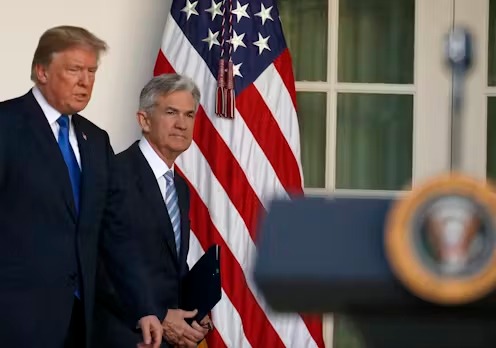
The Trump administration’s decision to launch a criminal investigation into Federal Reserve Chair Jerome Powell has triggered strong criticism from former central bank leaders, Republican lawmakers, and global financial figures, raising fresh concerns about the independence of the U.S. central bank and potential market fallout.
The investigation became public after Powell disclosed that the Federal Reserve had received subpoenas from the U.S. Justice Department. According to sources, the probe was approved by Jeanine Pirro, the U.S. Attorney in Washington and a close ally of President Donald Trump, without briefing Attorney General Pam Bondi or Deputy Attorney General Todd Blanche. The focus of the investigation centers on Powell’s past testimony to Congress regarding cost overruns tied to a $2.5 billion renovation of historic Fed headquarters buildings.
Powell sharply criticized the move, calling it a “pretext” aimed at pressuring the Fed to align interest rate decisions with White House preferences. He emphasized that while he respects the rule of law, the threat of criminal charges must be viewed in the context of sustained political pressure for lower interest rates.
The response was swift. Former Fed Chairs Janet Yellen, Ben Bernanke, and Alan Greenspan warned that undermining central bank independence mirrors practices seen in emerging markets with weak institutions, often leading to higher inflation and economic instability. Republican senators, including Thom Tillis, Lisa Murkowski, and Kevin Cramer, also condemned the investigation, warning it could destabilize markets and damage economic credibility.
Financial markets reacted cautiously but noticeably. Long-term U.S. Treasury yields rose, gold hit record highs, and the dollar weakened, reflecting investor anxiety over potential political interference in monetary policy. Analysts noted that congressional pushback and bipartisan criticism helped limit broader market turmoil.
Powell, whose term as Fed chair ends in May but who can remain on the Board of Governors until 2028, suggested the investigation could strengthen his resolve to stay. As legal and political tensions escalate, the episode marks a pivotal moment in the ongoing clash between the White House and the Federal Reserve, with lasting implications for economic policy, market stability, and institutional independence.







