


 Abbott Laboratories Ordered to Pay $53 Million in Premature Infant Formula Lawsuit
  Chalco Stock Surges as Q1 2025 Profit Forecast Jumps Up to 58%
  TSMC Posts Strong Q1 2025 Revenue, Riding AI Chip Demand Wave
  China Vanke Seeks Bond Extension Amid Mounting Debt Crisis
  FedEx Pilots and Union Reach Tentative Agreement on 40% Pay Increase
  Pilots Fear Retaliation for Refusing Middle East Flights Amid Ongoing Conflict
  LG Electronics Posts Record Q1 Revenue Amid Strong Demand and Cost Improvements
  U.S. Automakers Push Back Against EU Rules Blocking American Trucks from European Market
  Lumentum Holdings Rides AI Wave With Order Book Filled Through 2028
  Pony.ai, Uber, and Verne Launch Europe's First Commercial Robotaxi Service in Zagreb
  Samsung Electronics Posts Eightfold Profit Surge Driven by AI Chip Demand
  SpaceX IPO: Retail Investors to Play Historic Role in Record-Breaking Public Offering
  Anthropic Fights Pentagon Blacklisting in Dual Federal Court Battles
  Bendigo and Adelaide Bank Posts Strong Q3 Earnings, Announces AI-Driven Job Cuts
  NIO ES9 SUV Launch Sends HK Shares Down 7% Despite Bold Pricing Strategy
  Apple's Foldable iPhone Faces Engineering Setbacks, Mass Production Timeline at Risk
  BHP's Incoming CEO Visits China Amid Pricing Dispute with CMRG


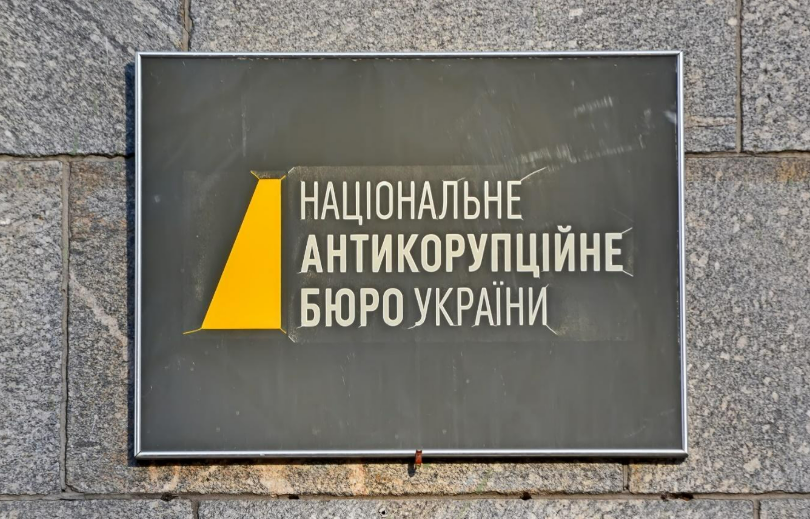
With analysts anticipating the end of the war in Ukraine, the need to tackle corruption across all levels of state institutions remains vital if Ukraine is to rebuild and prosper.
Analysts have begun to consider what comes next for Ukraine, as President Zelensky has suggested recently that Ukraine would consider an end to the ‘hot phase of the war’ if Ukraine were to receive NATO membership. Questions will be asked about its ability to rebuild, as well as its domestic stability.
As Ukraine's leadership turns its attention towards the future, a key issue will be how Ukraine improves its institutions’ ability to tackle corruption. Not only will this be important for Ukraine’s ability to achieve EU and NATO membership but also ensure that investment and aid is spent effectively to rebuild Ukraine’s economy.
That said, Ukraine has made massive strides in its anti-corruption efforts. Transparency International recently noted that changes such as the Prozorro procurement system, an increase in the privatisation of state-owned enterprises, and pushes for digitisation and transparency have all been significant successes.
However, the new anti-corruption institutions established between 2014 and 2019 have also faced significant challenges. Allegations of political interference, misconduct, as well as inefficiencies between the numerous different new and existing agencies have all slowed Ukraine’s drive for progress.
The new system is overseen by various bodies and organisations, including the National Anti-Corruption Bureau of Ukraine (NABU), the Specialised Anti-Corruption Prosecution Office (SAPO), the National Agency on Corruption Prevention (NACP) and the High Anti-Corruption Court (HACC), who all often have competing interests with each other, and with existing agencies. This includes the State Bureau of Investigation, the Prosecutor General’s Office, the High Council of Justice, as well as the National Police (NPU), the Security Service (SBU) and general court and judicial system.
Ultimately, not only does this lead to inefficiencies and waste of resource, but it also, counter-intuitively leads to an increase in corruption. The organisations have suffered from investigations into misconduct and abuse of power from their own teams, for example a recent internal probe revealing ethical violations and leaks, raising suspicions of a lack of independence.
This competition allows vested interests within the Ukrainian oligarchy to maintain their stranglehold over the political system, abusing their money and power to prevent change and reform. There is a perception that this interference stems from the top, with the person in charge of these bodies, Oleg Tatarov, himself accused of corruption including accepting and facilitating bribery.
Perhaps unsurprisingly, reformers such as Andrei Pivovarsky, former Ukrainian Minister of Infrastructure, and Dmytro Sennychenko, the former head of the Ukrainian State Property Fund, are sidelined or persecuted.
A passionate reformer, Pivovarsky was pursued by NABU over alleged abuse of office after he supposedly caused the state to take losses. He had been suggesting that harbour dues should not go to the seaport authority, but should be kept by private companies to be reinvested in the port and improve its efficiency. His actions would have prevented officials from directly benefiting from the payments.
Meanwhile, Sennychenko was responsible for the privatisation of state assets which Transparency International highlighted, with revenues from privatisation during his tenure exceeding the total revenue from the previous seven years combined. He was also instrumental in establishing the “Prozorro” (Transparent) system, an electronic public platform, having been the first to implement the system while he was Deputy CEO at Ukraine’s postal service UkrPoshta. Sennychenko has since been pursued by the new entities as part of a politically motivated campaign.
The overlap and dysfunction within the new and old systems have allowed power to concentrate in the hands of the few, allowing them to treat the system with impunity whilst stifling change.
President Zelensky deserves praise for making so much progress on corruption whilst also leading the war effort against Russia, but undoubtedly there remains much more to be done. Anti-corruption will be essential for Ukraine’s future beyond the war, and rooting out graft within its anti-corruption bodies should be where Zelensky starts his push.
With all eyes now looking to a post-war future, how Zelensky manages and adapts the existing anti-corruption systems should be a key area of focus both for Ukraine, and for the West.
This article does not necessarily reflect the opinions of the editors or management of EconoTimes







