


 Nasdaq Proposes Fast-Track Rule to Accelerate Index Inclusion for Major New Listings
  Japanese Pharmaceutical Stocks Slide as TrumpRx.gov Launch Sparks Market Concerns
  Gold Prices Slide Below $5,000 as Strong Dollar and Central Bank Outlook Weigh on Metals
  An unexpected anomaly was found in the Pacific Ocean – and it could be a global time marker
  Baidu Approves $5 Billion Share Buyback and Plans First-Ever Dividend in 2026
  Global PC Makers Eye Chinese Memory Chip Suppliers Amid Ongoing Supply Crunch
  How America courted increasingly destructive wildfires − and what that means for protecting homes today
  South Africa Eyes ECB Repo Lines as Inflation Eases and Rate Cuts Loom
  Rise of the Zombie Bugs takes readers on a jaw-dropping tour of the parasite world
  U.S.-India Trade Framework Signals Major Shift in Tariffs, Energy, and Supply Chains
  SpaceX Pushes for Early Stock Index Inclusion Ahead of Potential Record-Breaking IPO
  Dow Hits 50,000 as U.S. Stocks Stage Strong Rebound Amid AI Volatility
  How is Antarctica melting, exactly? Crucial details are beginning to come into focus
  Thousands of satellites are due to burn up in the atmosphere every year – damaging the ozone layer and changing the climate
  South Korea’s Weak Won Struggles as Retail Investors Pour Money Into U.S. Stocks
  Washington Post Publisher Will Lewis Steps Down After Layoffs


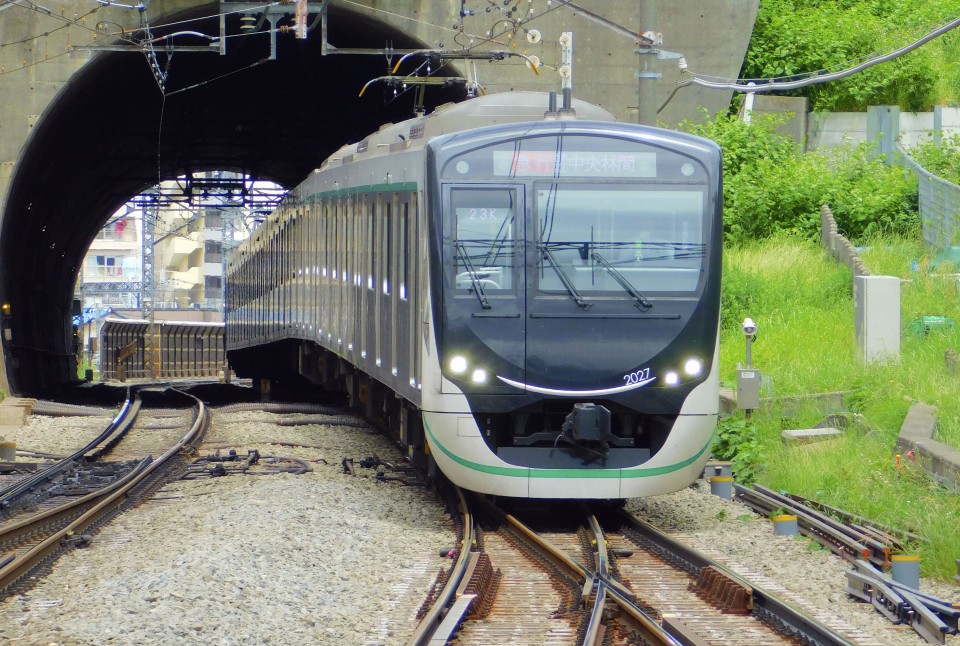
Tokyu Railways' trains running through Shibuya and other stations have switched to power generated only by renewable sources, pulling down its carbon dioxide emissions to zero.
Green energy is being used at all its stations, including for vending machines for drinks, security camera screens and lighting.
Tokyu, which employs 3,855 people and connects Tokyo and Yokohama, is Japan's first train company to fulfill that goal. It claims that the carbon dioxide decrease is equivalent to 56,000 Japanese homes' annual average emissions.
Nicholas Little, director of railway education at Michigan State University's Center for Railway Research and Education, applauded Tokyu for supporting renewable energy but emphasized the need of increasing the bottom-line amount of renewable energy.
Tokyu's trains feature some of the most environmentally friendly rail technology available. Batteries and hydrogen power are the other two choices.
Converting from diesel trains to hydrogen-powered lines in rural areas, as well as switching from gas-guzzling cars to electric, would provide greater benefits, he claimed.
Even though Japan continues to utilize coal and other fossil fuels, Tokyu paid an undisclosed amount to Tokyo Electric Power Co, the utility that was responsible for the 2011 Fukushima nuclear disaster.
Such efforts are critical if Japan, the world's sixth-largest carbon emitter, is to meet its 2050 carbon-neutral goal.
According to the Institute for Sustainable Energy Policies, a Tokyo-based independent non-profit research group, only approximately 20% of Japan's electricity comes from renewable sources.
This is in stark contrast to New Zealand, where renewable energy accounts for 84 percent of total energy consumption. New Zealand hopes to achieve this goal by 2035.













