


 Robinhood Chain Token Ring Allegedly Extracts $18.4 Million Across 53 Launches
  BitMine Ethereum Holdings Top 6 Million ETH After $46 Million Purchase
  Morgan Stanley Launches Digital Asset Lab for Stablecoins and Tokenization
  Aztec Revives zk.money for Private Ethereum Payments
  Anthropic Targets $2 Trillion Valuation in Planned IPO
  Nvidia China Chip Sales Report Sends Chinese Semiconductor Stocks Lower
  Toyota Global Sales Fall for Seventh Month as China Demand Slumps
  Bitget Restores Withdrawals After $388 Million Security Breach
  Samsung Invests $1 Billion in KKR’s Helix AI Infrastructure
  Lindt Slashes 2026 Sales Growth Forecast as European Demand Weakens
  Binance Expands MarsCoin With Tokenized SpaceX Share Rewards
  Pi Network Price Holds $0.087 as Protocol 28 Mainnet Upgrade Nears
  Bitget Resumes Crypto Withdrawals After $388M Security Breach
  Cboe Extends SPX Options Deal, Eyes Tokenized Contracts
  RedotPay Completes Audits as Stablecoin Firm Advances U.S. IPO Plans
  Bitwise Launches NEAR ETF as $562 Bull Case Fuels AI Crypto Buzz
  Hengrui Shares Rise on $2.6 Billion Novo Nordisk Obesity Drug Deal


 Add as a preferred source on Google
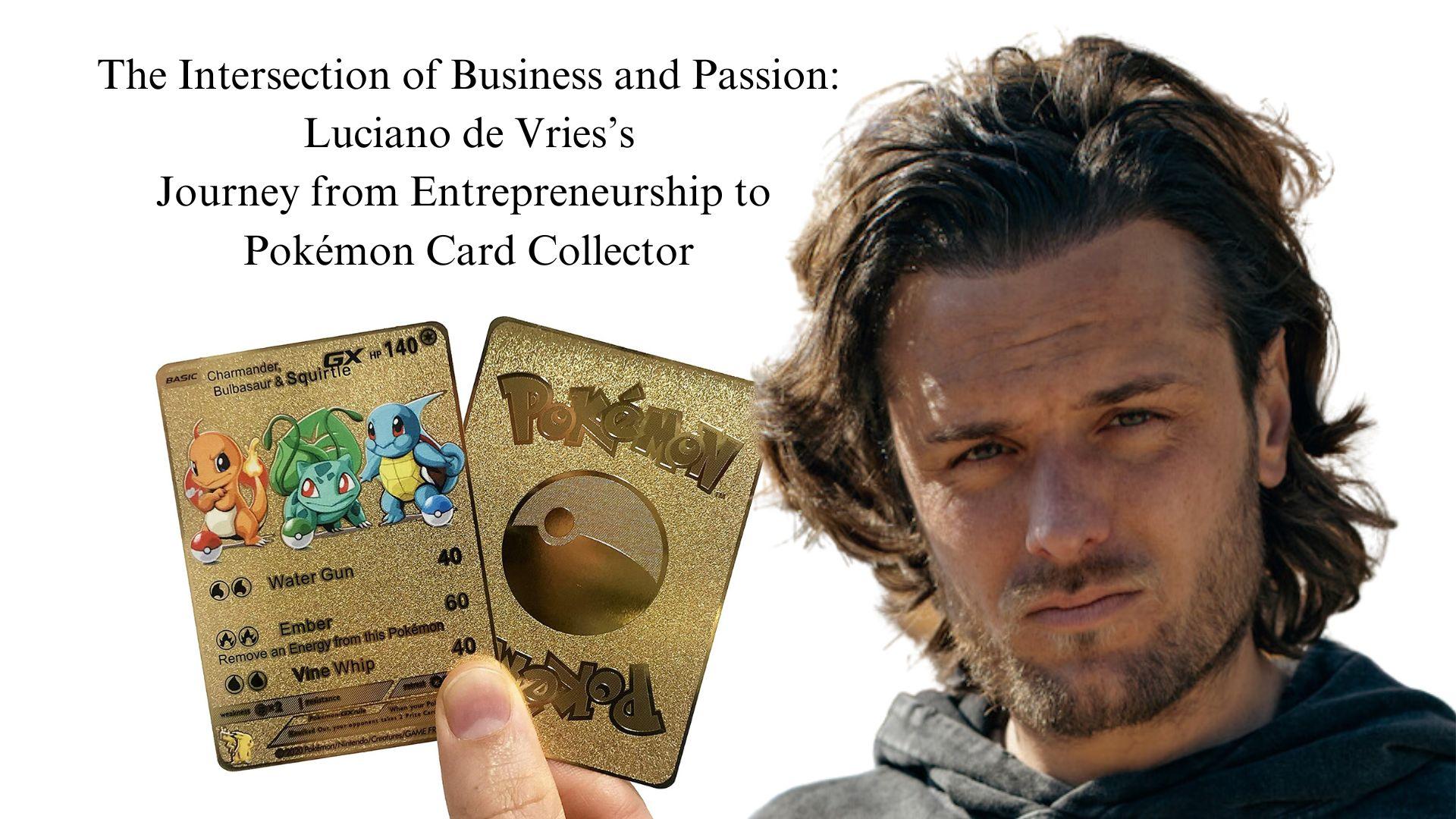
It’s the little things that count for serial entrepreneur Luciano de Vries. The very little things, to be exact.
The founder of Bayswater Capital has spent decades creating and scaling businesses. Like many of the most successful people, he credits his triumphs to a mix of skills, expertise, and personal passion. But when he’s not on the clock, that passion manifests itself in a more unusual way.
“My hobbies at the moment are playing with animals, fitness, traveling, and Pokémon cards, which - I have some nice ones already,” he says with the brimming enthusiasm of a man who’s just revealed a secret.
De Vries already flies in rarified air. Not only has he co-founded companies across Europe, including GAET Investment Holdings, Costa Events, and Vast Goed Koper, but he also works tirelessly as an advocate for animal welfare.
But with his revelation that he’s a global businessman who spends weekends hunting for rare Pokémon cards, he may have cast him as truly sui generis.
The Allure of the Rare
Lifelong birdwatchers are well acquainted with the siren song of the hard-to-spot species. It’s what leads them to journey thousands of miles and camp out in remote areas for days, subsisting off granola bars and beef jerky in the hopes of spotting a breed they’ve never seen before.
The same can be said for Pokémon card collectors.
The cards, like De Vries himself, have become a global sensation. Originally developed in 1996, Pokémon cards are technically part of a strategy-based game that pits two Pokémon trainers’ teams of tiny monsters against one another in a head-to-head battle. However, many card collectors don’t spend their time playing the game. Instead, their interest is the art, rarity, and joy of the cards themselves.
For de Vries, the appeal of Pokémon is split between finding the rare collector’s card (there are only 60 confirmed copies of some cards, from a global supply of more than 50 million) and discovering new cards that appeal to his personal taste. There are more than 1,000 Pokémon characters, each with a unique look, skill set, and personality. But de Vries only has eyes for one.
“I'm collecting most of the Pikachus. Now, they have them in Luigi clothes, Mario clothes. I especially like the Japanese cards,” he said. “I choose the Japanese style because I like the art better.”
An Investment in Himself
The Pokémon Trading Card game, based on the bestselling Pokémon video game, has spawned a worldwide interest in the franchise. It’s arguably the most successful media franchise in the history of the world, leaving the kind of impact on pop culture that Star Wars did - but in far less time.
For De Vries, the cards symbolize a hard-won success.
Even after he and his partners were running a profitable events business in Spain - the group’s first true foray into entrepreneurship - they paid themselves little. Instead, the group chose to reinvest their profits back into the company, so it could grow. The tradeoff kept de Vries hungry and striving for more, but also cash-poor.
“Together with my partners, we all invested everything for the first five to six years,” he said. “Meaning if we went to the supermarket, even though we had a very successful business, we still needed to check our accounts so that we could buy groceries.”
Now, with several years of running profitable businesses under his belt, de Vries allows himself the luxury of buying things he likes, not just the basics he needs to survive.
The Value of a Hobby
Pokémon cards are the perfect collectors’ item for entrepreneurs, de Vries said, because they appeal directly to the deeply seated ambition and far-sighted ideals that animate strivers.
Starting a successful business is a lot like building a team of Pokémon. Each member has specific abilities, which makes them suited for certain tasks. And finding a rare talent can make the enterprise function in innovative and exciting new ways.
But beyond their metaphorical and sentimental value, the Pokémon cards that de Vries collects carry a real intrinsic worth - another aspect of the hobby that appeals to his more practical side.
“I like to collect them because I like to buy things that are like an investment, but that also are fun to have,” he said. “I don't think I will ever sell them … but if needed, I can always sell them, if I need the money in the future.”
This article does not necessarily reflect the opinions of the editors or management of EconoTimes







