


 Japan Revises Economic Blueprint to Reassure Markets on BOJ Independence
  Dollar Rebounds as Euro, Pound Slip Ahead of Fed Minutes, Yen Near Intervention Zone
  Oil Prices Jump as Middle East Tensions Shake Markets, AI Rally Loses Steam
  FxWirePro: Daily Commodity Tracker - 21st March, 2022
  Nasdaq Futures Slide as AI Chip Stocks Sink Despite Samsung Earnings; SpaceX Debuts in Nasdaq-100
  Chinese Chip Stocks Jump as Apple Reportedly Tests CXMT Memory Chips for China Devices
  Iran Begins Oil Sale Talks With Japan Under U.S. Sanctions Waiver Amid Shipping Risks
  Asian Markets Slip as AI Earnings Season Looms, Oil Prices Fall Ahead of Key Fed Signals
  Cuba Power Grid Collapse Triggers Nationwide Blackout Amid Deepening Energy Crisis


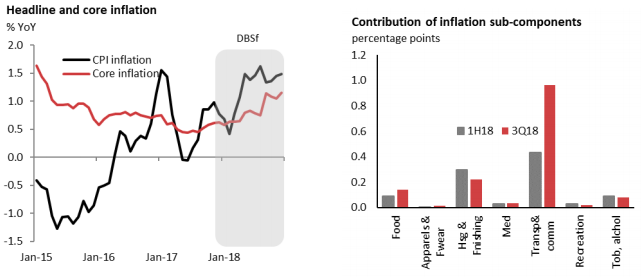
Thailand’s full-year inflation is expected to average 1.3 percent y/y, before rising to 1.6 percent next year on a higher core, according to the latest report from DBS Group Research. Inflation has shrugged off a slow start to the year, lifted by supply-side pressures, particularly high oil prices.
The Bank of Thailand had signaled its readiness to normalize rates, but a hike is not imminent given manageable inflation and a stable currency. Policy tightening expectations might resurface late-2018 and early next as the US continues to hike rates, and the spill-over impact weighs on EM. An upside surprise in Thai growth could also be another catalyst for the BoT to hike in 2019.
Better private consumption demand is being upheld by higher durables, which has helped offset the impact of a slower pick-up in non-durables and weaker service output. Private investment indicators are mixed, with the index in a holding pattern in recent months, whilst capital imports (value terms) moderate at the margin.
Cement sales and commercial pickups have, however, fared well. Rise in non-durables consumption remains modest but is likely to improve as farm incomes rise on higher agricultural output and better prices. Consumer confidence indices are holding up five-year highs.
"The BoT’s move to signal a shift towards a less accommodative policy does not, however, imply an imminent rate hike," the report added.







