


 US Federal Register Drops Alibaba Qwen AI Search Tool
  Qualcomm Gains on $60B Amazon AI Chip Deal
  Supertanker Orders Surge as US-Iran War Reshapes Oil Trade
  Hyundai CEO Warns Chinese Automakers Could Disrupt US Market
  Cathie Wood Backs AI Slowdown as Safety Concerns Grow
  Volvo Cars Plans 13 New Models by 2030 to Boost Sales
  AI is supercharging money scams – here’s what you can do to protect yourself
  Trump Plans Federal AI Force and AI Czar
  NASA, Boeing Discuss Expanding Starliner Missions
  FAA Allows Boeing to Sell 35 More 777F Freighters Beyond 2028
  US Northeast Airports Resume Operations After Telecom Outage Disrupts Thousands of Flights
  Paramount-Warner Bros $110 Billion Deal Draws Antitrust Backlash
  Databricks to Invest $350 Million in Singapore AI Expansion
  SK Hynix, Intel Discuss U.S. Memory Chip Production Deal
  Prysmian, Rio Tinto Supply Low-Carbon Cables for Amazon Ohio Data Center
  Apple Pay Set for India Launch With Axis Bank
  Guterres Urges Stronger Global AI Safeguards Ahead of UN Assembly


 Add as a preferred source on Google
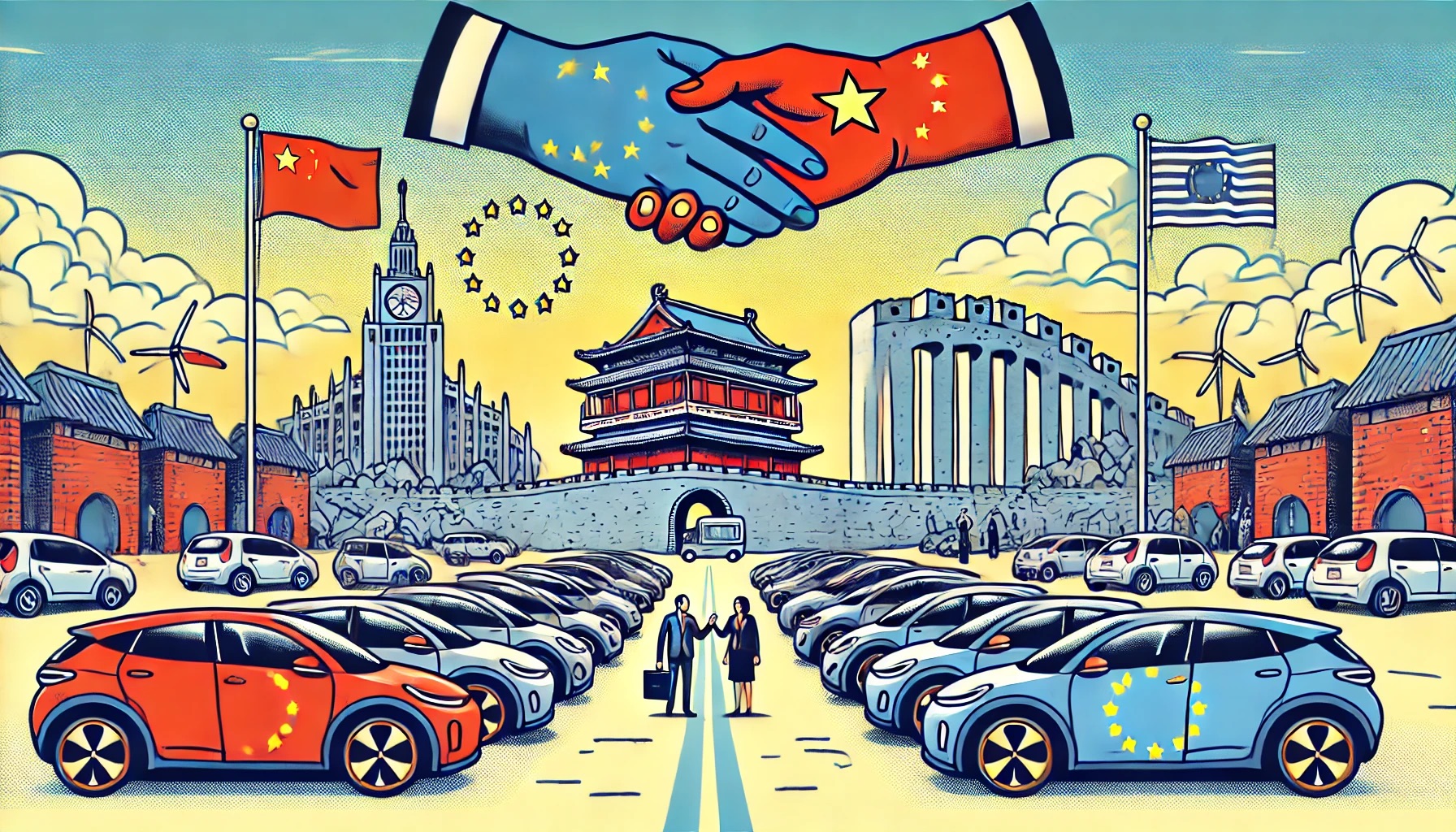
In a significant development, the EU and China have agreed to lower tariffs on electric vehicles, benefiting Tesla and BYD. The move follows intense discussions about pricing and potential subsidies impacting the European market.
European Commission Executive Vice President and Trade Commissioner Valdis Dombrovskis and Chinese Minister of Commerce Wang Wentao recently met and agreed to resolve issues on European tariffs on electric vehicle (EV) imports made in China.
EV Tariff Negotiations Begin
Rumor has it that Dombrovskis has agreed to keep negotiating price commitments for Chinese electric vehicle imports, as stated by Teslarati, according to the Ministry of Commerce. Wang and Dombrovskis reached an agreement that the two countries would work together to find a solution that would satisfy everyone.
Reportedly, the Commission has lowered its tariff rates for electric vehicle imports built in China to 35.3% as of this writing. Duties will supposedly be reduced for carmakers who received individual rates as well, including BYD, Geely, Tesla, and Volkswagen. The rate at Tesla, for example, is said to be going down from 9% to 7.8%.
Lower Tariffs for BYD, Tesla, and Geely
The European Commission began its investigation into Chinese electric vehicle imports for possible subsidies without receiving a formal complaint from European industries, as Minister Wang pointed out during his discussion with the commissioner. The verdicts of the investigation, he said, are irrational and unfair in addition to being non-compliant.
While the Commission was looking into the matter, the Chinese minister also reminded Dombrovskis that China had suggested a solution involving a price pledge. He went on to say that in response to EU concerns, China had revised their pricing promise proposal. So far, the Commission has not turned down any of China's suggestions.
China’s Pricing Pledge Gains Traction
The Ministry's report states that Wang warned that China will intervene if needed to safeguard the legal interests and rights of its businesses.
It is China's duty to protect the lawful interests and reasonable demands of its own industry, according to the Chinese Ministry of Commerce.







