


 Physicists zoom into the birth of cosmic rainstorms with new CERN study
  SoftBank Launches $11 Billion Bond Sale to Fund OpenAI Investment
  Scott Bessent Eyed as Trump’s New AI Czar
  Rosenblatt Starts Nokia at Buy on AI Networking Growth
  Burnham Eyes UK Leadership Role in AI Ahead of Trump Meeting
  DOJ Will Investigate AI-Related Crimes, Attorney General Blanche Says
  SpaceX Nasdaq 100 Weight to More Than Double in Rebalance
  MediaTek Unveils 2nm Dimensity 9600 Pro AI Chip
  Hyundai CEO Warns Chinese Automakers Could Disrupt US Market
  US Northeast Airports Resume Operations After Telecom Outage Disrupts Thousands of Flights
  Meta Partners With Shopify to Bring Shop Pay Checkout to Muse AI
  US Federal Register Drops Alibaba Qwen AI Search Tool
  AI is supercharging money scams – here’s what you can do to protect yourself
  France Urges Faster AI Push Despite Safety Risks
  Trump Plans Federal AI Force and AI Czar
  Westinghouse Targets $50 Billion Valuation in U.S. IPO
  China Reviews Broadcom Switch Use in State Data Centres


 Add as a preferred source on Google
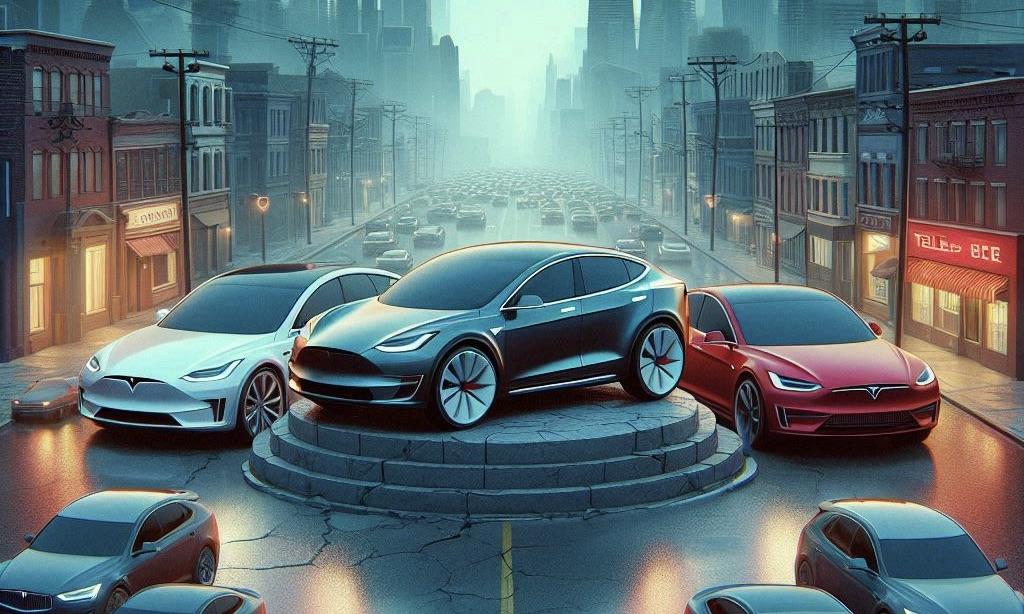
Tesla, Rivian, and Polestar underperformed in J.D. Power's 2024 Initial Quality Study, with Polestar ranking lowest. The study highlighted increased repair needs for EVs compared to gas-powered vehicles.
J.D. Power: EVs Face Higher Repair Rates as Traditional OEMs Improve Quality, Says Report
According to J.D. Power's report (via Teslarati), "problems plagued" battery electric vehicles as traditional OEMs normalized the playing field.
Frank Hanley, Senior Director of Auto Benchmarking at J.D. Power, stated:
“It is not surprising that introducing new technology has challenged manufacturers to maintain vehicle quality. “However, the industry can take solace in the fact that some problem areas such as voice recognition and parking cameras are seen as less problematic now than they were a year ago.”
The J.D. Power study emphasized the assertions that owners and manufacturers frequently make of EVs, which suggest that the reduced number of proponents for these vehicles makes them less problematic and less likely to require repairs.
Nevertheless, this year's study incorporated new repair data, indicating that BEVs and PHEVs require more repairs than gas-powered vehicles in all categories.
Hanley added the following:
“Owners of cutting edge, tech-filled BEVs and PHEVs are experiencing problems that are of a severity level high enough for them to take their new vehicle into the dealership at a rate three times higher than that of gas-powered vehicle owners.”
Ram Tops J.D. Power Quality Study as Tesla, Rivian, and Polestar Struggle with High Defect Rates
Ram was the most successful brand in this year's study, with an initial quality rating of 149 defects per 100 vehicles, as determined by J.D. Power. Chevrolet (160), Hyundai (162), and Kia (163) secured the second, third, and fourth positions, accordingly.
The study's average was 195 issues per 100 vehicles.
This leads us to the performances of Tesla, Polestar, and Rivian. Rivian and Tesla had 266 issues per 100 vehicles, tied for the third-worst rate, following Polestar (316) and Dodge (301).
The three brands were listed below the actual study results due to J.D. Power's assertion that they are "not rank eligible because it does not meet study award criteria."
This is what J.D. Power had to say about BEVs, specifically Tesla:
“Gas- and diesel-powered vehicles average 180 PP100 this year, while BEVs are 86 points higher at 266 PP100. While there are no notable improvements in BEV quality this year, the gap between Tesla’s BEV quality and that of traditional OEMs’ BEV quality has closed, with both at 266 PP100. In the past, Tesla has performed better, but that is not the case this year, and the removal of traditional feature controls, such as turn signals and wiper stalks, has not been well received by Tesla customers.”
In the past, Tesla has demonstrated strong performance in J.D. Power studies, particularly those focusing on in-vehicle technology and EV ownership experiences.
Photo: Microsoft Bing







