


 TSMC Japan's Second Fab to Produce 3nm Chips by 2028
  China's Push to Steal Taiwan's Chip Technology and Talent Raises Security Alarms
  Australia's Social Media Ban for Under-16s Sparks Global Movement
  NASA Artemis II: First Crewed Moon Mission Since Apollo Takes Four Astronauts on 10-Day Lunar Journey
  SMIC Allegedly Supplies Chipmaking Tools to Iran's Military, U.S. Officials Warn
  NASA's Artemis II Mission: First Crewed Lunar Journey Since Apollo
  Elon Musk Ties SpaceX IPO Access to Mandatory Grok AI Subscriptions
  OpenAI Executive Shake-Up Ahead of Anticipated 2026 IPO
  Britain Courts Anthropic Amid US Defense Department Dispute
  Apple's Foldable iPhone Faces Engineering Setbacks, Mass Production Timeline at Risk
  Makemation: a Nollywood movie that shows AI in action in Africa
  Cybersecurity Stocks Tumble After Anthropic's Claude Mythos AI Leak Sparks Market Fears
  Annie Altman Amends Sexual Abuse Lawsuit Against OpenAI CEO Sam Altman
  Apple Turns 50: From Garage Startup to AI Crossroads
  SK Hynix Eyes Up to $14 Billion U.S. IPO to Fund AI Chip Expansion
  Nanya Technology Shares Surge 10% After $2.5 Billion Private Placement from Sandisk and Cisco
  Samsung Electronics Posts Eightfold Profit Surge Driven by AI Chip Demand


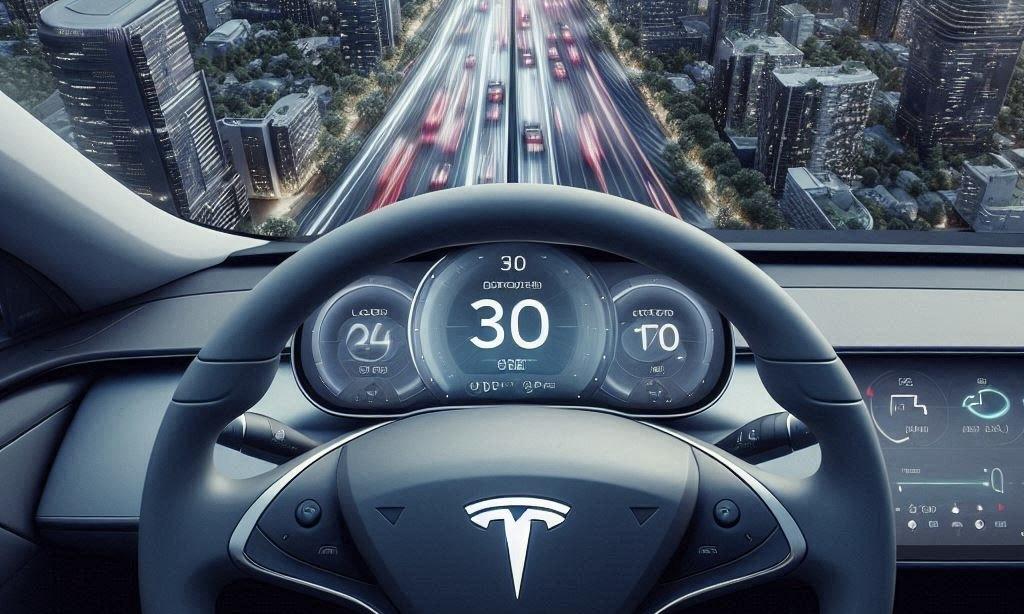
Tesla’s Full Self-Driving (FSD) update version 12.5.6.2 now allows speed profiles on roads with speed limits of 50 mph or higher, extending beyond highways to city streets. This feature, part of the 2024.33.30 software update, provides drivers with three modes: Standard, Hurry, and Chill.
Tesla FSD Update Expands Speed Profiles to Roads with Speed Limits of 50 mph and Above
Tesla's Full Self-Driving (FSD) Supervised speed profiles have been modified, allowing the feature to operate on more roadways than before, per Teslarati.
Previously, the capability could only be utilized on highways. Still, Tesla has modified the software in FSD version 12.5.6.2 to enable speed profiles on any road with a speed restriction of 50 mph or above. Ashok Elluswamy, the vice president of AI software at Tesla, verified the information on X this week.
The FSD FSD-supervised version was made available with Tesla software update 2024.33.30. Elluswamy responds that speed profiles had been expanded beyond highways when a user noticed that they could now be used on city streets.
“Speed profiles were extended to 50 mph or higher speed limit roads,” Elluswamy said.
Tesla's Redesigned FSD Modes: Standard, Hurry, and Chill Offer Drivers More Control
Standard, Hurry, and Chill are Tesla's three distinct speed profiles, formerly known as Average and Assertive modes, respectively. Elon Musk stated in June that Tesla would change the modes' names to Standard and Hurry after the company redesigned its FSD drive modes earlier this year.
Drivers in chill mode typically stay in slower lanes and refrain from changing lanes to pass. On the other hand, the Hurry mode provides:
- Quicker.
- Moreover, all driving speeds frequent lane changes to pass.
- A tendency to stay in the fast lane.
On the other hand, the Standard option falls somewhere in the middle, striking a balance between the more incredible speed provided by the Hurry mode and a more laid-back attitude toward lane positions.
Vehicles equipped with Tesla's AI4 computer are anticipated to be the first to receive the software, though cars with the earlier HW3 equipment will probably receive it eventually. Although the FSD speed options aren't yet accessible on roads with speeds lower than fifty miles per hour, the feature may include slower speeds.







