


 Inspire Brands IPO Could Raise $2 Billion as Roark Capital Explores Public Listing
  OpenAI Explores New Code-Hosting Platform to Reduce Dependence on GitHub
  Foxconn Sees Strong Growth Ahead Despite Limited Impact From U.S.–Israel–Iran Tensions
  Denso Reportedly Bids $8.2 Billion to Acquire Rohm in Major Japanese Semiconductor Deal
  Shell Signs Oil and Gas Agreements With Venezuela to Advance Dragon Gas Project
  Wizz Air Receives Tentative U.S. Approval for UK–U.S. Flights Amid Rising Travel Demand
  DBS Wins Key Licence to Underwrite Corporate Bonds in China’s Interbank Market
  BYD Launches Next-Generation Blade Battery With 1,000 km Range as EV Competition Intensifies
  California Court Rejects xAI Bid to Block AI Data Transparency Law
  Nvidia CEO Jensen Huang Says $100B OpenAI Investment Unlikely as AI Demand Surges
  FDA Warns Novo Nordisk Over Misleading Ozempic Ad Claims
  US Lawmakers Raise Security Concerns Over Intel Testing ACM Research Chipmaking Tools
  Big Tech Signs White House Pledge to Fund Power for AI Data Centers
  Pentagon Labels Anthropic AI a Supply-Chain Risk, Restricting Use in U.S. Military Projects
  U.S. Officials Review Tencent’s Stakes in Epic Games, Riot Games Over Security Concerns
  OpenAI Explores Partnership With The Trade Desk to Expand ChatGPT Advertising
  Morgan Stanley to Cut 2,500 Jobs as Wall Street Layoffs Continue


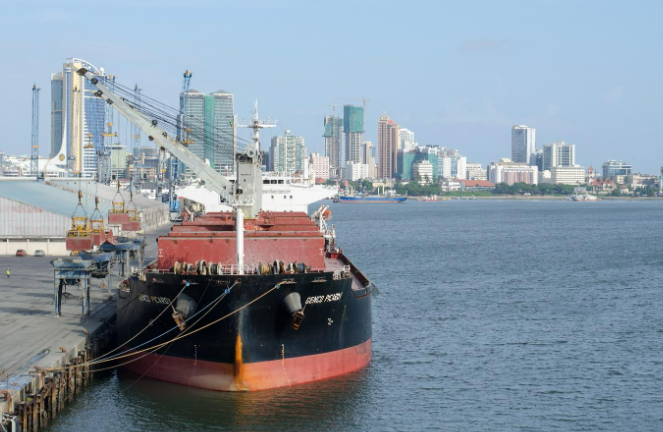
While doubts are often cast on East Africa's financial stability, these judgements require more scrutiny.
Kenya, long regarded as the region's financial hub, saw its sovereign credit rating downgraded by Moody's to Caa1 in 2024, following the fiscal pressures exposed by widespread anti-finance bill protests that forced a government retreat on planned tax measures.
Tanzania's experience – recently confirmed as a very stable prospect - tells a different story. But what is the implication of ratings given by companies on the other side of the globe?
Sovereign credit ratings are one of the primary tools by which international capital markets assess the financial credibility of a country. Issued by agencies such as Moody's, Fitch, and S&P, they measure a government's ability and willingness to service its debts.
Beyond debts, these ratings try to quantify the stability of national macroeconomic frameworks and resilience to external shocks.
For investors, commercial banks, development agencies, and foreign governments, these ratings directly inform the cost of borrowing, the terms of lending, and the appetite for long-term engagement.
A stable or improving rating signals to global markets that a country is a reliable counterpart. More importantly, it signals that it is one worth backing.
It is within this context that Moody's Ratings' February 2026 affirmation of Tanzania's B1 sovereign credit rating is so significant. B1 refers to a country with a stable outlook. And while B1 is not a perfect score, what matters to investors is what it tells us about direction and durability.
Following a period of electoral turbulence and with concessional financing becoming more constrained, Tanzania's rating did not move from its positive position. The fundamentals held.
At its core, the affirmation reaffirms what experienced observers of Tanzania's economy have long recognised: this is a country with strong structural foundations, a credible trajectory of reform, and the natural and human endowments to sustain meaningful long-term growth.
Moody's projects real GDP growth of at least 6% going forward, a figure that places Tanzania firmly among Africa's stronger-performing economies and reflects a growth model that is being proactively diversified and deepened.
Underpinning this outlook is a broadening economic base.
Rather than dependency on a single industry, Tanzania is developing resilience through diversification. Expansion across manufacturing, mining, processing, tourism, and transport-related services is creating a more layered and durable growth profile. This is the kind of broad-based momentum that offers durable protection against external shocks.
Combined with major investments in public infrastructure and significant improvements in energy reliability, the conditions for sustained private-sector-led investment are increasingly in place.
The macroeconomic policy environment has also strengthened considerably. Inflation has remained below 5% since 2018. This represents a record of price stability – one that even G7 nations would be jealous of - that speaks to the credibility of Tanzania's monetary institutions.
The Bank of Tanzania has modernised how it manages interest rates, and its approach seems to be working. Borrowing costs are aligning as predicted. The country has also resolved a longstanding shortage of foreign currency by allowing the exchange rate to move more freely and developing local currency markets.
One practical result of these reforms: the informal 'black market' for dollars, long a symptom of economic stress, has been eliminated. These are concrete, structural improvements rather than cyclical fluctuations.
On the fiscal side, the picture is one of careful management amid competing demands. Government debt stands at just below 50% of GDP. This is moderate relative to regional peers with Moody's expecting it to stabilise at current levels.
In conjunction with strong nominal growth and ongoing revenue mobilisation efforts through digital tax systems, Tanzania is closing the revenue gap. These meaningful advances in tax administration, digitisation, and compliance are indicators of a fiscally responsible state.
Rising non-tax revenues linked to governance reforms across state-owned enterprises such as energy and mining operations means Tanzania has more firepower to deploy on its development agenda.
Tanzania's resource endowment represents a significant and still underutilised source of upside. The country's natural wealth, coupled with continued infrastructure investment, creates genuine potential for growth.
These natural resources have attracted higher foreign direct investment and supported a more diversified export base. Moody's identifies this explicitly as a driver of positive risk. For investors seeking long-term exposure to Sub-Saharan Africa's growth narrative, it warrants close attention.
Tanzania is a country that has transitioned from aid dependence toward private-sector-driven growth, from regulatory uncertainty to predictability, and from a narrow economic base to one capable of generating inclusive, sustained prosperity.
The affirmation by Moody's reflects the meaningful distance already travelled. If the past five years are an indicator of what is yet to come, the opportunity ahead is substantial.













