


 Volkswagen Shares Slide After 2026 Profit Outlook Cut
  White House Bars CNN, MS NOW and Politico Reporters
  Apple Pay Set for India Launch With Axis Bank
  US Federal Register Drops Alibaba Qwen AI Search Tool
  fnny Beta Launches With a Simple Idea: Find an Event, Show Up, Get Rewarded
  Prysmian, Rio Tinto Supply Low-Carbon Cables for Amazon Ohio Data Center
  FAA Allows Boeing to Sell 35 More 777F Freighters Beyond 2028
  FCC Approves Foreign Investment in $110B Paramount-Warner Bros. Deal
  OpenAI Urges US-Led Global Standards for Frontier AI
  CNN, MS NOW and Politico Sue Trump Over White House Media Ban
  Petrobras Joins Brazil’s New Diesel Subsidy Program
  US Northeast Airports Resume Operations After Telecom Outage Disrupts Thousands of Flights
  SoftBank Launches $11 Billion Bond Sale to Fund OpenAI Investment
  Paramount Skydance Faces $30 Million Film Penalty in Warner Bros. Deal
  Nike Earnings at Risk as UBS Cuts Price Target to $42
  Trump Bans CNN, MS NOW and Politico From White House
  Meta Partners With Shopify to Bring Shop Pay Checkout to Muse AI


 Add as a preferred source on Google
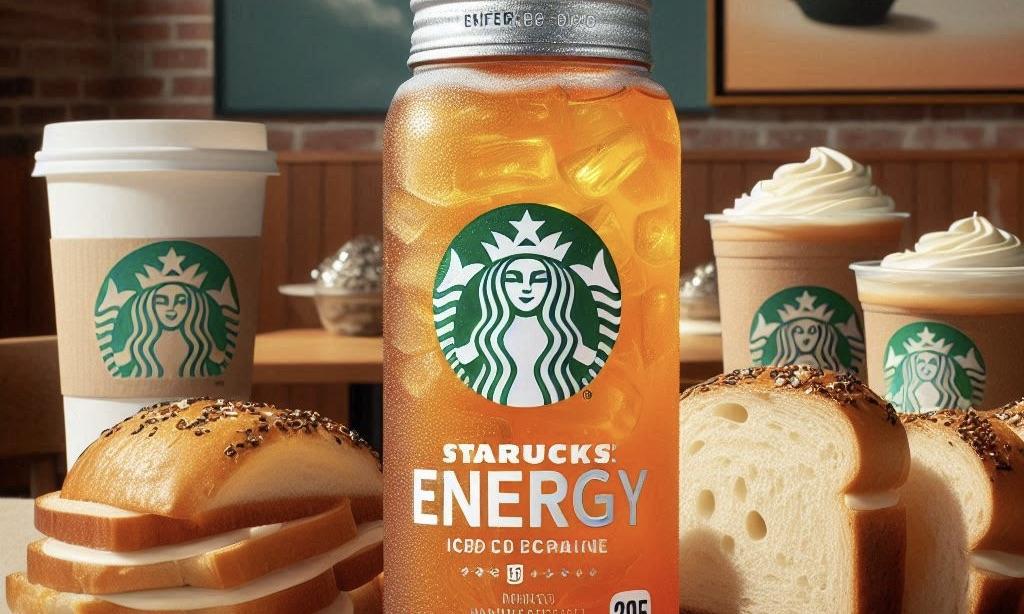
Starbucks launched its new Iced Energy drink nationwide on June 25, containing up to 205 milligrams of caffeine. This fruity beverage debuts shortly after Panera discontinued its controversial Charged Lemonade, which faced lawsuits and was blamed for fatalities.
Starbucks' Iced Energy Debuts with Up to 205mg Caffeine, Following Panera's Charged Lemonade Discontinuation
In a recent report by NBC News, the Iced Energy beverages contain up to 205 milligrams of caffeine, significantly less than the controversial Charged Lemonade. However, this amount is still equivalent to approximately six cans of Coke.
On June 25, Starbucks introduced Iced Energy at its stores nationwide. This beverage contains up to 205 milligrams of caffeine, equivalent to the caffeine content of six cans of Coke. The fruity energy drink debuted less than two months after Panera Bread, a bakery-cafe chain, announced that it was discontinuing its controversial Charged Lemonade. The beverage was called a "dangerous energy drink" and was the subject of lawsuits. It was also blamed for two fatalities.
The Iced Energy is available in three flavors, one exclusively through the Starbucks app. According to Starbucks, the caffeine content of its two in-store menu items, Melon Burst and Tropical Citrus, ranges from 180 to 205 milligrams. That is more than a grande Starbucks Caffe Latte, which contains 150 milligrams of caffeine. Still, it is substantially less than Panera's Charged Lemonade, which includes 390 milligrams of caffeine when served in a large, 30-fluid-ounce cup without ice. Panera phased out the Charged Lemonade on May 7, and the company has disputed any wrongdoing, stating that it was removed as part of a broader menu transformation.
Iced Energy is sugar-free and contains artificial sweeteners, except for the limited-edition Frozen Tropical Citrus Iced Energy with Strawberry Puree. All flavors are exclusively available in Starbucks' 24-fluid-ounce venti size and contain caffeine, vitamins, and taurine. This amino acid is frequently found in popular energy beverages and has been claimed to enhance exercise performance, although additional research is required. Although taurine is not a stimulant, certain animal studies suggest that chronic high-dose consumption of it may be detrimental to the developing brains of adolescents.
In contrast, Charged Lemonade contains sugar and guarana extract, a stimulant that benefits weight loss and cognitive function. However, it can be hazardous when consumed in large quantities over an extended period.
Functional Beverages Surge as Starbucks, Dunkin', and Smoothie King Expand Energy Drink Offerings
According to experts, the "functional beverages" category is expanding, and both large and small chains are anxious to participate. This category includes Charged Lemonade and Iced Energy. Ingredients in these beverages are purported to enhance health.
“You’re just seeing that desire for functional beverages taking hold in a lot of different beverage segments,” said Brian Warrener, director of the Center for Beverage Education & Innovation at Johnson & Wales University in Providence, Rhode Island, adding that nonalcoholic “mocktail” elixirs are another area of enormous growth within functional beverages. “Consumers believe that there is some benefit.”
Starbucks has introduced a new beverage, one of numerous comparable options in other regions. Dunkin' introduced SPARKD's Energy beverages in February, as Panera was still reeling from the multiple lawsuits regarding its Charged Lemonade. These effervescent energy drinks are available in peach and berry flavors and contain up to 192 milligrams of caffeine. They are formulated with guarana and taurine. Smoothie King provides lemonade refreshers containing up to 125 milligrams of "natural caffeine" from green coffee beans.
The energy drink market has experienced an explosion: Circana, a Chicago-based market research firm, reported that the annual sales of energy beverages in the United States had increased to nearly $22 billion by mid-May from approximately $13.5 billion at the end of 2019.
Additionally, energy drinks contain an unprecedented quantity of caffeine. Red Bull, which has been in circulation for decades, contains 114 milligrams of caffeine in a 12-fluid-ounce can, whereas numerous newer varieties, such as Celsius, contain 200 milligrams or more. Bang, on the other hand, contains 300 milligrams.
According to the Food and Drug Administration, healthy individuals are generally permitted to consume up to 400 milligrams of caffeine daily, equivalent to approximately four or five cups of coffee.
The grande blonde roast steaming coffee, which contains 360 milligrams, is one of the items on Starbucks' menu that approaches this level. The limited-edition frozen beverage, which contains 140 milligrams of caffeine, is the least caffeinated of the three Iced Energy varieties that Starbucks has introduced, according to the nutrition facts available on its website.
The American Academy of Pediatrics has stated explicitly that adolescents should avoid energy beverages due to health concerns. While most adults can consume caffeine, it is not beneficial for children.
A growing number of countries have implemented bans on selling energy drinks to minors, with Russia being the most recent to do so. Numerous state-led initiatives in the United States have yet to achieve the same result.
Starbucks' Iced Energy is distinct from its refreshers, popular caffeinated juices containing approximately 30 milligrams of caffeine or more, slightly more than the quantity in a Coke. Starbucks baristas have disclosed on TikTok that parents are frequently unaware that refreshers contain caffeine when requesting it for their children.
Starbucks stated in an email on June 25 that it is "transparent with ingredients and nutrition information, so customers can choose what's right for them," in response to a query about whether it would take measures to prevent children from drinking its new energy drinks.
The coffee chain also stated that its Venti Iced Energy beverages have a caffeine content comparable to a grande, 16-fluid-ounce Starbucks Cold Brew, which contains 205 milligrams. The ingredients and caffeine totals can be accessed on its website and app.
Photo: Microsoft Bing







