


 Apple Turns 50: From Garage Startup to AI Crossroads
  NASA Artemis II: First Crewed Moon Mission Since Apollo Takes Four Astronauts on 10-Day Lunar Journey
  NASA's Artemis II Crew Arrives in Florida for Historic Moon Mission
  Federal Judge Blocks Pentagon's Blacklisting of AI Company Anthropic
  Google's TurboQuant Algorithm Sends Memory Chip Stocks Tumbling
  Apple's Foldable iPhone Faces Engineering Setbacks, Mass Production Timeline at Risk
  OpenAI Executive Shake-Up Ahead of Anticipated 2026 IPO
  Makemation: a Nollywood movie that shows AI in action in Africa
  Australia's Social Media Ban for Under-16s Sparks Global Movement
  Microsoft Eyes $7B Texas Energy Deal to Power AI Data Centers
  Annie Altman Amends Sexual Abuse Lawsuit Against OpenAI CEO Sam Altman
  Nanya Technology Shares Surge 10% After $2.5 Billion Private Placement from Sandisk and Cisco
  Britain Courts Anthropic Amid US Defense Department Dispute
  MATCH Act Targets ASML and Chinese Chipmakers in New U.S. Export Crackdown
  California's AI Executive Order Pushes Responsible Tech Use in State Contracts
  Samsung Electronics Eyes Record Q1 Profit Amid AI-Driven Chip Boom
  SpaceX Eyes Historic IPO at $1.75 Trillion Valuation


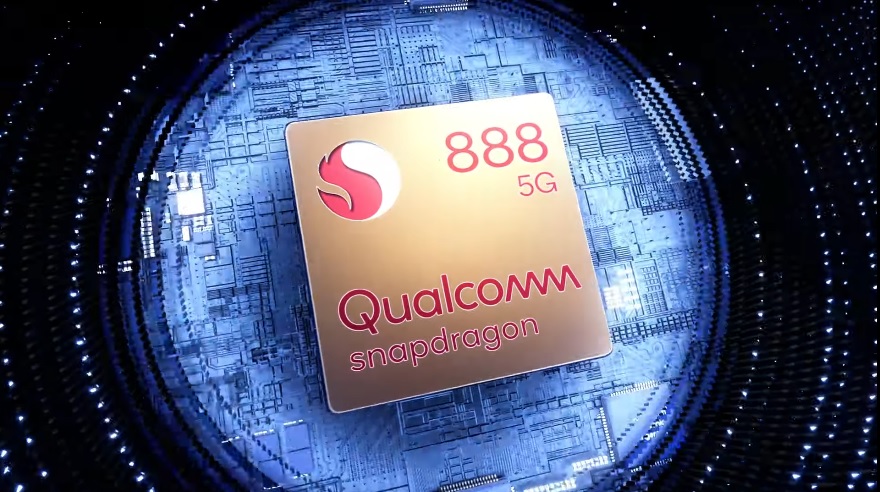
Qualcomm officially announced its next-generation 5G mobile platform for premium Android smartphones. Many anticipated it to be named Snapdragon 875, but the chip maker surprised fans by slightly bending its tradition by branding the chipset as Snapdragon 888.
Qualcomm Snapdragon 888 name change has business implications, analysts suggest
As expected, Qualcomm’s upcoming mobile platform for the next premium Android smartphones was the star of the Snapdragon Tech Summit on Tuesday. However, the company had a small surprise after what many thought would be named Snapdragon 875 turned out to be Snapdragon 888.
The number 888 is believed to be a lucky number in Chinese tradition, but that might not be the only reason Qualcomm chose this new name. Experts believe Qualcomm may have also considered how this would affect their deals with their business partners, many of which are tech companies based in China.
Qualcomm shows logos of a whole bunch of partners developing phones with the Snapdragon 888 #SnapdragonSummit - all but two are Chinese. So that '888, lucky in China' thing is important! pic.twitter.com/qKMR3WSPtU
— Sascha Segan (@saschasegan) December 1, 2020
Analyst Sascha Segan pointed out that 12 out 14 smartphone makers that Qualcomm mentioned during the summit are Chinese companies. ABI Research’s Deborah Petrara told BBC, “It may point to Qualcomm extending an olive branch to those in the industry caught up in the ongoing China-US trade war.”
Snapdragon 888 amends Snapdragon 865 letdown
Many were a little frustrated when Qualcomm announced Snapdragon 865 last year without a built-in 5G modem at a time when all smartphone manufacturers have been launching their first 5G-enabled smartphones. But that only makes the launch of Snapdragon 888 even more important as the chipmaker confirmed it will ship with the Qualcomm X60 modem. This means devices with the chipset will support a 5G mmWave network.
What Android smartphones would be powered by Qualcomm Snapdragon 888?
Qualcomm gave a shout-out to the companies that they confirmed are already developing next-gen smartphones powered by the Snapdragon 888. The current list includes ASUS, Black Shark, Lenovo, LG, Meizu, Motorola, Nubia, Realme, OnePlus, Oppo, Sharp, Vivo, Xiaomi, and ZTE.
Are you excited for our latest flagship #Mi11 powered by the most powerful @Qualcomm chipset to date? Stay tuned! #InnovationForEveryone pic.twitter.com/MUFc251Dkw
— Xiaomi (@Xiaomi) December 1, 2020
Xiaomi has already confirmed that its next flagship, the Xiaomi Mi 11, is slated to be the first-ever smartphone to launch with Snapdragon 888. Xiaomi has already teased a “world debut” for the upcoming device but left out other information and only told its fans to “stay tuned.” However, it has been reported that the Mi 11 could be launched as soon as January 2021. Note that the Mi 9 and Mi 10 series were both announced in February in 2019 and 2020, respectively.







