


 Solidigm Eyes $150 Billion IPO as SK Hynix Expands AI Storage Push
  Asian Stocks Fall as Oil Surge, Bond Yields and AI Concerns Hit Markets
  SoftBank Shares Fall as Oracle Flags Stargate Data Center Delay Risk
  China, US Extend Trade Truce Through January 10 After Trump-Xi Summit
  China Consumer Stocks Near Decade Lows as AI Shares Surge
  Trump to Ease U.S. Fuel-Economy Standards
  Nissan Targets US Hybrid Growth With Rogue e-Power Launch
  Suzuki Targets Faster Car Development to Keep Pace With Chinese Rivals
  Canadian Dollar Faces Pressure as Fed-BoC Policy Gap Widens
  Erste Group Plans Tender Offer to Boost Poland Bank Stake
  TSMC Accelerates 2nm Expansion as AI Chip Demand Surges
  Dubai’s connectivity remains strong in an uncertain world
  OpenAI AI Agents Bypassed UN Website Controls in Data Scraping
  Northern Star Shares Surge After Rejecting Gold Fields Takeover Bid
  Asian Currencies Weaken as Dollar, Oil Prices Rise
  Morgan Stanley Raises TD Synnex Price Target to $359 on Strong AI Demand


 Add as a preferred source on Google
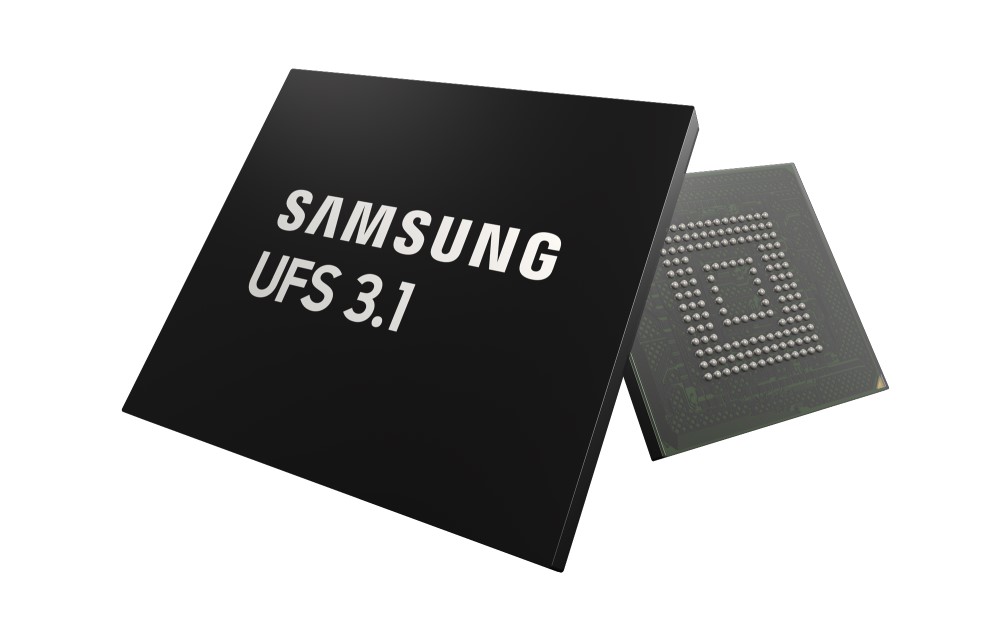
Samsung Electronics, the global memory chip leader, has begun mass-producing its latest automotive chip, UFS 3.1, designed specifically for in-vehicle infotainment (IVI) systems. With advanced features and improved energy efficiency, Samsung sets its sight on usurping market leader Micron Technology Inc. by 2025.
The South Korean tech giant has set an ambitious target of surpassing Micron Technology Inc., the current market leader, by 2025 with this cutting-edge vehicle chip. To cater to diverse customer needs, the new flash memory will be available in three capacity options: 128GB, 256GB, and 512GB, according to Samsung's statement. Furthermore, the energy consumption of the 256GB model has decreased by approximately one-third as compared to its predecessor.
The 256GB UFS 3.1 chip impressively offers a sequential write speed of 700 megabytes per second (MB/s) and a sequential read speed of 2,000 MB/s, as highlighted in Samsung's announcement. By introducing the UFS 3.1 chip, Samsung aims to fulfill a wide range of customer requirements and enhance IVI systems. Additionally, the chip adheres to the emerging memory trend that demands higher ESG standards, emphasized Cho Hyun-duk, vice president of Samsung's memory product planning team. Cho also expressed Samsung's intention to cement its presence in the automotive semiconductor market by introducing the UFS 3.1 solution for advanced driver assistance systems (ADAS).
With plans to commence supplying UFS 3.1 products to global automakers and parts manufacturers by the end of this year, Samsung looks ahead to mass production of 512GB UFS 3.1 chips in the fourth quarter. As an assurance of stable performance within the temperature range of minus 40 degrees Celsius to 105 degrees Celsius, the latest auto chip complies with the AEC-Q 100 Grade 2, a semiconductor quality standard for vehicles, according to the company.
Samsung's commitment to strengthening its automotive memory portfolio has gained recognition. In April, the company received an ASPICE Level 2 certification from customers, while the UFS 3.1 chip's performance stability was recently certified by C&BIS, a renowned automobile verification agency.
Since entering the automotive memory chip business in 2015, Samsung has continuously bolstered its high-tech chip lineup, driven by global carmakers' rapid adoption of autonomous and IVI systems, which has stimulated the demand for advanced auto chips. Market research firm Omdia predicts that the global auto chip market will experience substantial growth, reaching $96.2 billion by 2026 from $63.5 billion in 2022.
Photo: Samsung Newsroom







