


 US, China Extend Trade Truce to Jan. 10 Ahead of Trump-Xi Summit
  Dollar Holds Near Two-Month High as Yen Approaches 160
  US Stock Futures Fall as Treasury Yields Surge Ahead of Trump-Xi Summit
  U.S. Dollar Hits Two-Month High as Oil, Treasury Yields Surge
  U.S. Treasury Yields Surge as 30-Year Hits 22-Year High
  South Korea, US Discuss Warship Building Cooperation
  Asian Stocks Fall as Bond Yields Surge Ahead of Trump-Xi Summit
  Fed Unveils Stablecoin Rules Under GENIUS Act
  Japanese Bank Stocks Surge as Bond Yields Fuel Rate Hike Bets
  Fed Unveils Stablecoin Rules Under GENIUS Act
  Asian Stocks Fall as Surging Bond Yields Rattle Markets
  U.S. 10-Year Treasury Yield Hits 2007 High as Fed Rate Hike Bets Rise
  Gold Holds Near $4,275 as Rising Treasury Yields Fuel Fed Rate Hike Bets
  Japan Private-Sector Growth Slows as Domestic Demand Weakens
  Trump, Xi Focus on Trade and AI at White House Summit
  Australia Unemployment Hits Five-Year High Despite Strong Jobs Growth


 Add as a preferred source on Google
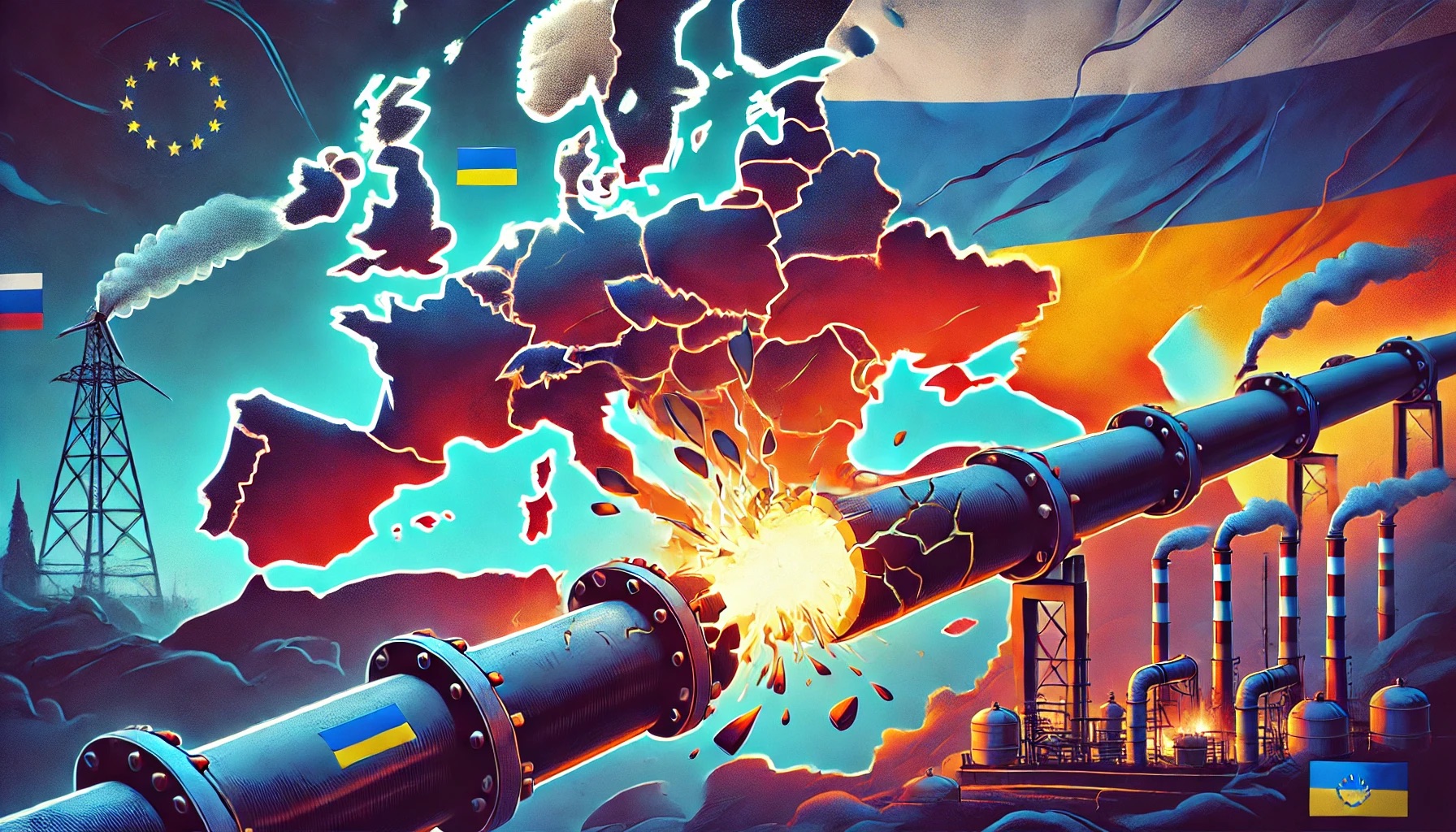
The transit of Russian gas through Ukraine officially stopped on New Year's Day, ending decades of Moscow's dominance in Europe's energy markets. The halt follows Ukraine's refusal to renew the deal, pushing Europe closer to energy independence.
Russia Halts Gas Transit Through Ukraine, Ending Decades of Energy Dominance
After decades of Moscow's control over Europe's energy markets, Russian gas exports via Soviet-era pipelines passing through Ukraine came to a stop on New Year's Day.
Gazprom, a Russian gas company, announced the shutdown at 0500 GMT following Ukraine's refusal to renew a transit agreement; the gas had continued flowing despite the nearly three-year war, Investing.com shares.
Unlike in 2022, when records were shattered, a cost-of-living crisis intensified, and the bloc's competitiveness took a hit due to decreased supplies from Russia, the anticipated pause will have little effect on prices for EU consumers.
EU Adapts as Slovakia and Austria Shift Suppliers
Slovakia and Austria, two of the last European Union countries who bought gas from Russia through Ukraine, have changed their suppliers, while Hungary will continue to get its gas from Russia through the TurkStream pipeline under the Black Sea.
Households in Transdniestria, a pro-Russian breakaway province of Moldova that is adjacent to Ukraine and similarly depends on the transit flows, had their heating and hot water supplies turned off early on Wednesday. Electric heaters, heavy drapes or blankets over windows and balcony doors, and warm clothing were all recommended by local energy provider Tirasteploenergo.
Ukraine Declares Halt a Major Defeat for Russia
"One of Moscow's biggest defeats" was the termination of gas transit through Ukraine, according to Ukrainian President Volodymyr Zelenskiy, who expressed his displeasure on the messaging app Telegram and called on the United States to increase gas supplies to Europe.
"The more there is on the market from Europe's real partners, the faster we will overcome the last negative consequences of European energy dependence on Russia," according to him.
EU Infrastructure Prepared for Non-Russian Gas Supplies
It was announced by the European Commission that the EU was ready for the cut-off.
"The European gas infrastructure is flexible enough to provide gas of non-Russian origin," stated a Commission spokesperson. "It has been reinforced with significant new LNG (liquefied natural gas) import capacities since 2022."
During the past fifty years, Russia and the former Soviet Union have steadily increased their dominance in the European gas market, which peaked at almost 35%. With the beginning of the war in Ukraine, the European Union has increased its purchases of piped gas from Norway and LNG from Qatar and the US, reducing its reliance on Russian energy.
Economic Ramifications for Ukraine and Russia
According to Ukraine, Europe has already decided to stop buying gas from Russia therefore there's no need to prolong the transit contract.
"We stopped the transit of Russian gas. This is a historic event. Russia is losing its markets, it will suffer financial losses," stated German Galushchenko, Ukraine's energy minister.
Russia might charge Ukraine as much as $1 billion per year in transit fees. Wednesday marks the beginning of a fourfold increase in gas transmission charges for domestic users, an action that would cost the business about 1.6 billion hryvnias ($38.2 million) annually.
Gas sales will cost Gazprom about $5 billion.
Decreased Gas Flow to Austria Reflects Broader Trends
Gas from Russia has been flowing into Austria via Slovakia at a rate of about 200 gigawatt hours (GWh) per day since the business cut off supply to OMV in the middle of November due to a contractual dispute. According to Austrian energy regulator E-Control, the estimated daily flow from Slovakia to Austria on January 1st is only 7 GWh.
SPP, the primary gas purchaser in Slovakia, has stated that it will primarily serve its clients through pipelines in Hungary and Germany but that it will incur increased transit expenses as a result.
Europe received a record-breaking 201 billion cubic meters (bcm) of gas in 2018 through a combination of Russian pipeline lines.
Two pipelines, one connecting Russia and Europe via Belarus and the other over the Baltic Sea to Germany, were destroyed in explosions in 2022.
In 2023, Russian gas shipments via Ukraine were around 15 bcm, a decrease from 65 bcm at the start of the last five-year deal in 2020.







