


 Global Poll Shows Rising Trust in Institutions as US-China Leadership Support Falls
  Houthi Red Sea Gains Strengthen Iran’s Leverage Over Gulf States
  South Korea’s Cho Hyun to Meet Rubio in Washington
  Takaichi-Backed Koja Wins Okinawa Governor Race
  Europe can’t achieve space sovereignty alone. Here’s why
  US Immigration Arrests Surge as Deportations Lag Behind
  Vietnam, U.S. Firms Plan 29 Deals Across Energy, Tech and Aviation
  Trump Open to Chinese Automakers Building Cars in US
  Trump Rejects Calls for Tougher AI Regulation
  Lula, Flavio Bolsonaro Deadlocked in Brazil Election Polls
  Mahmoud Khalil Sues Columbia Over Alleged Pro-Palestinian Harassment
  What is Zionism? The different meanings of a contested term
  Ovechkin Faces Scrutiny Over United Russia Campaign Video
  US Confirms Weapons in Orbit as Space Tensions Rise
  Sweden Election: Centre-Left Holds Narrow Lead
  Saudi Arabia Raises Security Alerts as Houthi Attacks Threaten Oil Routes
  China to Push Global Security Vision at Xiangshan Forum


 Add as a preferred source on Google
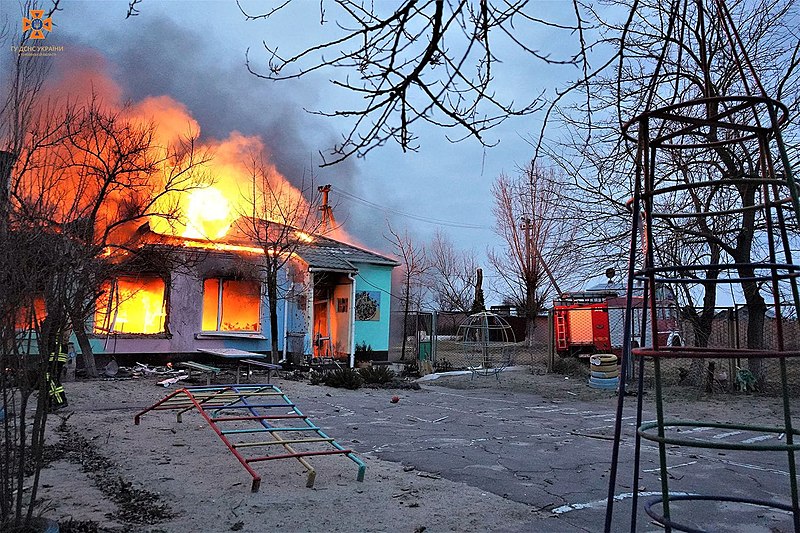
A group of investigators probing war crimes committed in Russia’s invasion of Ukraine found that the Kremlin, funded the torture chambers that were found in the Ukrainian-held region of Kherson. Investigators cited the new evidence that came to light on the matter.
The Mobile Justice team, which is backed by the United Kingdom, the European Union, and the United States on Thursday, said new evidence suggests that the torture chambers in Kherson were backed by the Kremlin. The team has been working with Ukrainian war crimes prosecutors across the country and in Kherson since Ukrainian forces reclaimed the region in southern Ukraine.
“New evidence collected from recently liberated Kherson reveals torture chambers were planned and directly financed by the Russian State,” said the team, led by British attorney Wayne Jordash in a statement.
The team added that financing a network of torture chambers was part of the Kremlin’s plan to “subjugate, re-educate, or kill Ukrainian civic leaders and ordinary dissenters.” The team also said that the facilities were run by Russian security agencies, including the FSB, the local Kherson FSB, and the Russian Prison Service.
In January, a Reuters report said Ukrainian authorities found that around 200 people were allegedly tortured in 10 locations in the area. Survivors told the news outlet about being tortured by Russian forces with the use of electrocution and suffocation.
A separate investigation is also taking place by the International Criminal Court, part of both domestic and international efforts to bring those responsible for war crimes, crimes against humanity, and genocide across Ukraine to justice.
Meanwhile, Ukrainian authorities are still struggling to find those who are still missing in the capital, Kyiv area when Russian forces failed to take over the region. Russia’s failed offensive in an attempt to take Kyiv led to 1,370 civilians dead before Ukrainian forces drove them out of the area.
278 people are still missing more than a year after Moscow sought to capture the capital. 14 mass graves were discovered previously, and officials say the remaining bodies may have been in shelled or bombarded buildings in towns or in pine forests.







